October 2014


We woke up bright and early the next morning to another gorgeous day of mild temps and bright sunshine. We now had to pack a smaller bag as we would be taking a train from Ollantaytambo and there were luggage restrictions. Once again we sat in the square in front of the hotel. Some adventurous shoppers also found a somewhat fancy boutique nearby selling quality alpaca wool items and did some preliminary browsing. Later on our whole group did a lot of shopping and got a good discount there. Soon our comfortable bus pulled up for our half day of travel.
Different and unique was our first stop. We saw how the travel lodges of the ancient Incas were and frankly, not bad at all! In those days the entourage, often with royalty, travelled for days by paths through jungles and a overnight rest area would have been welcome for all of them. At Tambomachai (tambo meaning rest area and machai was caves) we saw on the face of the mountain, niches and caves carved out for people to spend the night, of course the royalty enjoying better spaces. Right there was a natural spring waterfall, cleverly directed through carved holes in the rocks for the refreshment of the travelers. The Incas believed that even different forms of water had its own sex – a waterfall was male, while the ocean was female, so our guide Angel informed us! Surrounded by the great Andes mountains, it was a serene and perfect place that any traveler would appreciate an overnight stop under the canopy of stars.
We had loved the alpaca animals briefly, now we got a chance to view them at close quarters and learn more about them. At Awanacancha they were fenced in open pens and we could also feed them a kind of grass. They do come in various shapes, sizes and colors and of course, names. According to their chart the Camelids as they are known range from llamas at one end all the way to the two hump camels with several species in between. The locals knew exactly how the quality of the wool would be in each variety of alpaca. “Baby alpaca” referred to the first cut of wool that was in a way virgin wool, like olive oil! The exhibit also included indigenous people demonstrating how the wool was died naturally (even one type of bug produced a deep red color) and woven into intricate designs. We saw a mind boggling display of potatoes of various size, variety and hues. It is a major crop of Peru. Attached to the farm was a high end showroom selling top quality goods by indigenous talents.
Sacred Valley of the Incas
We drove down to the Sacred Valley. From a vantage point high on the mountains we saw the beautiful agricultural land with river Urubamba snaking through it. It is one of the rare rivers in the world, flowing from south to north, finally joining the Amazon river, we were told. No wonder the Incas made it their home, so fertile, beautiful and bountiful. Next stop – Pisac market! This place could beat any US flea market in its variety. We first saw how silver is crafted into beautiful jewelry blended in with natural colored minerals. Known as Mother Earth or “Pacha Mama”, the pendent was the ladies’ favorite. Almost everyone got a large pendent in silver with concentric circles in beautiful colors like deep blue, green or terracotta red. However, the prices back at Cusco beat out the Pisac market rates! Still, a few good buys like children’s sweaters, place mats and scarves were made. Our lunch was in a lovely “hacienda” type of open air restaurant surrounded by large swatches of colorful bougainvillea flowering bushes and beautiful gardens with the mountains in the distance. The food was okay, they did make a lot of effort to provide vegetarian items.
Next stop, fairly nearby, was the famous Ollantaytambo, a place where an Inca king Ollantay stayed, legend says. The town too is known by this name as is the Inca structure, presumed to be a temple or a fort. Here we saw huge terraces rising up endlessly to the sky. Perhaps there was a sun temple at the top, it was certainly a place where Incas lived and produced crops, for they had storage granneries on a different mountain nearby. We could only climb to a short distance, some adventurous ones in our group were willing but only a few and in the interest of time, we had to leave. However, our guide did tell us a romantic story associated with the fort, the love that ended in tragedy between Pachakutec’s general and the daughter of the king. We also viewed the water temple where Inca rituals were performed for fertility of fields. Corn was the main crop and chicha, a corn based alcohol, was consumed as also used in rituals where it was first offered to the earth.
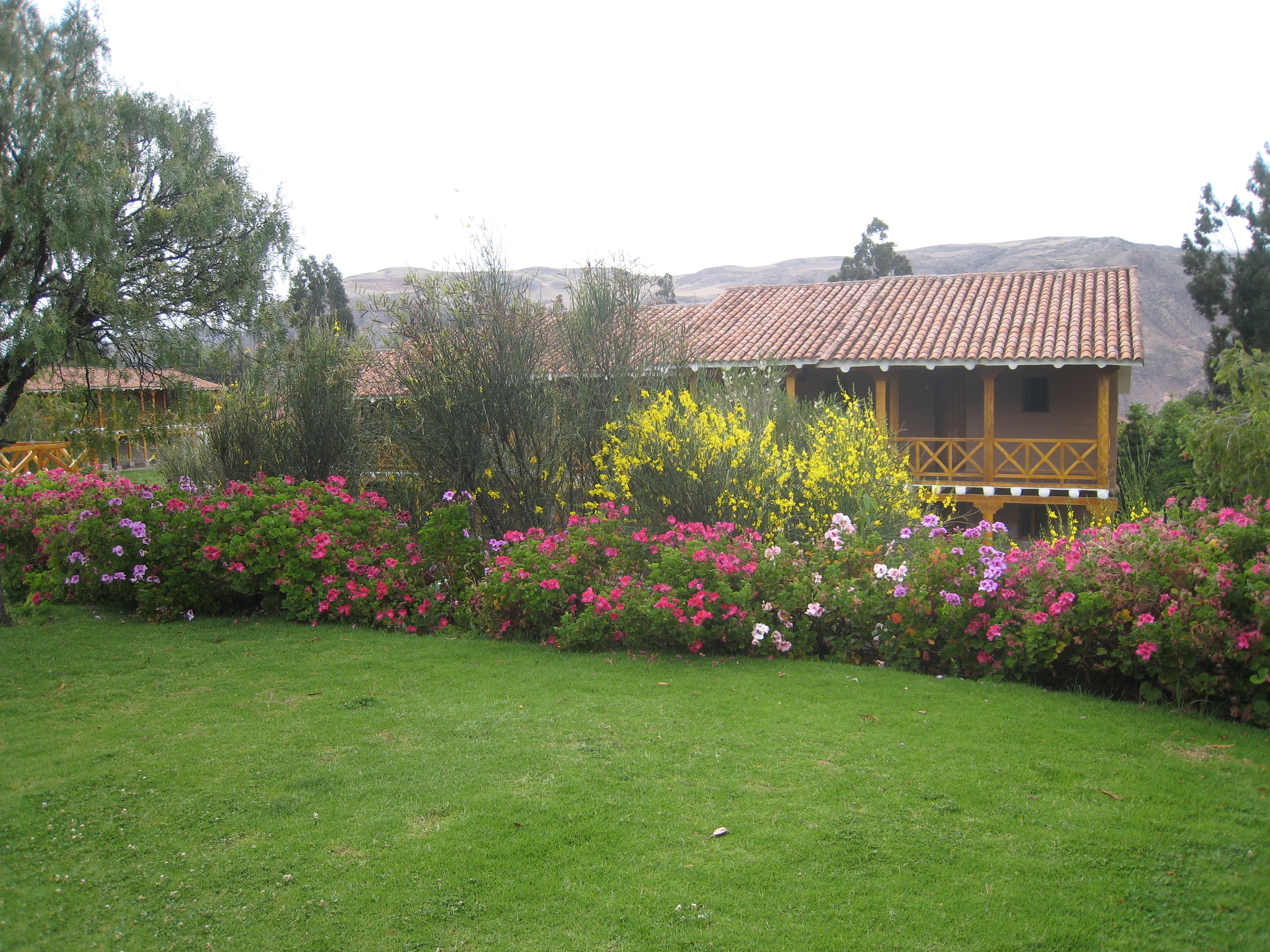
We loved our overnight hotel stay. The location was gorgeous, greenery all around, lovely flower beds meticulously maintained. Our one complaint was that we had to trek up three to four levels of steps to reach our rooms! But we did have incentive to come down to the lobby because some indigenous artifacts were sold in “sidewalk sales” at very reasonable prices. The scarves bought here made fabulous gifts once we came back home and thanks to our group the women made substantial sales. We also enjoyed the sights of alpacas grazing on the property and just beyond the fence was a row of local children looking for small handouts. We were served dinner and breakfast at the same hotel.
All too soon we had to leave for the train station the next morning. The Vista dome train lived up to its name. So comfortable with a table between four seats and gorgeous views all around. All along the route the river Urubamba flowed along with us, sometimes as a narrow stream, at other times whitewater rapids tumbling over large boulders. The majestic peaks of the Andes never failed to take our breath away, some even with snow caps. Along the way we could see smaller Inca structures on the mountainside. The backpackers tackling the famed four day trek to Machu Picchu were visible here and there and we were pointed out the 81 km. marker which is the start of the trek along with a pedestrian bridge crossing the river. Soon we were served snacks and the journey was pleasantly completed in a short couple of hours.
Our destination, Aguas Calientes, (hot springs) at the foot of the mountains was fascinating too. The only transportation allowed here are the buses going up the mountain to Machu Picchu. We were staying at one of the best eco lodge hotels, the Inkaterra, in the midst of the cloud forest. This group is doing great work in conservation of the Andean bear and other species in the vicinity. Even before we got our lovely eco-friendly rooms, we all signed up for the nature walk later in the afternoon. Here we could see miniature species of orchids growing in the thick undergrowth. To be sure we saw a lot of exotic plants but what drew our attention was the hummingbirds that constantly hovered over the sweet water feeders. We were as fascinated by them as they were by the sweet treat! Our walk concluded with a view of the Sacred Rock wall with Inca carvings and an aeriel view of the Urubamba river. We were soon ready for dinner at the nearby restaurant, right in the middle of the railway tracks!


Machu Picchu at last!
The final culmination of the trip was in sight and we got a good night’s rest. As the reservation for the visit to Machu Picchu ruins is filled up weeks ahead (only 1500 visitors are allowed per day), we were to make only one trip and had to make the most of it. No one was complaining about waking up really early and finishing breakfast by 6 a.m. One of us in the excitement of the visit, did leave behind the camera bag in the room and had to run back and miss the first bus! The good news was that buses were plying every 10 minutes. The ride uphill was only about 25 minutes with expert drivers negotiating hairpin bends. With the clouds coming down low, the view was partially covered with each turn revealing breathtaking heights! Soon we were at the entrance, our group assembling and full of anticipation.
Testimonials to the quality of the structures at the entrance praised the quality, none less than the civil engineering society of the US! On entering the gate the sight that greeted us was beyond expectations. As someone in our group said, “Wow would be an understatement”. We just walked in a few yards and stopped to stare. All around us were steep, wide terraces, green everywhere and very even leading our gaze to the guard houses way up. The space was huge with simple stone structures broken only by beautiful patches of grass. What gave majesty to the location were the mountain peaks everywhere, the Andes in their full glory. Granted that the Incas must have built the place with blood, sweat and tears, but how glorious was their reward to have a dwelling so heavenly, close to the gods they worshipped.
The stories told about the discovery of Machu Picchu in 1911 by American anthropologist Hiram Bingham were of course challenged by the Peruvian authorities who said that the mountains of Machu Picchu (old mountain) and Huayna Picchu (young mountain) had been mapped and named in the late 1800s. Story goes that the whole establishment had been abandoned by the Incas for reasons unknown and had been overgrown by nature. With a 8 year old for a guide, Bingham braved many dangers to reach Machu Picchu and unravel its marvels little by little. Untouched by the invaders, the culture of the Incas is pristine here. Credit goes for presenting it to the modern world to Yale University and National Geographic society for funding cleanup expeditions. Now the government of Peru is doing an excellent job of maintaining and managing. What struck us the most was that there were no railings or guards to spoil the beauty, everyone was just careful and it worked!


We spent about 5 hours, escorted by our guide, Angel. He pointed out the difference in the types of stones used and how they were always more polished and finished when it was for the purpose of making buildings of worship. The trapezoid windows narrow at the top and wider below, the trademark of the Incas, was visible especially in their Temple of Three Windows. Another courtyard had shallow stone bowls that caught rain water and probably reflected the sun, moon or stars. Everything was of course conjecture because the Incas did not leave behind anything in writing for the world to understand their culture. We climbed up a small hill in the center to get spectacular views. We saw the famous sun temple designed to receive the rays with precision, the temple of the condor facing east, as they believed that condors transported the souls to a higher world. The wings of the condor were two chiseled rocks behind it, part of the rock formations!
As it is said for many spots of beauty and grandeur in the world, it would take days to explore and discover the intricate secrets. Unfortunately we had no such luxury afforded to us. Soon it was time to do the final ascent to the natural viewing gallery which gives the iconic layout of the Machu Picchu ruins so often used in brochures and books that lures tourists. Again, the view was amazing, unbelievable and beautiful. All we could do was to take our pictures and then take a few moments to drink it all in and hope our memories would take us back to that precious nano second where the world stands still, we forget our cares and we enjoy as nature and man’s amazing skill takes over our mind. Thank you Incas, for calling out to us and giving us such an unforgettable experience.
As we exited, Angel made sure we all got our passports stamped with a nice Machu Picchu proof of visit stamp! After lunching at the sanctuary lodge just outside the gates, we were on our way back and boarding the train to Cusco. There was just a little bit of time to explore the rows and rows of stores selling local wares. Again, so refreshing that nothing was marked “made in China!”. We enjoyed the Vistadome, the train with the windows all around, spotting several snow clad mountain peaks. Back to our same hotel and the next morning was reserved for a walking tour of the city of Cusco. We were quite used to the altitude by now and walked with ease along the cobble stoned streets where centuries ago, King Pachacutec was probably carried in ceremonious procession! We spotted a coffee store and purchased roasted seeds and powder to take back home.
Last minute shopping proved to be a bonanza for the boutique near our hotel. One of the ladies of our group proved to be a consummate bargainer and we all enjoyed the bounties of good quality and lower prices! I am sure we all expect to use our alpacas well and bequeath them to the next generation! They are ultra soft and warm too. We said our goodbye to Angel and others and caught our flight back to Lima, spent a few hours at the airport and the overnight ride brought most of us back home. Others had longer flights with connections. However, no complaints as the trip had been truly amazing. It was just seven days, but packed with new sights, sounds, tastes and above all the visit to a world heritage sight that only a few in the world are destined to enjoy! That too in the company of our dear friends. Priceless!
 travelswithshamla