March 2017


Our small group had been requesting to accompany Shubhraji to Swami Chinmayananda’s ashram at Sidhbari in the lap of the Himalayas for ever so long, but she kept saying that the right time had to come! We were so, so fortunate that the auspicious time did arrive in March 2017 and not only did she take our group to the ashram but also did a wonderful retreat with us at an exclusive location whose natural beauty and privacy could not have been more perfect, if all of India had been searched!
Great Views and Location
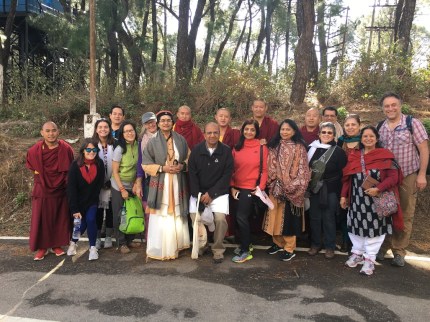
At the outset, Shubhraji wanted to teach students who had a strong basic knowledge of Vedanta and most of us were from the class that had taken the VYIP course, the Vedanta, Yoga Integrated Program for two years at the Namah center in Saugerties. Others came from Hong Kong and various parts of the USA and of course Rajpriyaji, Shubhraji’s very able assistant, and guru behen from Mauritius. We were just about 15 of us, the right number to bond and explore the intricacies of Vedanta.
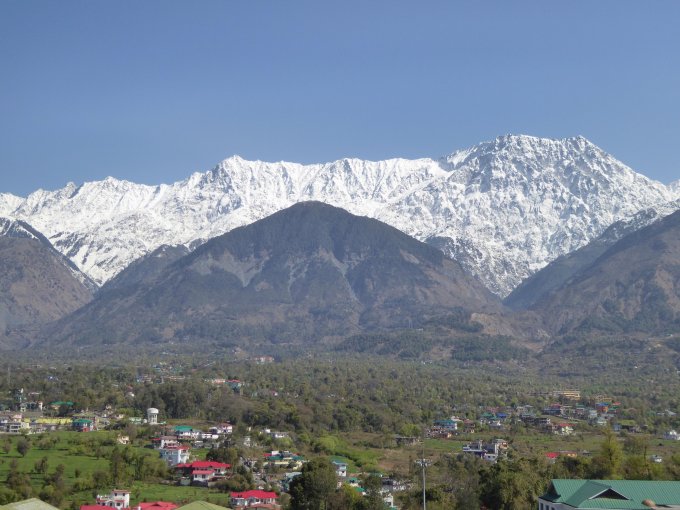
We met in New Delhi and took a flight to Dharamshala, the current residence of the Dalai Lama. It was a small airport but as soon as we alighted on the runway to walk to the terminal, we were overwhelmed by the snow clad Dhaulagiri mountains and had to pause to take pictures. This was just the start of many beautiful views of the mountains and the timing was so perfect, snow in the distant mountains, but sunshine and warmth on the plains.

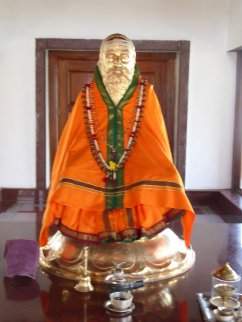
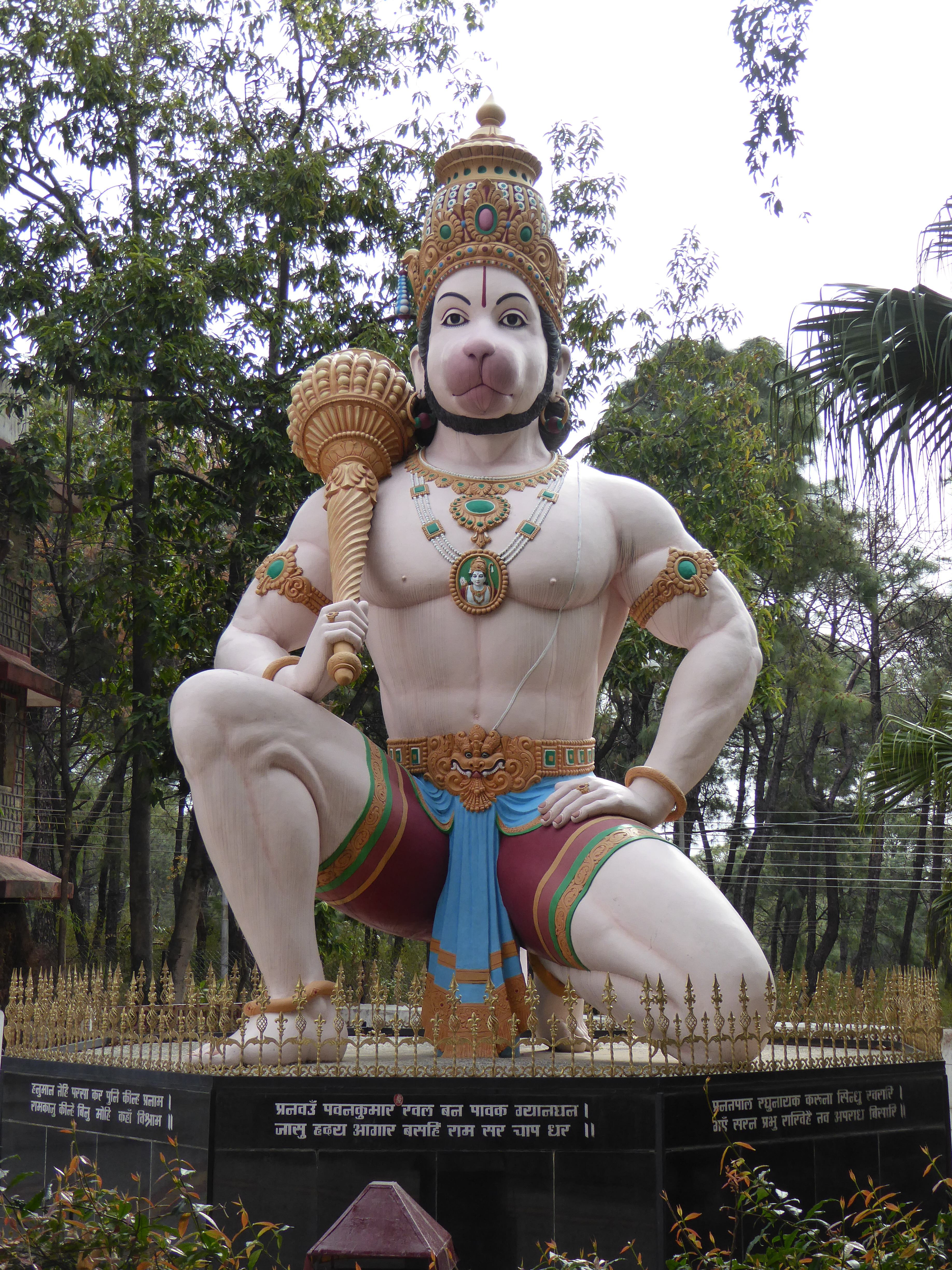
As the story goes, Swami Chinmayananda was just on a casual visit to the area and when he was passing by he pointed to a tract of land on a higher elevation and declared that his ashram would be built there. Of course his intention took shape and was soon a reality. Simple rooms to house the seekers were made, a hall for the lectures, a small cottage (kutia) for Swamiji, a dining hall and kitchen and a beautiful Rama temple. The temple, made to attract and serve the local, humble mountain people, was unique in a way. Instead of decking the lord with resplendent silks, He, along with Sita, Lakshman and Hanuman were depicted in simple robes as vanwasis, on their sojourn in the the jungle. Large pictures depicting the story of Rama were all around the temple. The ashram grounds also had a huge Hanuman installed after it was found to be a very windy location and Pavan Putra Hanuman, son of the wind god, would help to mitigate this.
The winning point of the ashram is the fabulous view of the snow clad mountains and the green valley dotted with colorful homes. Swamiji’s presence is everywhere in the spacious ashram property, his kutia is a museum now. His samadhi in the rose garden is beautiful and the most inspiring place in the ashram, at once simple and full of joy and contentment. A puja is done twice a day there.
After spending five glorious days, quietening our mind, attending the pujas and enjoying the simple and delicious food of the ashram, we had to say a reluctant good bye and also leave the mountain view behind us, because we were going to be on a mountain ourselves for the retreat at Mcleodganj! About an hour’s drive away and closer to the small town of Dharamshala, we then settled down into the well maintained and luxurious cottages of our retreat. We had the entire resort to ourselves and were served very tasty home cooked food for every meal.


With our physical needs taken care of, we turned our attention inwards. We were one with nature with a few monkeys and exotic birds around us. Shubhraji had selected the topic of “meditation” and the surroundings could not be more conducive. We had a full day’s schedule of activities, but with time for rest, relaxation and introspection. In hushed silence each day we heard our Guru tell us that we need to go deeper into our spiritual journey, go inwards and find ourselves. Even Meditation and indeed anything external that this world offers is not the path to moksha or God realization. Our avidya keeps us fascinated and bound by the world of objects. After we fully understand our scriptures as a valid means of knowledge we are to seek that Consciousness that can never be an object, as it illumines the mind. We can employ any spiritual method that appeals to us, but this will only quieten the mind, the final “seeking” is to be done through silence and contemplation based on our understanding, in short sravanam (listening to a qualified teacher), mananam (contemplation) and niddhidhyasanam (assimilation/meditation).
Pratyahara, the Withdrawal of the Mind
We listened, we meditated, we discussed our experience, we learnt japa, we sought our oneness with nature in silence and we had satsang. Pratyahara, the withdrawal of the mind, seemed so easy away from the hustle and bustle of daily life. The real test was going to be able to sustain it in the real world. Some of the tips we took away with us was to be a witness and allow life to unfold, develop sattvic vasanas of cheer, joy and clarity, help others and surrender our expectations to a higher power. Then grace would flow in our endeavours, we would sustain that inner bliss which is our birthright.
We did a brief tour of the area, visited some temples and monasteries and the quaint town of Dharamshala. We saw the monastery where the Dalai Lama usually stays when in town but could not meet him. All too soon it was time to say goodbye and we left with a very thankful heart toward Shubhraji, Swami Chinmayananda and the grace that has made all this possible!
 travelswithshamla