Egypt – Larger than Life Part 2 Visit in Feb 2025
Post under construction — pics being added!


Amidst the excitement of viewing the ancient magnificent sights of Egypt, we also managed to have a calm and interesting cruise on the Ms/Miriam. Part of the credit goes to the ship crew and organizers and part to our enthusiastic co-travelers on Gita Travels. Admittedly some of us were retired and practically covering the few remaining countries on our bucket list, but many were still much younger and full of enthusiasm.
Among the activities we had, first an Antakshari program organized by the very enthusiastic Vaishali and her group. As there were 70 plus people on this tour, it was hard to get to know everyone well (given how busy we were kept) but some stood out by their enthusiasm. Everyone was roped in for the Antakshari and divided into two teams, very fairly the left and right side of the lounge. The crew of the ship helped us put together seating facing each other. It was a tension free session, everyone breaking into songs, old and new and enjoying it thoroughly. Hindi and Tamil songs were the most popular.
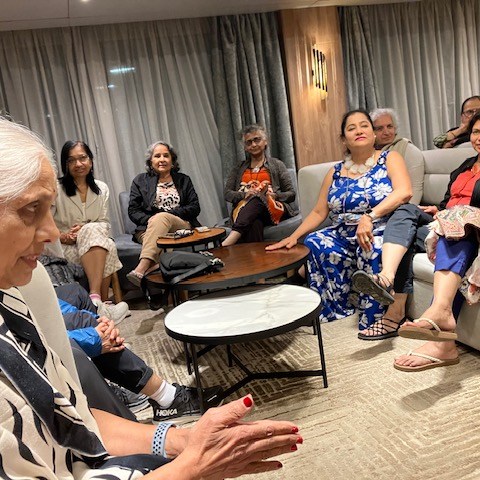

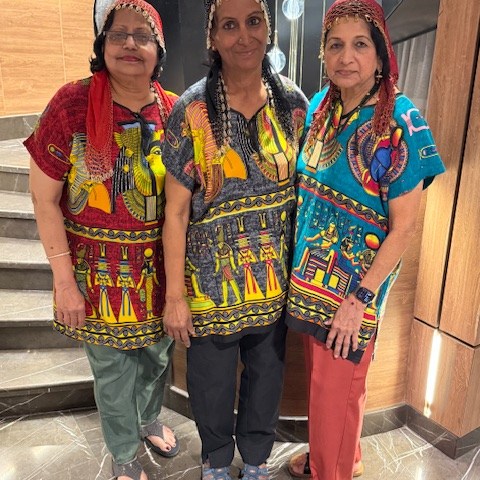
Antakshari excitement Three of our lovely ladies clad in local garb
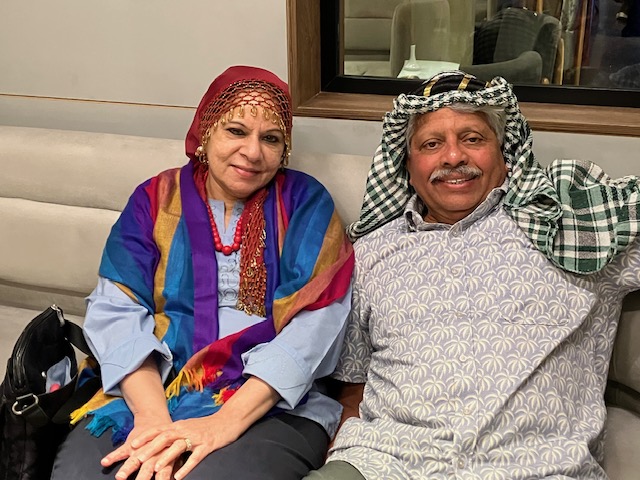
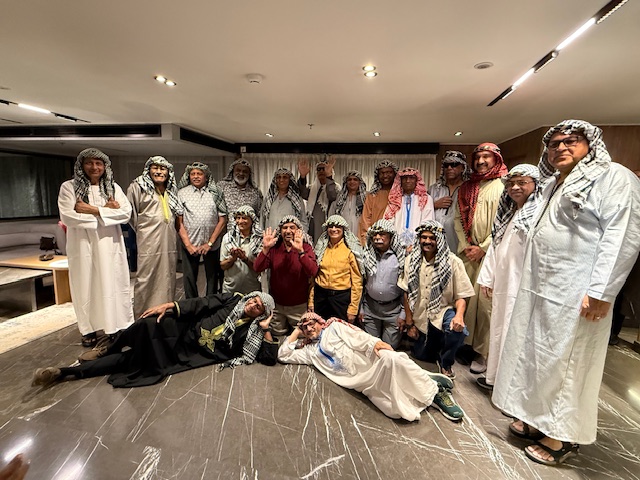
Another fun activity, this time organized by the ship’s crew was an Egyptian evening. We had been told earlier to dress up in their local clothes, a “Galabeya” or a long loose-fitting dress with a specific headgear for men and women. Most of the ladies went for it with a colorful, almost gypsy like headdress, with shiny tinsels. The men for a large part stayed in their regular clothes and sported a typical checkered head scarf available in various colors, held in place with a ring. Think Sadat! Starting with a yummy dinner featuring local vegetarian fare and deserts, we moved on to the lounge deck where the crew members did a fabulous drum session and dance. Then the floor was open for the rest of us to join in and dance the steps they demonstrated. Everyone including the spectators, had a very enjoyable time.
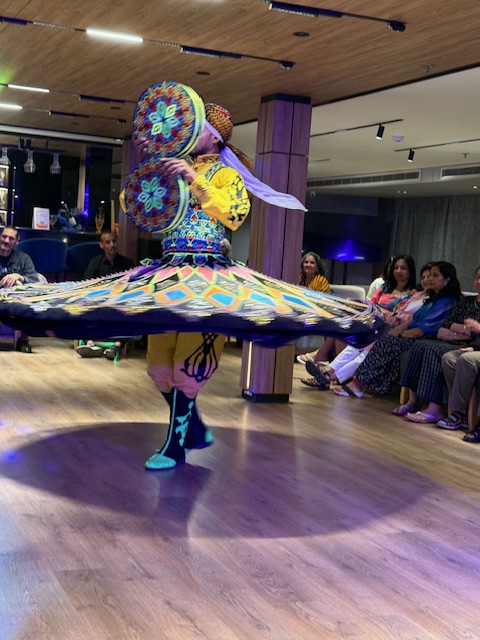

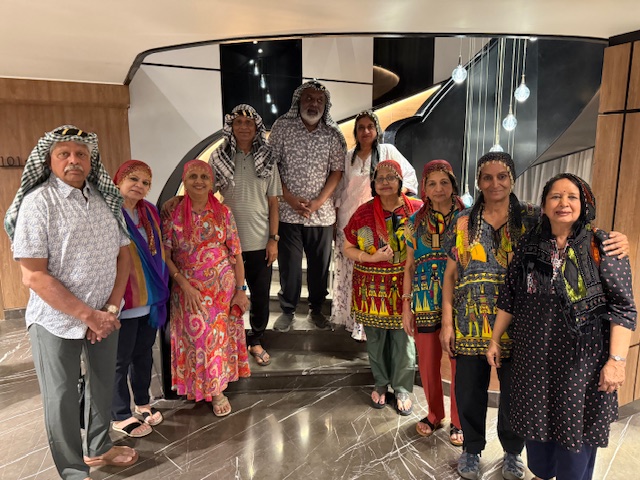
Whirling Dervish, friends posing in local costume
The highlight was taking photos in the finery to show our families! Another entertaining evening was dancing by a belly dancer and a whirling dervish. The former of course made the men happy and collected quite a few dollar bills. The Dervish, accompanied by a lively band, performed well and also had on a very colorful costume that lighted up from time to time. On the whole an interesting evening.

The ship next made a stop for us to visit the Kom Ombo temple. Built in the second century, BC close to the river, it emphasized the use of animal references in the Egyptian hieroglyphics. Specific to this temple was the crocodile and the falcon in some ways depicting good and evil that exists in the world. Two notable features of this temple were the well in the compound that measured the level of the Nile river and an attached museum that featured around 300 crocodile mummies. Apparently, crocodiles are very much part of the Nile river although we did not see any live ones!

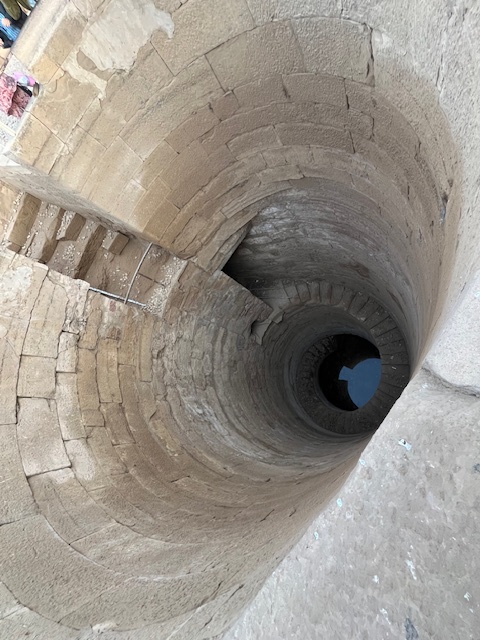

Kom Ombo temple, Picture of the well, courtesy of Seema
The next day was the longest and a very interesting day of the Egypt visit. It was actually moved from the afternoon to the morning, that too very early departure. The reason we were told was that crowds increase at the popular sites. It was an optional visit to Abu Simbel, the temple of Ramses 2 and his beloved Nubian consort, Nefertari. We were told that those who did not want to make the trip could stay behind and relax on the boat but to my knowledge no one did! The drive itself was unique as we could see the countryside. There was desert like sand for miles. Many fields and properties were walled, with fences stretching for miles together. Alfalfa was the crop we could view here and there, making a green patch in the sandy stretches.
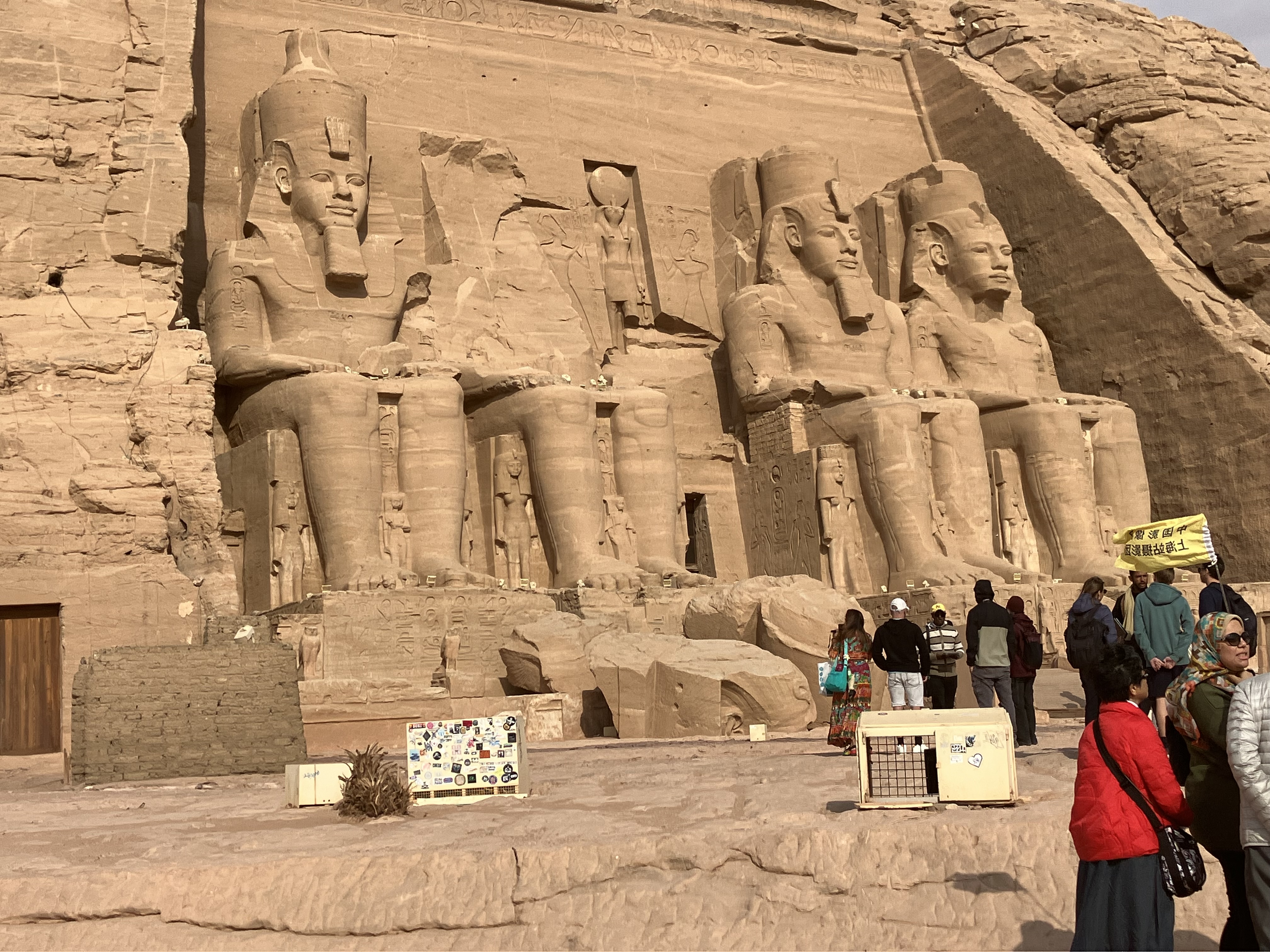

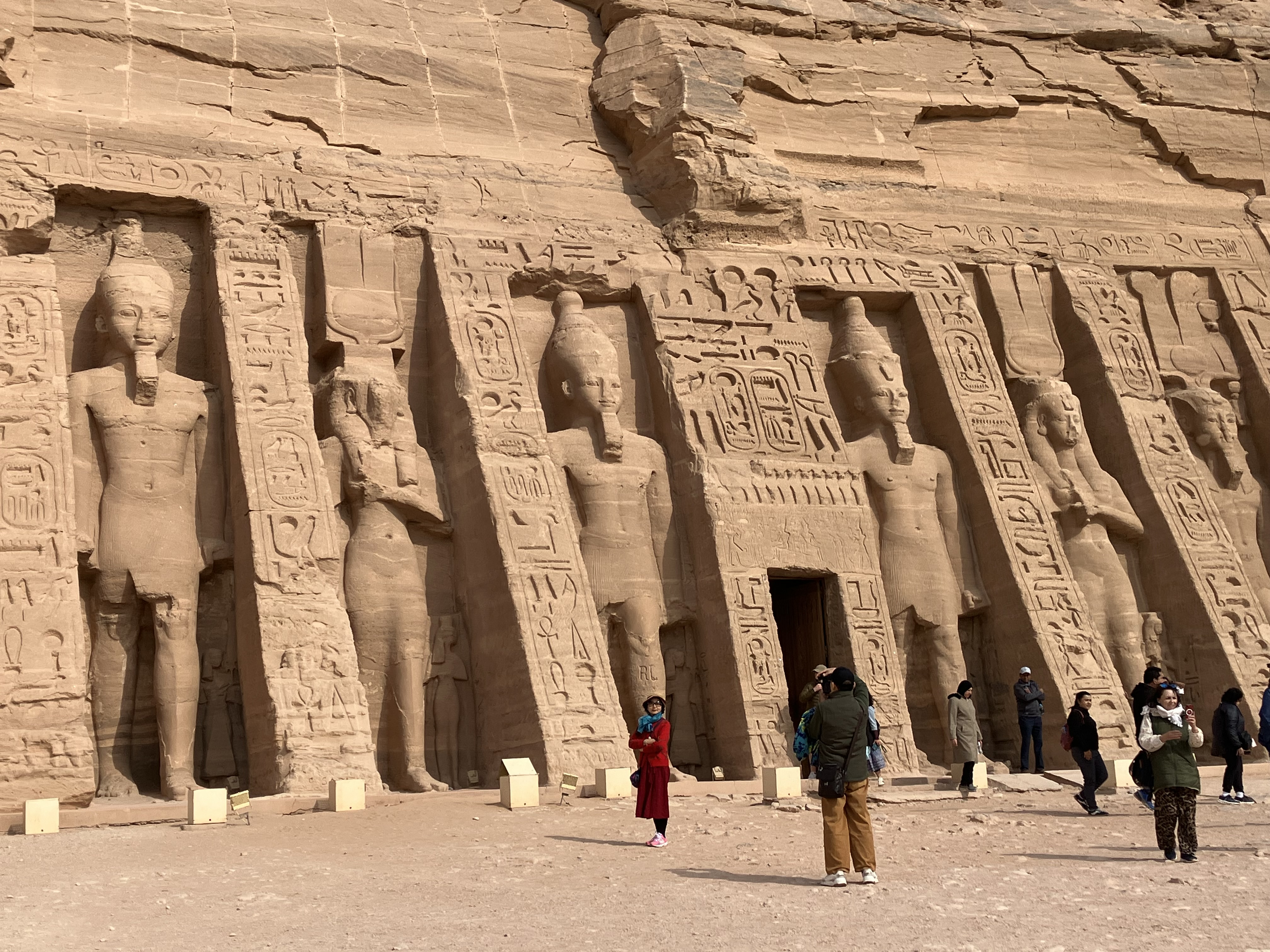

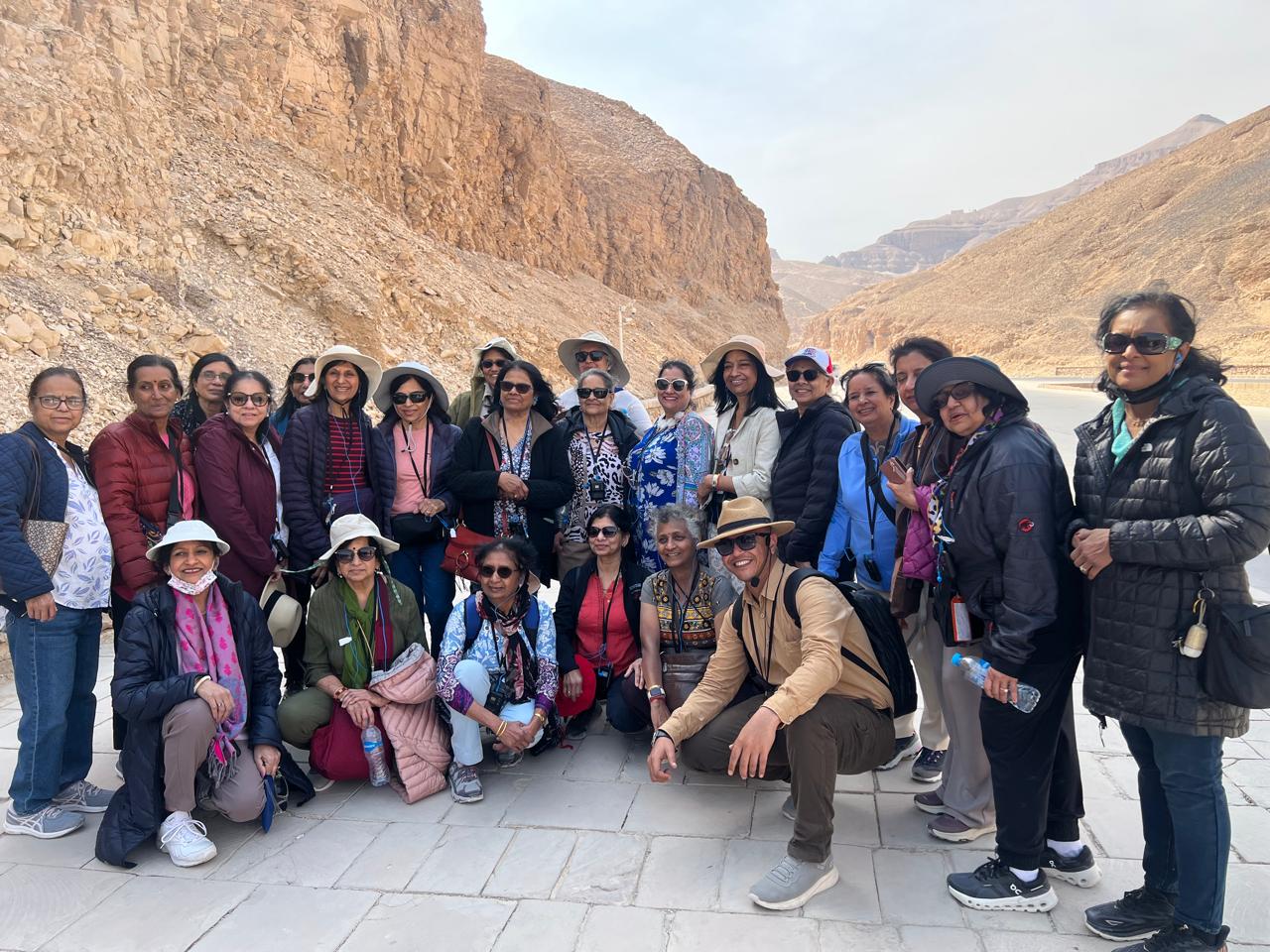
Views of the Ramses 2 temple outside and in, the temple of Nefertari; Our ladies group with tour leader and guide, Mohammad
Ramses 2 himself was a very colorful character per our guide. He was the son of Seti 1 and ruled uninterrupted from 1279 to 1213 BC. His father encouraged him to become a warrior and at a very young age he took to the challenge. He was tall, healthy, virile and lived life to the fullest, never afraid of leading many successful forays to conquer territory for Egypt. In fact, nine kings were said to have carried the name Ramses forward. It is said he met his favorite queen, Nefertari when he was just a crown prince, during his foray in the southern regions of Nubia. She is depicted with darker skin tones and famed for her beauty. In fact at the temples of Abu Simbel, a separate one is dedicated to her. Sadly, she died before she could see the edifice ordered to be built by Ramses 2. Brought back memories of Boldt palace in Canada’s Thousand Islands where a huge Rhine castle was never completed for Louise, which her businessman husband, George C. Boldt, owner of the Waldorf Astoria, was building. Like the Taj Mahal, also keeping alive the memory of a special woman, it is now enjoyed by tourists.

Abu Simbel itself is certainly worth a visit. At a scenic location, with the waters of the Nile dam, Nasser reservoir, nearby, the temple of Ramses 2 has four colossal statues at its entrance, each estimated to be about 66 feet tall, though shown seated. Often, for reasons unknown, many Egyptian temples had more than one statue of the same king. In the 1960s, Unesco had to assist in the moving of these temples to higher grounds due to the reservoir of the Aswan dam being built. These and many other temples that were moved have certainly preserved that antiquity and natural look and this move is no less a miracle than the original one being built and carved out of the hillsides. An artificial hill was created for these temples! We were given ample time to walk around and explore the cave-like interiors of the temples.

Having done a morning trip, we were back by lunchtime and really luxuriated in the free afternoon time on the ship. Time to rest, to get up to the upper deck, watch the passing scenery and enjoy the tea and coffee service. It was not to be missed, those precious moments because the next morning we were checking out. Though we had to pack our bags pretty early, we could still have breakfast and get ready for a jam-packed day of visits. Our ship had reached its destination, Aswan. The Aswan High Dam was actually the second dam built on the Nile. The first dam had been completed in 1902. It was useful only for a time. So 7 km upstream the new dam was built, also creating Lake Nasser reservoir. Construction took place in the 1960s and at that time it was the tallest earthern dam in the world. It served the purpose of controlling flooding, improving irrigation and generating electricity. The downside, we were told, was the lessening of the fertile soil it brought to the region. We got the opportunity to walk on the road on top of the dam and take pictures but each group had a very short time allotted for this activity due to the busy tourist season.

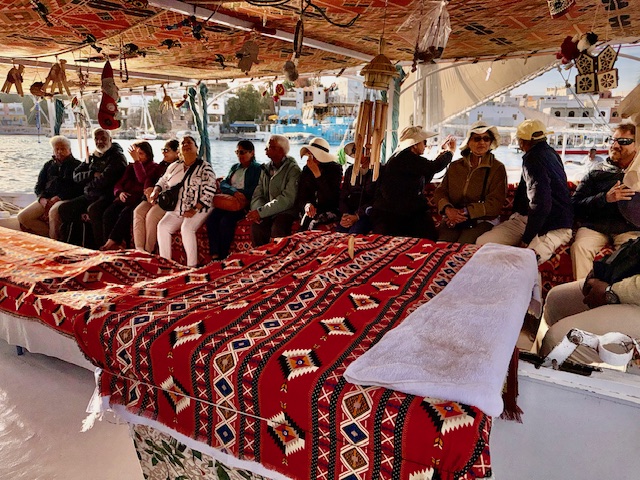

Felucca boats, on the boat ride, temple of Philae
Next attraction was the short boat ride to the Temple of Philae. This was located on an island and had also been moved to a different location and done efficiently. We went the short distance by boat. The edifice was large and very impressive. Similar to the Karnak and Luxor temples with a double walled entrance and beautiful etched carvings on its walls. The cruise ship had been kind enough to allow us back on board to have lunch and use the top deck for relaxing. The rooms were being readied for the few passengers who boarded for a return trip back to Luxor. Our flight was later that night so one more fun trip was squeezed in. This was the felucca boat ride on the Nile. We were taken to a wider part of the river in a boat that operated just with sails and wind power. The boatmen had to be very skilled as there were many boats around. Then we were shown some souvenirs for purchase on board during our return ride. Small knick-knacs including maps and tour books that would serve as reminders of our visit. It is to be mentioned and admired that everything seemed to be manufactured in Egypt itself and the roadside hawkers were willing to bargain. Later in the night we caught our flight back to Cairo to our old hotel. Kudos to the organizers for having our room allocation all done in a very short time. Having picked up our stored luggage and catching some shut eye, the next morning we were ready once again to see the most exciting part of our tour – the pyramids of Giza!


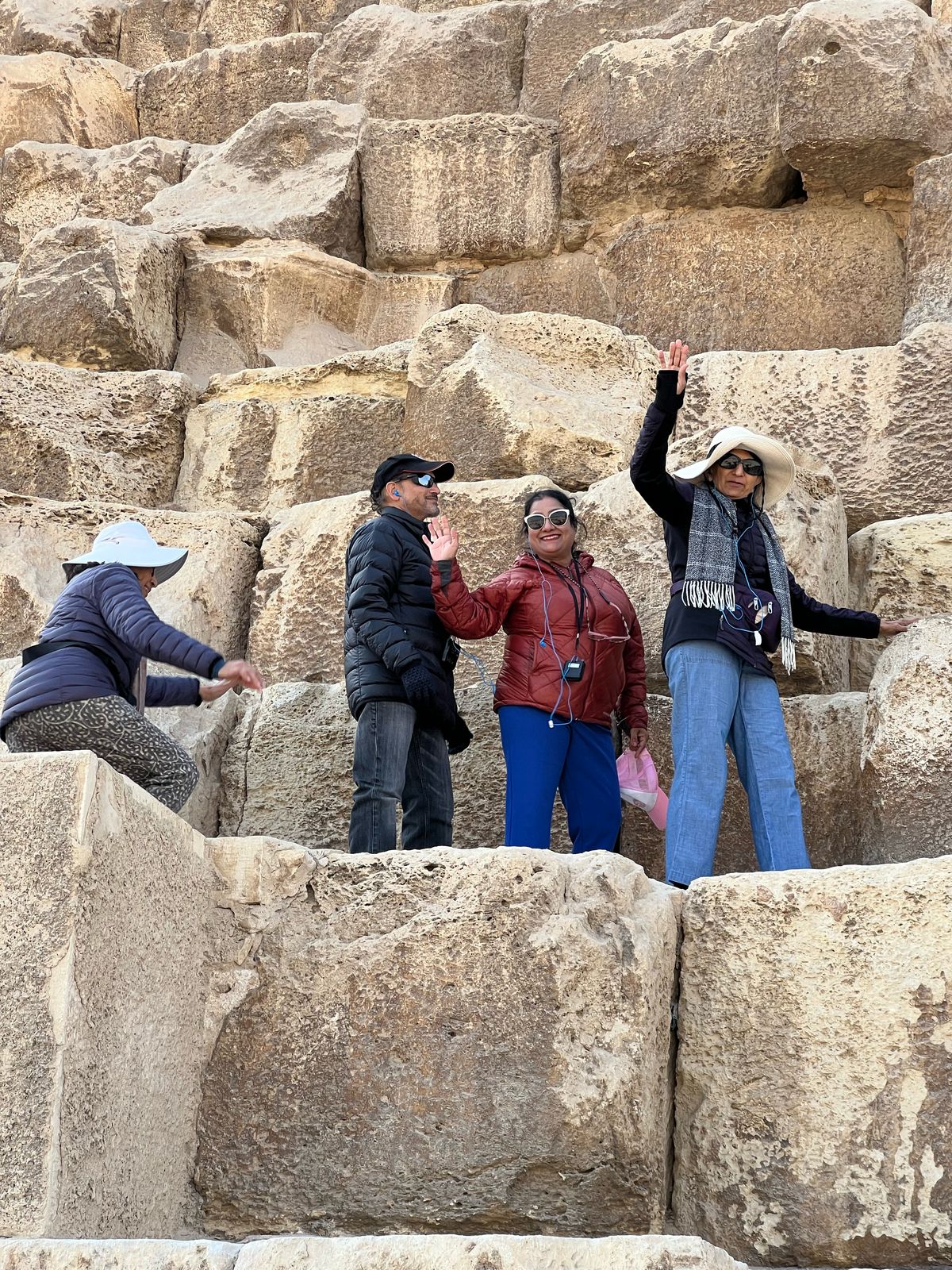
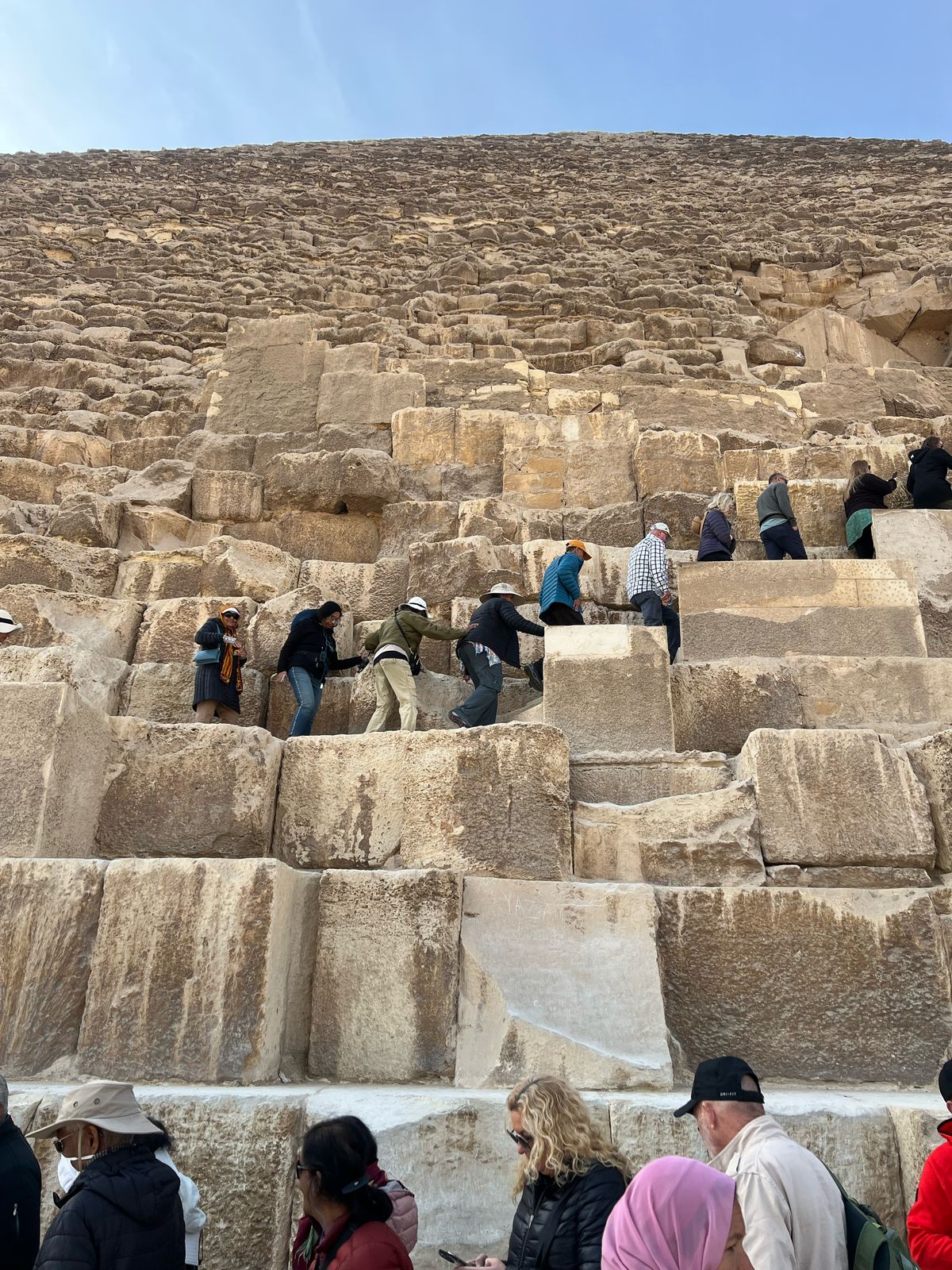
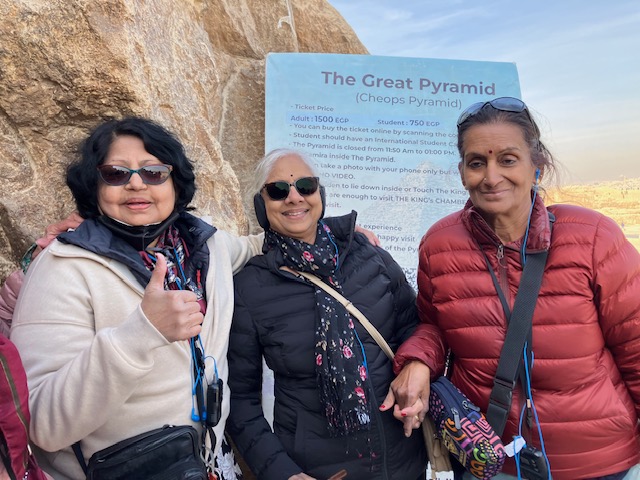
The perfect symmetry Entrance is visible Up close and climbing on the blocks!
One reason this had been kept for the end of our tour was the fact that initially everyone arrived at different times and could be jet lagged. Now we were fit and fine, in tune with the brisk sight-seeing. An early start was a must. After the mind-boggling variety of breakfast items offered, we boarded our buses for the short ride to the Great pyramid for it was very close to Cairo. It could be seen in glimpses along our bus ride but up close it was just amazing in its size and symmetry. It’s not called Great for nothing. It is one of the Seven Wonders of the old world. Our pictures will speak more than our words. The exciting part was that we could climb up the great blocks of stone and go up to the entrance. Only the brave few ventured inside as we had been warned that the ceilings were very low and in many sections one had to literally be on hands and knees. Compared to the Valley of the Kings, there was very little art work to be seen inside. This pyramid is the largest one in Egypt and was the tomb of the pharoah Khufu and is estimated to be built in 2600 BC over a period of about 26 years. Today it is largely intact with only a few blocks that have fallen off in the lowest tier. The height itself was originally 481 feet with blocks of stone weighing 6 million tonnes. Most pyramids had a smooth casing which has been weathered away. No point in quoting other dimensions, we want to dwell more on the emotions it evoked. Initially there was a scramble to climb up before the crowds made it impossible. Though the entrance was only a few feet high, it was a bit of a difficult climb as one had to be careful. But once we had made sure our victory had been captured on camera, we came down and walked around. The cobblestones around are to be carefully walked on too in order to avoid ankles being twisted. Our small group of friends walked up to a corner to view the angle and also took some pictures with a few camels.
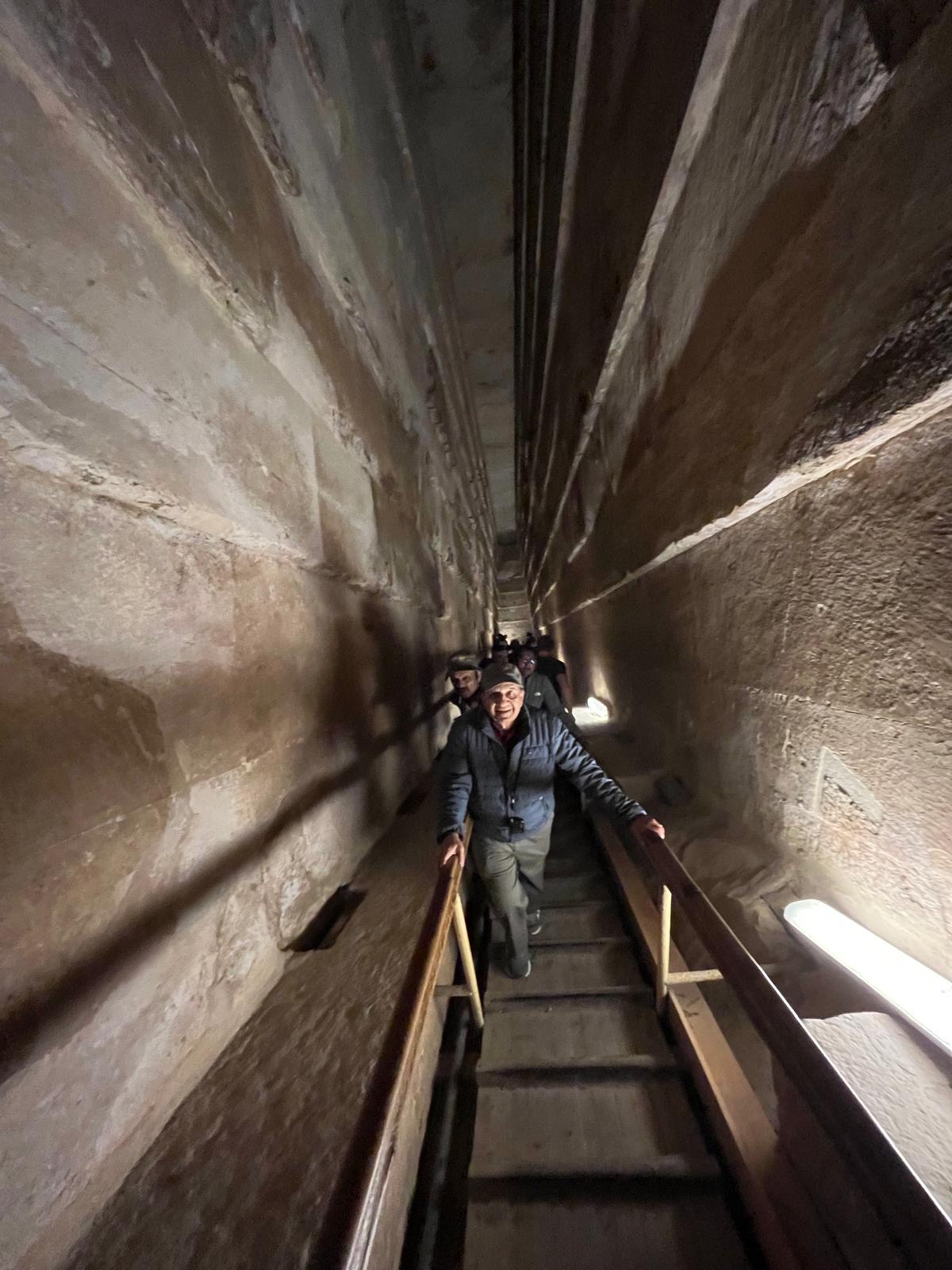
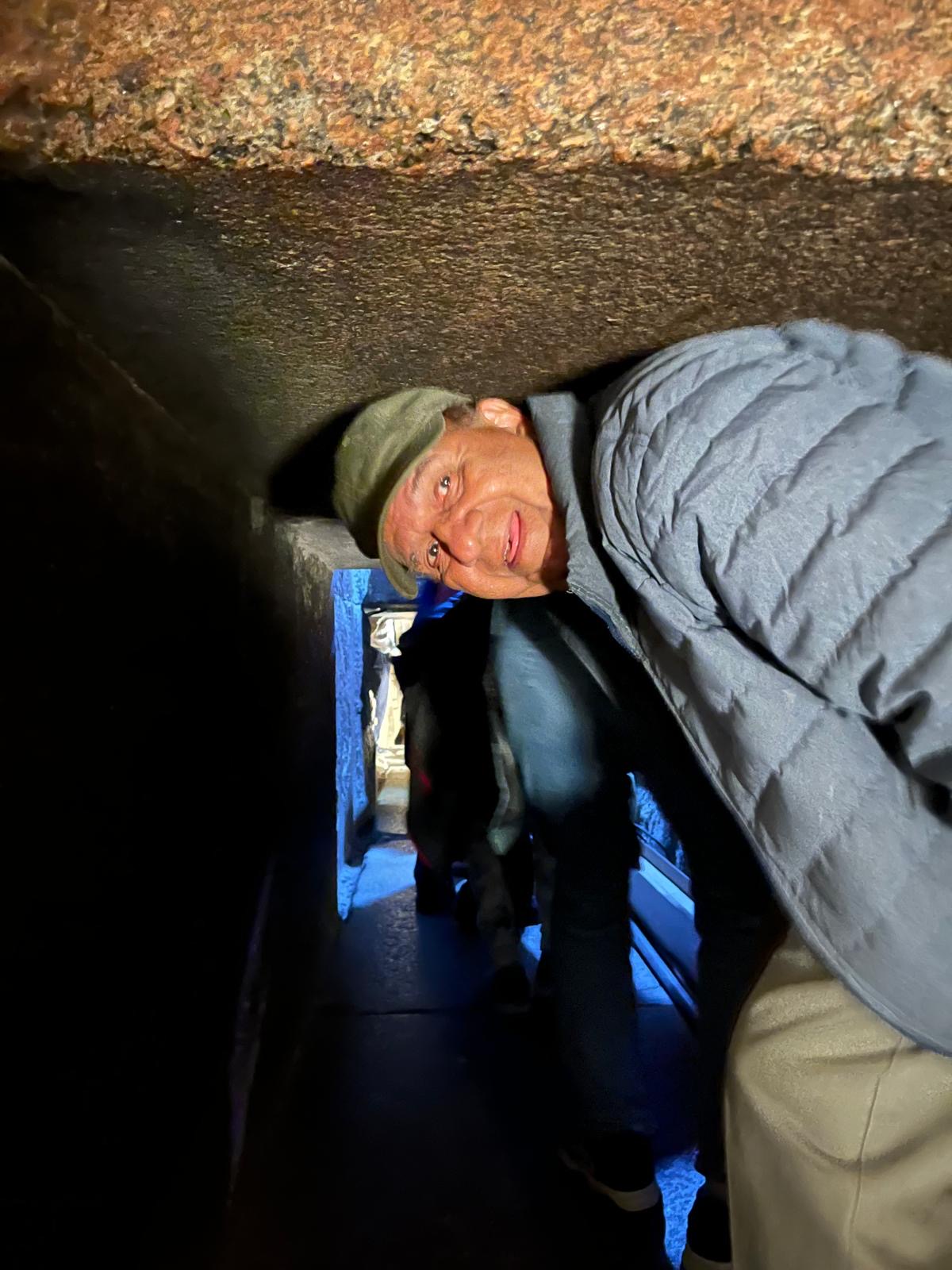

Standing there in front of this wonder was totally awe inspiring in the deepest sense of the term. That humans had put in so much effort to build something for posterity and it still stood there a witness to all the changes the world is seeing, was too deep to fathom. But it was a rock-solid feeling that some things will not change so easily and gave our coming days something to think back upon, to ruminate the meaning of life itself. A visit well worth the time we spent.
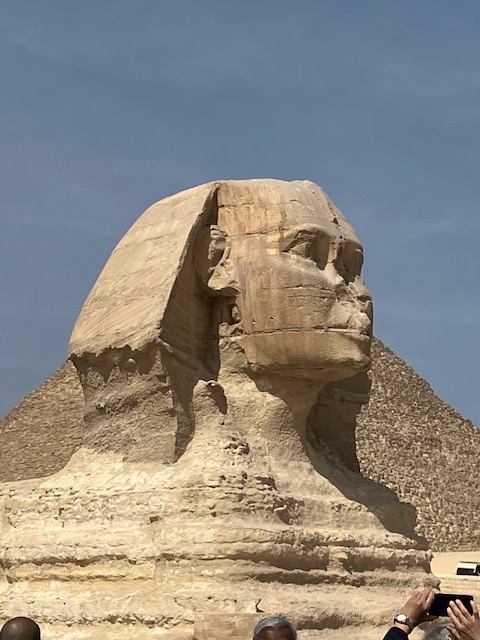
We were then taken to see some other lesser but still very impressive pyramids that were in the distance. These had accommodated mummies of family members of the pharoh. We saw the step pyramid at Saqqara and finally the grand Sphinx which did not disappoint in spite of its face being disfigured over time. It was huge with a much larger pyramid behind it. A ramp to view made picture taking easy. We had seen it all and it was all so very impressive.
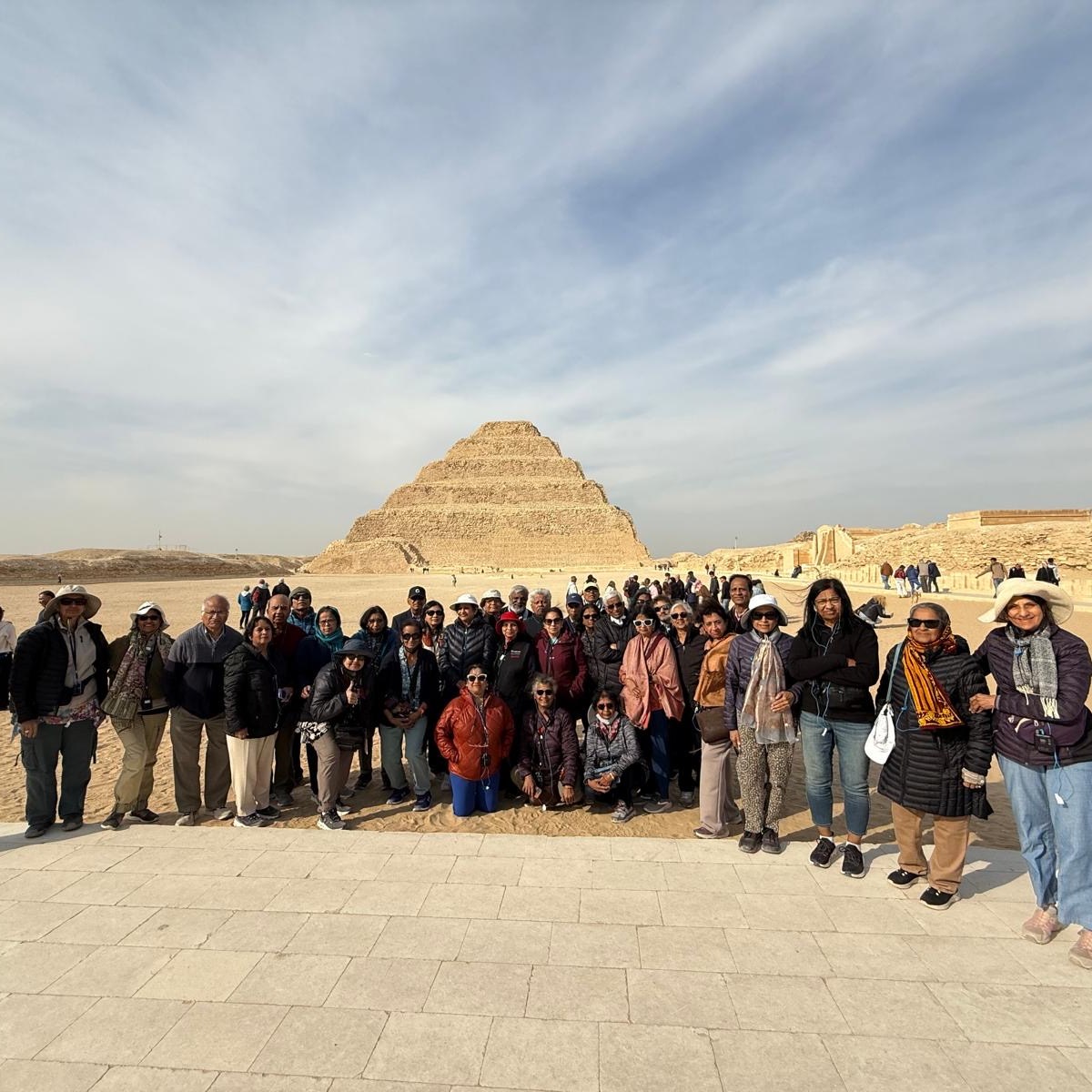

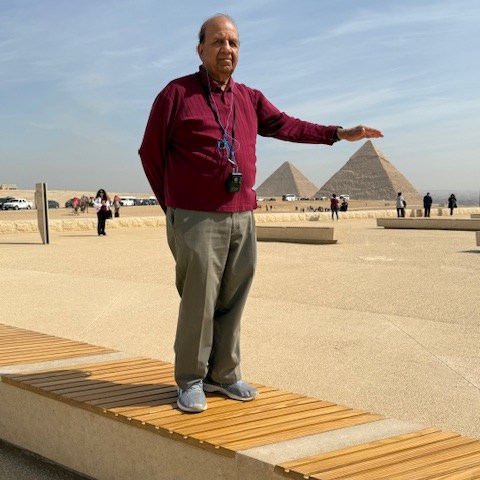
The step pyramid at Saqqara Sphinx and a pyramid “Look how small it is!”
Here I have to mention that we were taken to a showroom with original papyrus paintings and a demonstration of how papyrus leaves are processed and preserved. Other visits to alabaster showrooms and essential oils processing plants and sales had been sort of lukewarm so far as the shopping was concerned. But at the papyrus place, everyone went gung-ho! Firstly this art is unique to Egypt and details on the artwork was pretty amazing. Secondly, it was easily transportable being packed well in cardboard cylinders. Finally, it was a trophy that could be displayed on our living room walls, something that was sure to prompt a conversation that started with “you visited Egypt?!” Almost everyone bought something (the prices were reasonable too, depending on the size and intricacy). Those into painting also bought some blank papyrus to try their own skills back home. A marvelous demonstration of how the papyrus stalks are converted to a sheet was also given, taking us through the process of stripping, soaking, rolling, drying in a press and finally a ready sheet that had undergone some days in the press was shown. Yes, we were given extra time to complete our shopping! Quite close by was Cotton world, a T-shirt paradise made with high quality Egyptian cotton, was also of great attraction for our group, shopping for kids and grandkids! Items were bought by the dozens! Finally we were given the opportunity to go to a bazaar and complete shopping for items left out or last minute gifts. This was the Khan el Khaleli bazaar and literally had everything from A to Z. During the day we were also taken to the familiar restaurants on the Nile that provided us with simple vegetarian fare with pitas. The only shortcoming of the tour was no Indian food!
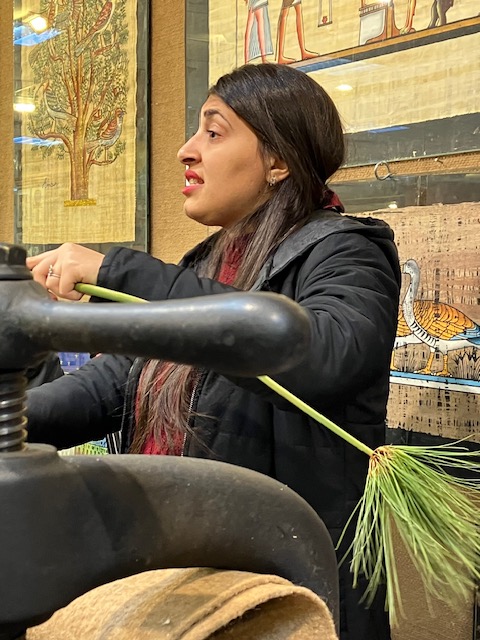
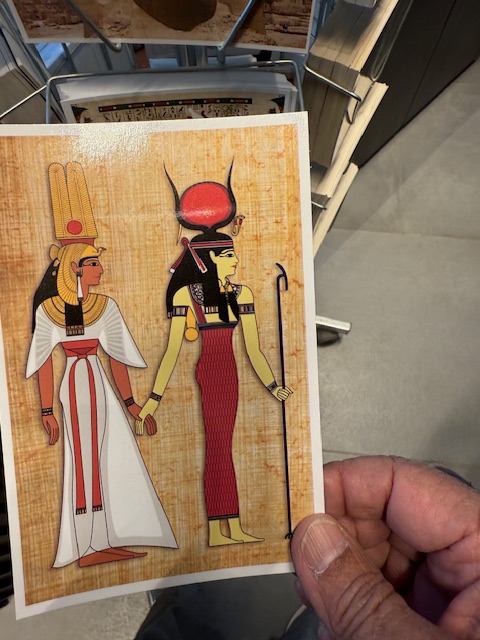

Some random interesting facts: In the tombs, pharaohs were buried with countless amulets, artifacts of gold and precious stones, even mummified pets. The priests decided what would work for that individual soul. The roof of the tomb above the sarcophagus was painted with stars and there were passages where the soul could wander in before its departure! Not all pyramids were perfect, there is one known as the crooked pyramid!
So to conclude Egypt is a “must see” destination with grand sights, a relaxing river cruise and friendly people.
(Pictures courtesy of R. Shankar, S. Shankar and friends on the tour — please click on each pic to expand and view details)
 travelswithshamla