China — A Visit to Remember

Visit to China, Tibet and Japan

Part 1


Sep/Oct 2016
P1010014

Our visit to China, Tibet and Japan concluding with a tour of Hong Kong lasted exactly one month!   People asked me how we were ever going to live out of suitcases and move from place to place for that long!   We ourselves were wondering about this. But the visit went off almost seamlessly and we enjoyed every moment!   The “almost” will be reserved for the adventure we had prior to landing in Tibet which will be shared later.   But thanks to the superb arrangements by Lakshmi Travels, we had a wonderful time.

Normally I like to give a somewhat detailed description of all that we saw, but to do so this time would almost result in a book!   So in the interest of holding the reader’s interest, I have to reluctantly keep it brief, highlighting only the anecdotes that will make it more personal for my fellow travelers and readers.   Suffice here to say that China was amazing in many ways.   I had been turning a cold shoulder toward this magnificent country, thinking that all it had was a wall and a great square.   But I was soooo wrong!   The places, the people, the discipline, all impressed our whole group deeply.   As we made our way through the country seeing destinations that were not always visited by the average tourist, our amazement grew and looking back at the pictures we took, we can only conclude that it is definitely a “bucket list” country to see.  And guess what?  We did not have to reset our watches, the time difference was exactly 12 hours from EST.

As has been commonly done before, our wonderful group converged from various parts of the US and met at our final starting point of Beijing.   Our smaller group from Newark travelled via Hong Kong.  Made sense as we returned home after visiting Hong Kong.   The journey was long, but Cathay Pacific was a wonderful airline to travel on.   As it was not peak rush either, we could spread out a little and did not feel packed in like sheep!  Eventually we arrived in Beijing and were met by a local English speaking Chinese guide as well as our super efficient Tour Guide, Amita Suvarna from Thomas Cook.   She stayed with us all the way including our Tibet tour and returned with us to Shanghai.    Our Chinese guide, (usually local guides met us in each town, they were all friendly and well informed) gave us a glimpse of what young people have to deal with in China.   Housing affordability in cities was very difficult, to own a car license plate one had to enter a lottery and even with marriage, it was a matter of “no money, no honey!”   We had dinner at the local Taj Indian restaurant and were pleasantly surprised to find some South Indian items like sambar and rasam, no doubt ordered for our group!

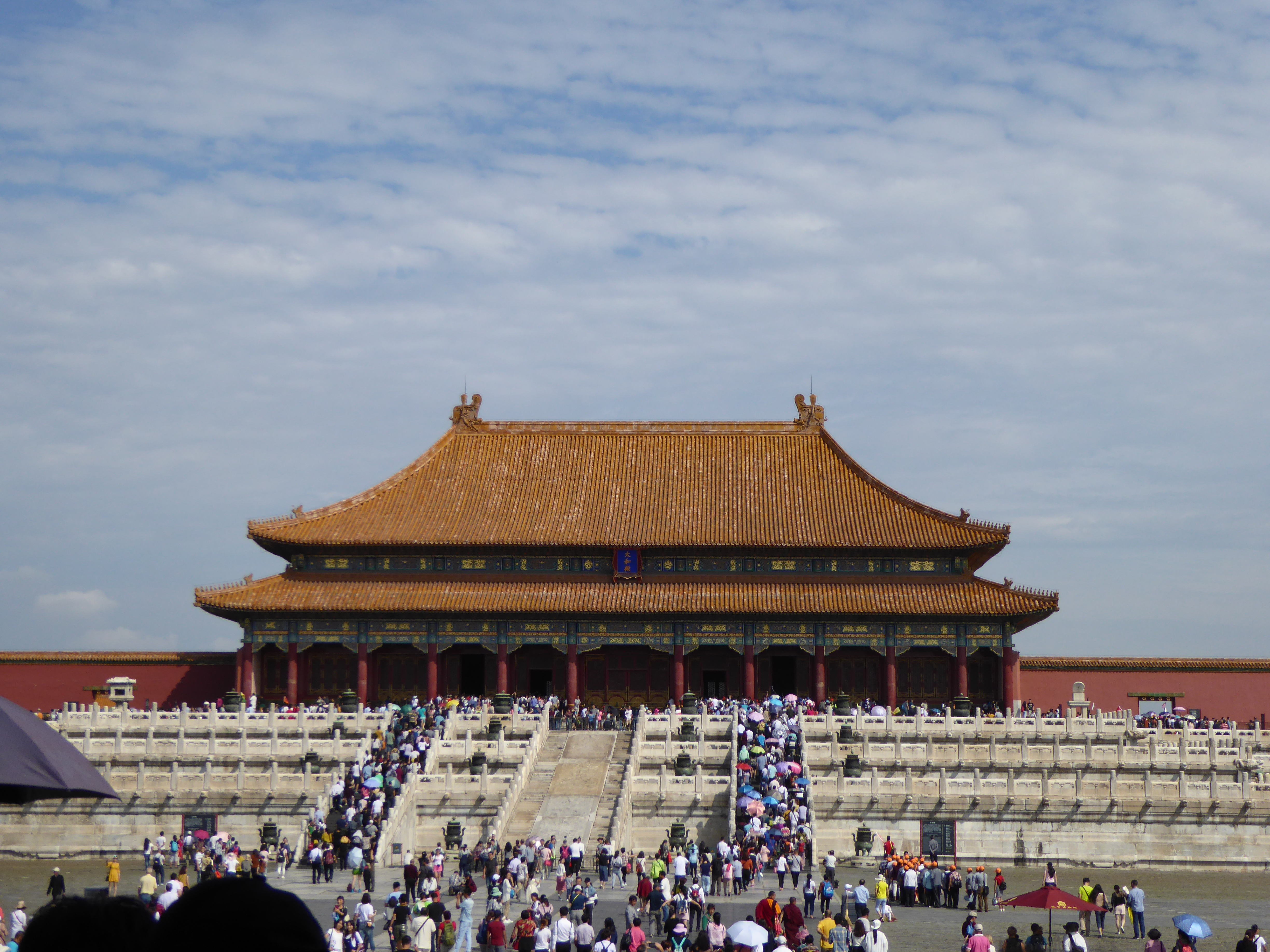
After a nice breakfast at the beautiful hotel we stayed at (definitely these luxury hotels, four stars and above, eased the pinpricks of travel!) we were ready for our first big day of sightseeing.   It was Beijing’s best.  The weather co-operated, providing us with sunshine and warmth, though it was fall.  The Forbidden City was the first stop.  In the olden days circa 1406-1420 when it was built, only the royals were allowed to reside here and the city was forbidden to commoners, other than those who served.  It is one of the largest wooden structures to be built anywhere in the world.  In the reign of the Ming dynasty, it was the seat of power for 24 emperors over the course of 491 years.  Official business was carried out in its huge courtyards and buildings.  The yellow and red colors, meticulously maintained,  had eye appeal while the courtyards beyond endless courtyards provided as with good exercise and the sights kept us wonderstruck and entertained.   The inner courts included former residences of royalty and commoners serving the Emperors.   As each one was allowed to have up to 3,000 wives or concubines, the population housed within was high.    However no one lives here now and parts have been converted to a museum containing beautiful artifacts, but we did not have the time to see this.  We did catch views of thrones in cordoned off rooms and could have an idea of the opulence of that era.  Among the impressive sights were the Gate of the Heavenly Purity and layer after layer of buildings, gates and squares.   The entire area was spotless, not a single store or vendor in sight.   Just walking through all the gates, climbing each higher level and ultimately being rewarded with a grand view of the surrounding mountains was exercise as well as entertainment for the morning!

Tian’an Men Square
img_2001Next the iconic Tian’an Men Square (this is the official spelling!).  Probably the largest in the world, it has a central commemorative monument.  We were told about a 100,000 people can fit here.  This was the historical place where protest was voiced but immediately silenced in the distant past.   We walked around, admiring the symmetry of the gardens with splashes of color, the buildings around and  appreciating the statues of the common men and women of the people’s republic  at one end.  The Gate of Heavenly Peace of the Forbidden City was at the other end.   The next day as we headed for the Great Wall, all traffic came to a halt near the Tian’an Men Square —  there was the ceremonial changing of guards and groups of working people and children in school uniform, had taken time out to pay homage.

The Great Wall of China 

The Great Wall of China!    This is what most people go to China to see and experience and I have heard this is visible even from outer space.   Snaking over the hilly terrain for over five thousand  miles, even a small section is a stupendous sight.  The first section was built as far back as 221 BC and many dynasties continued to build it for protection. Around Beijing there are many locations to view and climb the wall and we were taken to a spot that was not the easiest, it appeared.   Perhaps the tour gave us credit for our fitness level!  It was known as the Juyongguan pass section.   Many of us were able to do the steep climb for part of the way and a few, notably those from Canada, went much further up and only returned in the interest of time!  Our tour leader rewarded each of us with a medal souvenir with date and name inscribed.   Being a world icon, maintenance work is constantly done on the wall.

The same day we took in the Summer Palace gardens.   The palace itself was not open to the public but we had a pleasant walk around part of the huge lake near it.  On the way back to our hotel, a detour was made to give a view of the “Bird’s nest” structure that became the focus of the Olympics that China had hosted in the not so distant past.    We also had the opportunity to have great seats and witness the lush and beautiful Golden Mask Dynasty show during our brief stay in Beijing.

Bullet Train, Shaolin Monastery

Having heard a lot about bullet trains, we were excited to board one for Zhengzhou the next morning.   But no one had told us that people bring minimum luggage!   With our full sized suitcase and one bulging carry on, it was quite a miracle that we made it on and off that speedy train.   Our men (husbands) were amazing in packing in all the luggage in the small area provided and in the overhead shelf.   Further the conductor created more space by having seats face each other and sliding smaller bags between the rows.   The train was so sleek and its (other) passengers so disciplined.   Our group of course created the initial excitement of loud comments, exchange of snacks and general commotion (this is what Indians do that makes us so unique!)   Once we settled down to some degree of order, we noticed how quiet the train was, how imperceptible the super speeds upwards of 300 km per hour and how quiet and orderly the local Chinese were!  It was a great experience and we also heard that a bullet train will soon be part of the travel routine in India!

img_2111img_2072

The Shaolin temple in a beautiful mountain setting of the Shaohi mountains was a lovely rural escape after the city sojourn in Beijing.   This was the birthplace of Kung Fu and even today thousands of young boys, dressed in various colored uniforms get trained in the martial art.   Some even reside there for the course.   The complex was so huge, it was divided into several parts that we had to use their transport system to get from one area to another.   The monks also cooked us a fabulous Chinese vegetarian meal.   Incidentally, most Buddhist monks are vegetarians.   One small branch of monks, due to non availability of food had to turn to meat and that tradition has continued.   The lunch was delicious, course upon course of fresh and lightly cooked vegetables and rice.   The eggplant was so good, almost like our own South Indian curry,  that we had to place a repeat order!  We consumed every delectable bite.

The temple itself was in several levels and individual halls set on the mountain slopes.   Originally built in 1928, it was burnt in a fire and rebuilt in the 1980s.   Many original parts remained, including the topmost hall where Kung Fu was born.   The original floors, still with dimples and pits caused by the hours of practice remains as a silent witness over the decades.   Here we heard so many beautiful Buddhist legends.   The Shakya Muni (Buddha is often referred to in this way in China) who was born in India could walk and talk as a baby and  when he took little steps, a lotus appeared for each step!   We too walked on the seven stone lotus flowers on the ground for good luck.  We put our hand into the mouth of the turtle with a dragon head to get rich!  We heard there are usually three depicted Buddhas, including a Medicine Buddha and we found this in many temples.  We saw a room which was an age old library.   But the most beautiful legend was that of the Standing In Snow, Prevailing,  pavilion.  This involved an a monk named Damu of Indian origin.  He had many students but he did not share his deepest secrets with all.   He had one devoted student who wished to learn everything from him.   After serving for nine years, he approached his guru, but was turned back.  He was told something like he would be taught only when the snow turned red!  So one day, the student stood out in the snow and cut off his left arm till he bled on the white snow.  The master was so touched that he immediately taught him everything and and to this day only the right hand is used to salute the seniors.  His name was Kui Koh.

We then watched with wonder and a little amusement a Kung Fu demonstration when one of our own group, Dr. Ram, volunteered to participate and was declared the most sporting volunteer.  Congrats Ram!  Our comfortable couch then took us to Louyang for our overnight stay.   How lucky we were to get a glimpse of rural China and the old world monastery where young minds and bodies are still being shaped to combat the effects of the fast pace of the modern world where  children are mostly glued to their electronic “screens”.   Tradition that is handed over to the next generation for safe keeping!
img_2180

img_2210img_2170

Fabulous Longman Caves, Gifts from Across the Globe

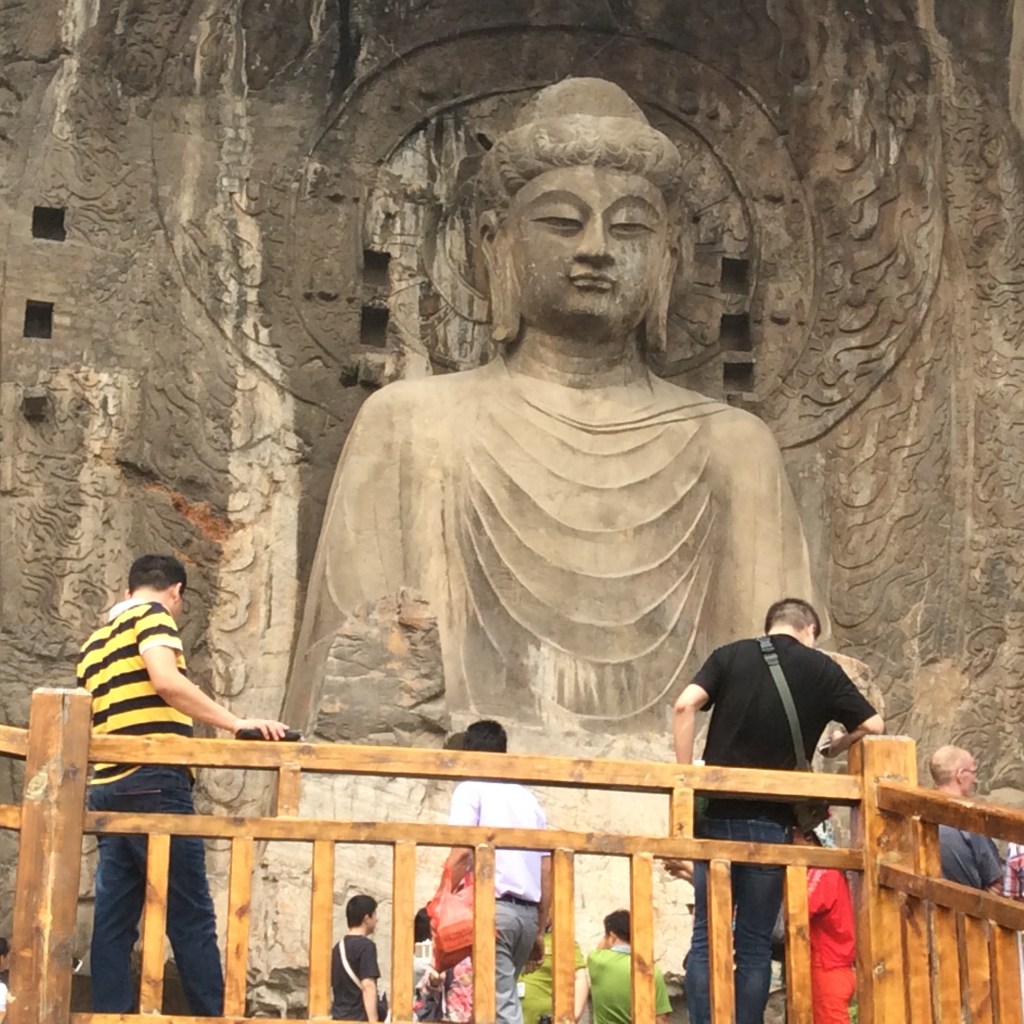
Our next day of sightseeing unfolded many more wondrous sights and legends.  All along we were also blessed with gorgeous sunny, warm weather.   The gods smiled on us!  This day we visited the world heritage Longmen Caves and then the White Horse temple.   The  grottos left us speechless.   There are estimated to be over a thousand caves, small and big.  Most of us have never seen such beautiful, extensive or huge carvings of Buddha and his disciples right on the mountainside, one cave after another.   Carved right out of the limestone cliffs, the heritage of many dynasties, they are surprisingly well preserved.   We had to climb steps to get to some of the carvings but many could be viewed from ground level as well.  Only photos can somewhat give a clue as to the magnitude of the edifices, but certainly we were all wonderstruck.  The Buddhas had peaceful and beautiful expressions, some we were told, deliberately made to look feminine.  Very reminiscent of Ajanta and Ellora caves which also feature Buddha a lot.  Later we crossed a bridge and enjoyed the panoramic view from the other side.

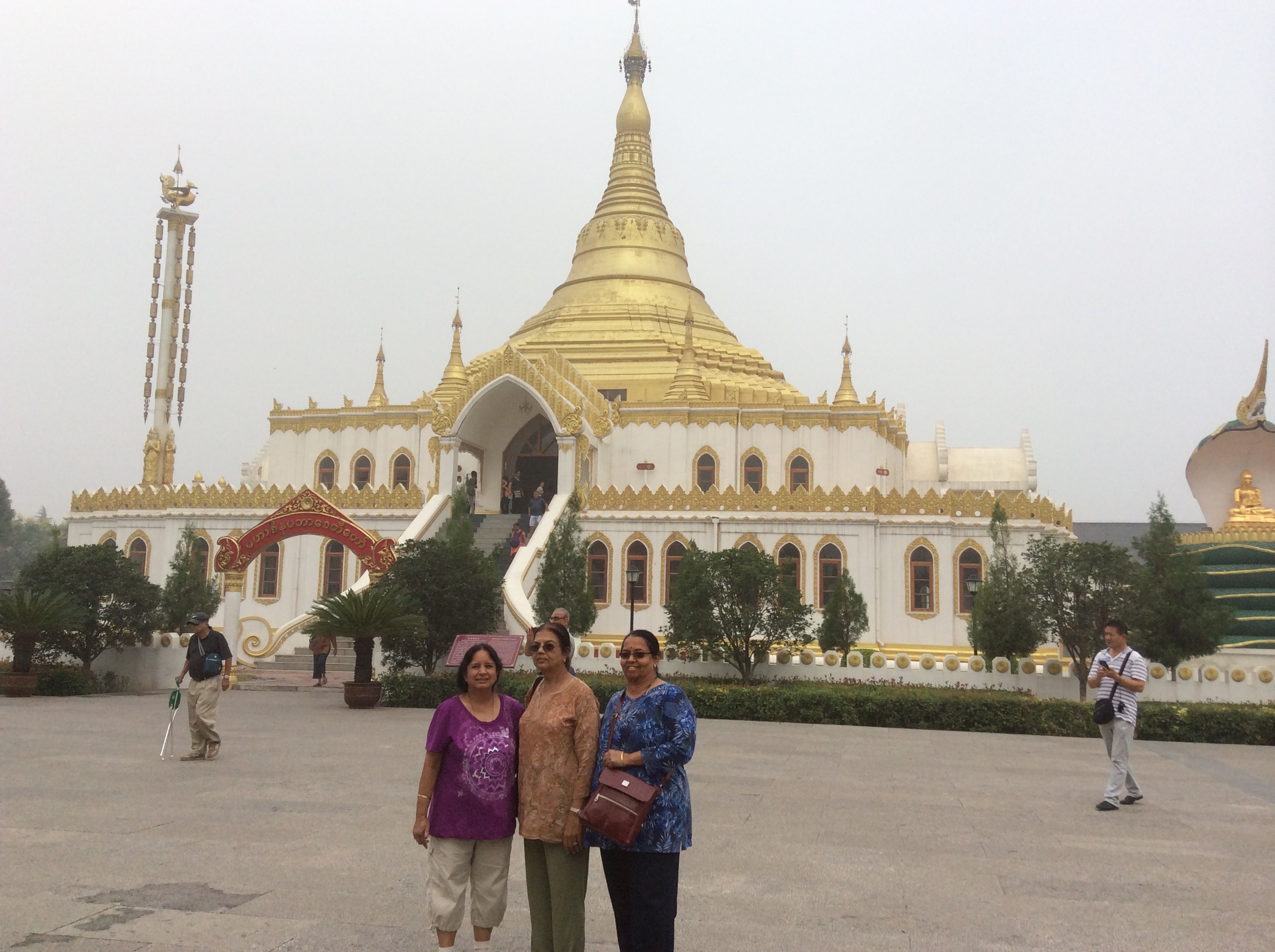
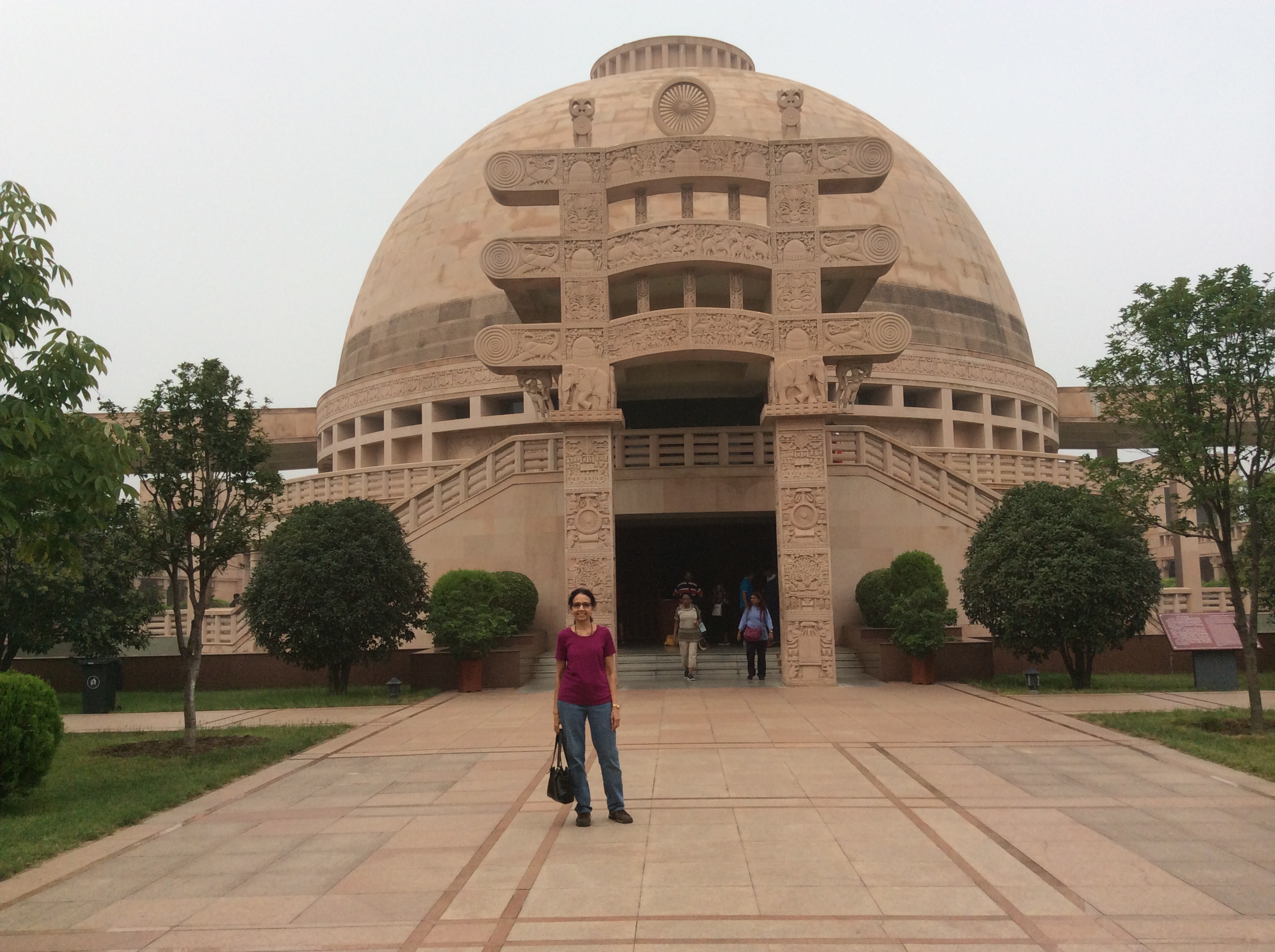
The White Horse temple, also from ancient times, started with a dream by an emperor.  When he attempted to fulfill this, he met two Indian monks from Afghanistan who were invited to China and they travelled on two white horses.  The temple was then built depicting Shakya Muni, (another name for Buddha) his disciples, Bodhisattvas and Arahants.   The Laughing or Smiling Buddha which is the Buddha of the future, is also included at most monasteries and Buddhist temples.  The art work of hollow clay statues is also a special technique of this area.   Impressed as we were by the artistry of bygone days, we were in for another pleasant surprise from modern days – the huge complex had many temples gifted by different countries, including India.   The Buddhist temple from Thailand, resplendent in gold and enamel was gorgeous as were some of the other temples.   From India was an elegant  Stupa style architecture, similar to ones found in Sanchi, Madhya Pradesh that some of us had seen.   Each had its own courtyard and garden complex, one could spend an entire day there soaking in the peace and quiet ambiance.
img_2136img_2147

Terracotta Warriors, Yangtze River Cruise

 Our next big destination was the yet again famous Terracotta warriors of Xian and our fabulous Yangtze River Cruise.  But let”s take a breather here and continue in our next installment.   There is only so much that can sink in within one write-up!   Throughout China we loved the simple scenery be it agricultural fields or mountains shrouded in clouds.   However the rustic homes that had been the mainstay for centuries have now been replaced with multitudes of very high apartment buildings looking quite incongruous in the pastoral scenery!  Some are used for relocations and others simply to generate rent, which we were told were very high, especially in towns. Many looked unoccupied.   The land is always owned by the government and a 75 year lease is on even ownership abodes.  After the given period expires, no one is sure what may happen.

Vegetarian Food in China

We must comment on the food!  First of all, the Indian restaurants are doing amazing jobs, springing up in the remotest little towns!   The food is delicious!  Perhaps the group tourist stream keeps them in business.  As for Chinese food, that was good too.    But it took some practice to get used to the serving method!   We each got plates a little bigger than a saucer with a soup bowl.   The vegetables, deliciously sautéed, arrived in batches.   The soup was usually watery!  The rice came at the end!  We had to beg for extra salt and chilly powder, given our Indian palates.   The chutney and puliogare powders we had taken were also greatly utilized.   Soon we learned the tricks and our tour manager arranged for the condiments and rice to be provided in the first round!   We survived and to our great delight and surprise, none of the eateries had any lingering smell of seafood and all was very neat and good.   Thanks to our travel agents for taking us to such good places, for providing us with superb tour managers like Amita in China and Aditi in Japan. Also for providing us with bottles of water.   The hotels did too, so we were always plentifully supplied and never had to buy any.  


Australia Down Under

Visit to NZ, Fiji and Australia  Part 3 

April 2015

1-P1000619

Just the final leg of the journey remained now and we were very refreshed after a couple of days in Fiji.   At the airport, however, Fiji airlines gave us a hard time.   Trying to fit in the hand baggage into a seemingly tiny box was a skill that has to be learned.   Even if the dimensions are perfect, the wheels did tend to get stuck.   Forget about overloaded bags, people had to literally dump clothing in the garbage to conform.

We headed for Melbourne first and our drive from the airport to the hotel was not that impressive.   However, the city showed its real character on the following day when  we were taken to view some of its famous landmarks.   We indeed had a full day of sight-seeing planned and all of it was very exciting.  We checked out from outside the imposing Parliament House, the financial district and were able to go into the bluestone cathedral of the St. Patrick’s church.   As with many other churches all over the world that were built several centuries ago and well preserved, we were impressed with the  beauty and serenity inside the edifice.  The next stop was Pitroy Gardens which was unique by way of the pathways converging in the shape of the Union Jack.   Captain Cook, that world traveler was also immortalized with his re-assembled cottage on view, some locals dressed in authentic period costumes adding to the charm.

The star of the show of course was the Melbourne Cricket Club, the famous MCC.    If you can believe that a non-sports enthusiast like me could be highly impressed, it has to be something!   As for the husbands who had been waiting to savor this visit, there was no disappointment.   We had a detailed tour and possibly saw every inch of the huge space, with a most enthusiastic guide, all dressed up in a striped blazer!  Okay, some hard facts – there is a 20 year wait for the club membership and the yearly charges around $650 we were told.   Many privileges go with membership including use of the enclosed viewing  galleries where no doubt white gloved waiters serve dainty sandwiches!  The audience capacity is 100,000 and believe it or not, every year the pitch which rests on a concrete slab with several inches of mud under it, is physically removed by a flat bed truck and stored.   This is so that other users of the arena do not ruin it with rough sports.   To keep the grass green on the other side where the sun does not quite reach,  special lamps are used!   And if you wonder why the Australians are so good, their practice areas are complete with every convenience and technology, even imitating the pitch of world players.   Promising young players of school age are given opportunities to practice in indoor areas at the MCC.   Our group spent quite a bit of time inspecting the names and statistics engraved on the World Cup boards, savoring all the Indian names.

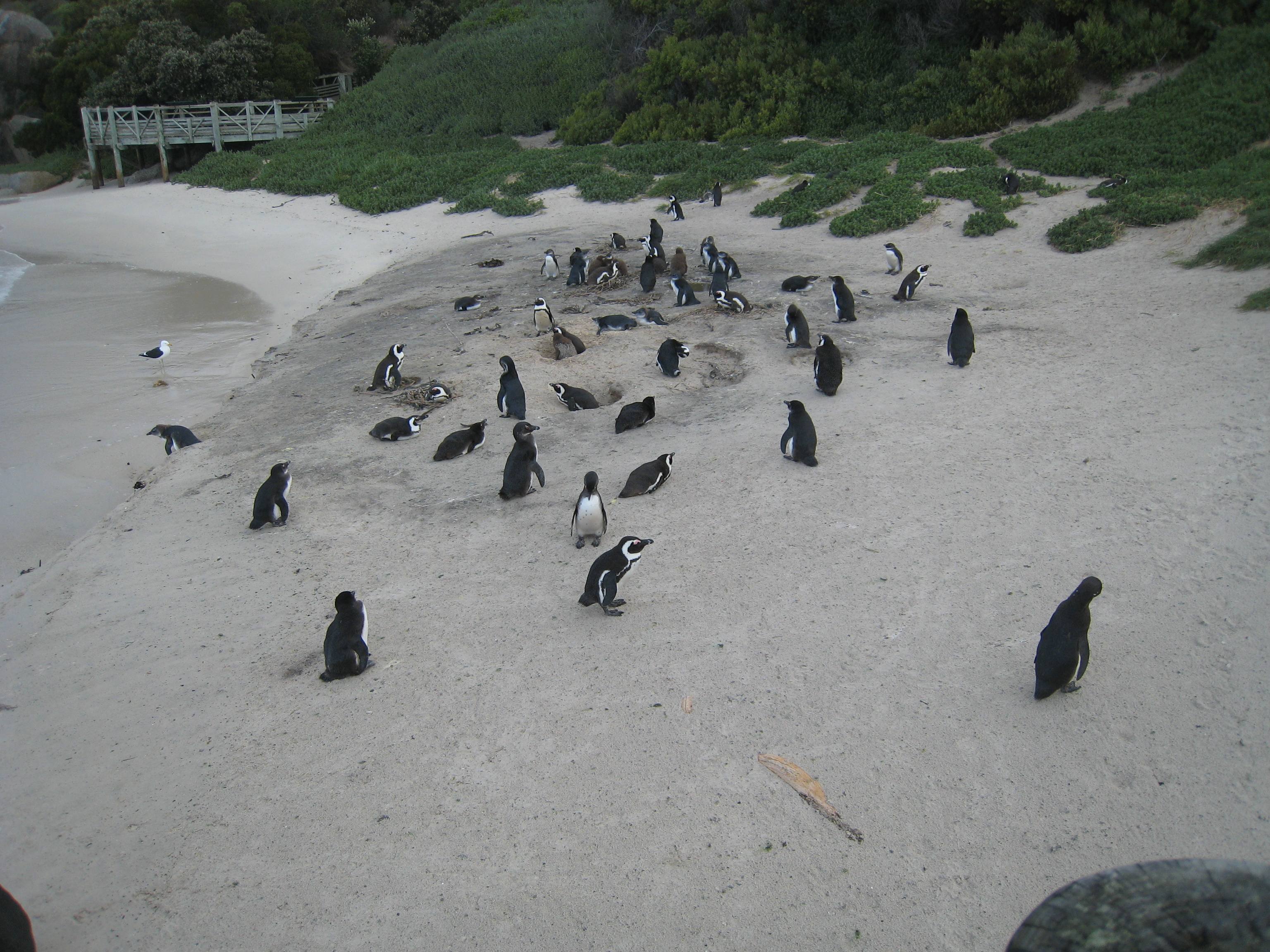
So much so, we could only pass by the Rod Laver arena where the Australian Open is played.  It comprises of 22 tennis courts we were told.   We were driven to see the beautiful park and monument of the Shrine of Remembrance honoring all those who died in various wars.   Hundreds of beautiful medals on colorful ribbons were displayed in glass cases along with other memorabilia.   We had been Down Under for so long and still not seen a koala or kangaroo up close and that desire was fulfilled finally when we visited the Koala conservation center where we viewed the cuddly animals perched on tree tops in their natural habitat.    We could film them as they slowly walked up and down the branches.   Slow yes, but considering they sleep 18 hours a day, we were lucky to see any movement!  They do look a little funny with no tails, as such.  Wallabies, somewhat related to kangaroos  and similar looking, were also there  behind a simple fence and we could see and appreciate their hops.  This was a good place to pick up some stuffed animal souvenirs and contribute to the conservation center at the same time and we all did.   We had also opted to view some tiny penguins and found out that after a long drive to the Philip Island beach, we had to sit quietly on the bleachers for over an hour.  We were told the penguins came home after dark when danger from predators was less.  While we expected about a thousand  to waddle out of the ocean (on some days the statistic was for 1,400), on that specific day we may have seen a few hundred in small groups of about 10-20. A bit disappointing!  No photography was allowed either!  However, on our  way out as we walked over the wooden boardwalks, the little ones were below us, chirping and making their way to their own nests in the sand dune burrows.  The diminutive penguins, less than a foot tall,  were cute and inquisitive, not afraid to stop and stare at us as we did at them.

IMG_1279

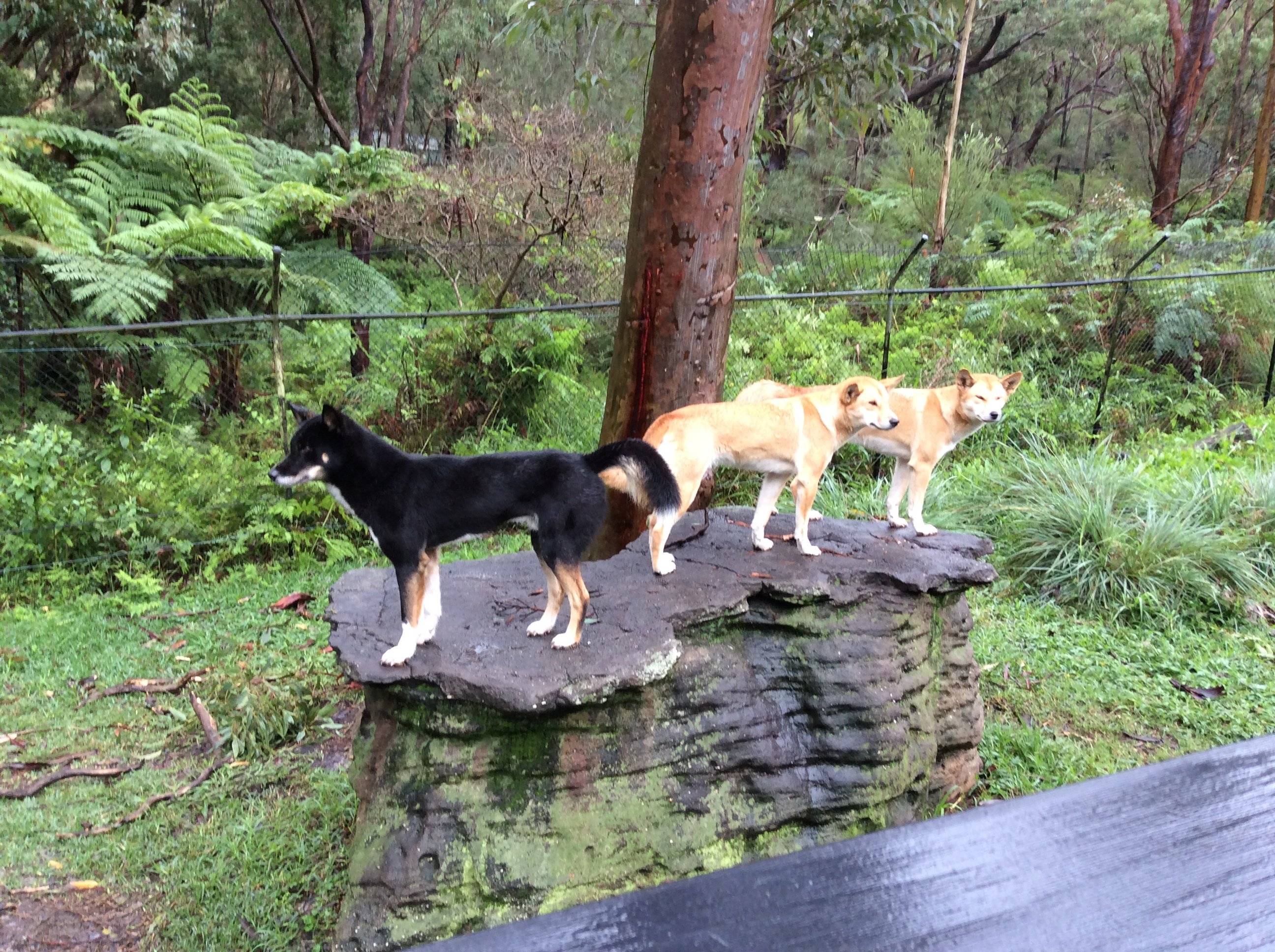
Animals unique to Australia — Koala, Kangaroo, Kookaburra, Dingos,  

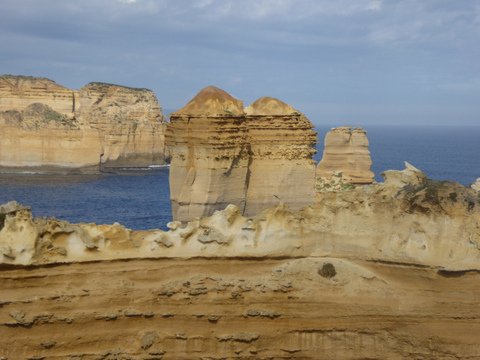
The next morning we were refreshed and ready for another adventure, which of course (what else is new?) involved a long bus ride!   But this time the scenery along the Great Ocean Road was breathtaking at every bend and honestly I can give my opinion that I will remember Australia not by its Great Barrier Reef, but by the spectacular sandstone formations along this coast and the famous Twelve Apostles. It is not to be missed! We were told by our driver/ guide that the road itself was built by soldiers.   The rocky coastline, the picturesque seaside towns and the true blue sea, not turquoise, gave us a different flavor of Australia.  With a stop for a simple lunch and a little browsing at a seaside small town store for snacks, we were ready to move onwards.   Soon we were at the rock formations., overlooking the sea and the “apostles”.   These are natural rock formations, actually the sea has created them by whittling away the soft stone.   Reminded one of the twelve apostle peaks in Cape Town.   Only eight remain now in Australia, others having collapsed into the sea.   So this is a sight that may not last forever.   We were lucky to have seen them, they were very inspiring.  From our vantage point, it was fascinating to see the layers of rock and the ocean darting in and out, playing with the cliff along the coast, sculpting with a mind of its own.   We walked around a bit, admiring this fascinating feature.  They had cute names too, like “salt and pepper” and did look like giant shakers.

3-P1000621

Spectacular Formations in the Ocean, Helicopter Ride views

A short drive brought us to the Port Campbell National Park area where,  to our delight we found that there was a helicopter ride for a reasonable rate.   Everyone opted to go and it was also one of the best decisions we made.   The ride, though only about 10 mins gave us a totally different perspective.  We were taken out to the sea and could view the etched stone edifices along the coast.   It was beautiful!  We then made a smooth landing after passing over some green meadows and sheep.  Our only regret was that having driven all that distance, we could only spend a short time there.  We even missed walking down to the beach and viewing some of the formations up close due to time constraints.  Port Campbell is certainly worth a stay over.

Cairns was the next destination which was but a short flight away.   Having reached, we went straight to the Kuranda rain forest area and up the steep mountain in the sky rail.   The view was spectacular and the rain forest mountain very impressive with its flora and fauna and rare plants.   We were even allowed to make stops to walk around and view the waterfalls.   We had expected a demo of aborigine skills like throwing a boomerang, but at our destination all we found was a  gift shop.   The aborigines are to be found only in the interior of Australia.  Our hotel was facing a very large lake with ample walkways along it and we were able to exercise our legs and enjoy the bird action taking place!

The Great Barrier Reef

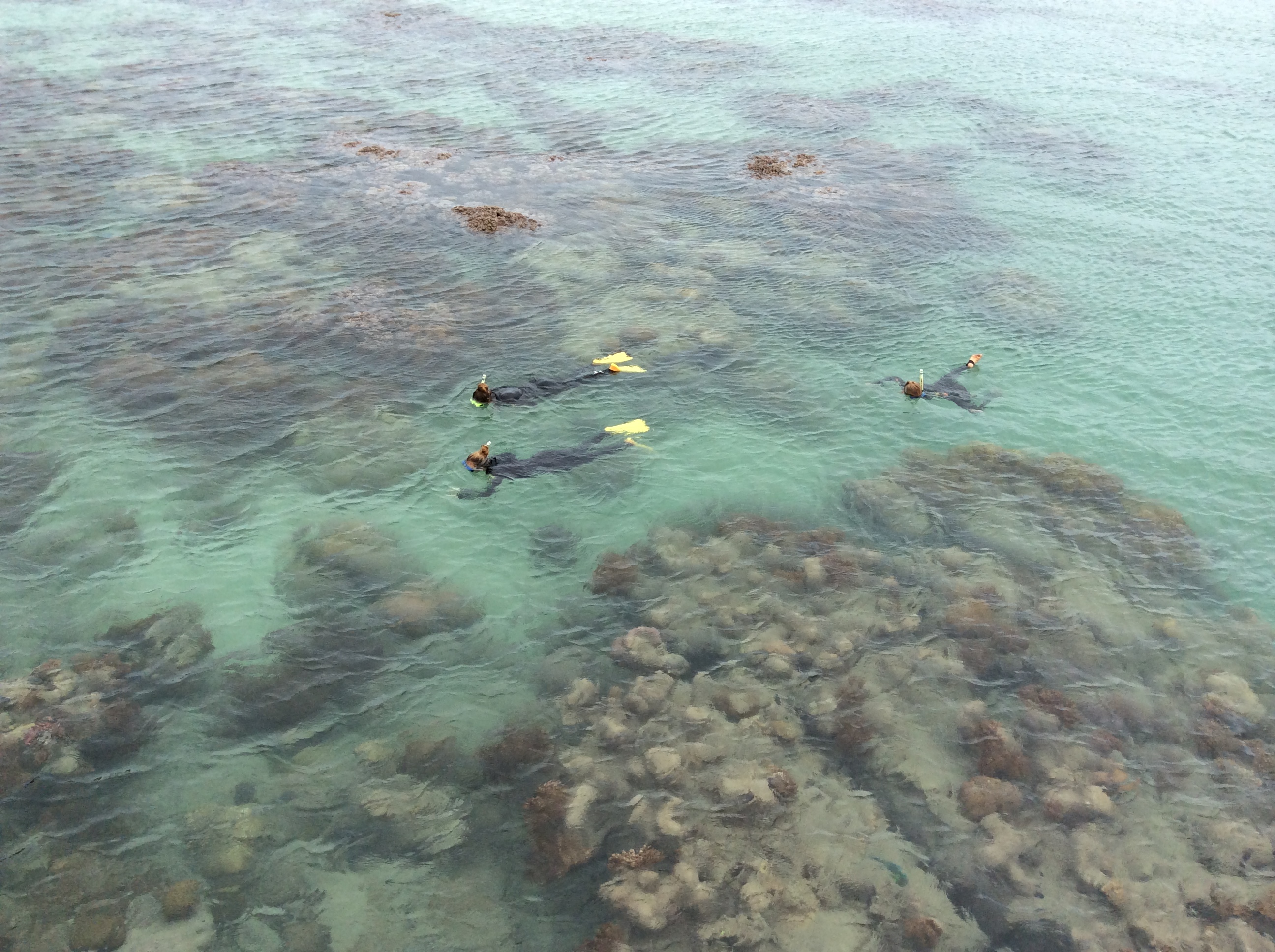
Now the Great Barrier Reef  may be listed as the only living structure visible from the moon but what we saw (or were shown) seemed fairly tame.   Though none from our group did scuba diving, many did take the semi submerged submarine ride and all of us the glass bottom boat ride after taking a stomach churning speedboat ride to an island and reaching the “edge of the continental shelf”, we could only view very little of the exotic corals or sea life.   I mean there was plenty of coral formations, only not that colorful or impressive, pretty similar to what we had seen before in Fiji or say, Aruba.   Later at the Sydney aquarium we saw samples of the real deal and said to ourselves, “oh, that’s what it must have been like or must still be on some parts of the ocean floor.”    In the evening we drove over to the Cairns night market and did some precious stone and silver jewelry shopping.   Very nice kiosks, set up like an indoor flea market.   The Indian dinners continued to follow us in every town,  actually we should not be complaining but be thankful that we did not have to experiment tasting local vegetarian fare which may  have been hardly palatable.   Indian restaurants both in NZ and Australia were well above standard, providing predictable, but tasty food.

IMG_1085

Sydney, a beautiful city, the famed Opera House

Sydney was our last stop of the Australian tour and provided plenty of activity.   It is a beautiful city and the Darling Harbor area which houses the Opera House has everything from a wax museum to a full fledged zoo and aquarium.  We started our stay with a showboat dinner cruise which gave beautiful views of the Harbor Bridge, Opera House and night skyline.   We also had great entertainment on board, including a Bollywood number performed by their locals!  After a restful night, we woke up to a perfect morning for viewing the sights.  Starting with The Rocks area which gave us views of the bridge and opera house across the water, ideal for pictures.  We were taken up the Sydney Tower, a very tall structure giving us panoramic views.   However, the activities at the Darling harbor were extremely rushed and as everything closed at 6 p.m most of us could do only two out of three activities and had to skip either the wax museum or the aquarium.   The animal exhibits in the Wildlife World zoo we all loved, being able to see many unique natives like koalas, wallabies and kangaroos and birds unique to the region like the Kookaburra.   Some in our group could even feed or pet the kangaroos.

The Opera House itself was nothing short of amazing, its history and story of how it was built even more so.  It was designed by a Danish architect, Jorn Utzon,  but due to the vicissitudes of fortunes, he worked on it off and on and was not in charge at the end and  never able to see the completed project.  In 1955 there was a worldwide competition to select the architect.   His “sublime masterpiece” was viewed by many as a white elephant that could never be successfully built.  But suffice to say, after 350,00 man hours and over ten years in the making, built at a cost of $102 million Australian currency,  it was finally inaugurated by Queen Elizabeth in 1973.  By this time Utzon had resigned and refused to come back, though invited and he was awarded a gold medal.    Looking beautiful like the wings of a sail or the petals of a white lotus, only a close look can reveal its multitude of secrets, like the triple glazed off- white ceramic tiles coating its wings which came from Sweden, its lovely glass windows from France.   The inside did not disappoint either.   There are so many beautiful auditoriums allowing several shows to go on at the same time, a royal purple carpet lining its foyers.  The wood floors and walls in some of the halls provide awe inspiring acoustics we were told.  It is built to last, huge, a modern day wonder and using Danish simplicity and clean lines. This is the 40th anniversary of its completion – check out 40 interesting facts about it on the internet. Definitely worth seeing in person.

Port Stephens and Sand Dunes

To give us a break from city sights, we were scheduled for a bus trip to Port Stephens.   On the way we saw some interesting specimens of snakes, small alligators and even tarantulas  at the Reptile Park.  For the first time we saw some Dingoes which really looked like friendly dogs with their wagging tails.   Our run with good weather seemed to be nearing an end and light rain followed us on and off.  The next morning after a lunch on board a large boat, we were taken for a dolphin sighting ride.   We did see a few that seemed to be trained to follow the boat, but not too many otherwise!  Next morning we only got a glimpse of the sand dune adventure in Stockton promised to us,  due to rain.   We were taken to one of the largest moving sand dune beaches in the world over 32 km long and 2.5 km at its widest.  The clean sand, constantly shifting, had been sculpted into huge mountains.   Youngsters were actually enjoying sandboarding.    The ride in the 4 x 4 vehicles was heart stopping too as it climbed over the steep dunes.  We spent a few moments by the ocean as well, braving stiff winds.

Back in Sydney we did our last minute shopping of candied ginger (delicious!), chocolates and believe it or not, tomato soup packets which had been a light and  tasty treat when we played truant from our Indian dinner!   The weather was turning worse (heaviest rain in a decade) and at the airport we found our flight had been cancelled but thankfully we were transferred to a Qantas flight!   The service on it was great and after some inconvenience at LA where we had to drag our baggage to another terminal along the sidewalks, book on another connecting flight, we finally made it back home.   Now, looking back, it all seems like a dream, but so is every experience in life after a lapse of time.   Sweet Dreams!


New Zealand and Fiji, A study in Contrast

Visit to NZ, Fiji and Australia, April 2015

Part 2

8-IMG_0736            

          Back to Auckland by bus and after a refreshing night’s sleep, we were ready for the next leg of our adventure.   We reached the airport early and let our guide assist us in the strict rules of baggage check in.   We did have a few anxious moments when we found that our group leader Lakshmi had inadvertently booked her flight for a wrong date.   Luckily a few seats were available for the short hop to our destination and after some anxious wait time, it was all done to our satisfaction.

Dunedin, Baldwin Street, steepest in the world

It was a short flight to Dunedin and just half an hour to drive into town.  It is a town with a Scottish background and the third largest city in New Zealand. For all that it was  low key and quiet.    As at other airports, we found that the tourist buses here are not that big at all.   In fact there is always a trailer for the luggage and the driver has to be really smart in fitting in all the luggage.   Some smaller  pieces had to be stored inside the bus.    The driver, Mark was the total opposite of our North island driver and was very quiet.   But he stayed with us the entire the trip and we went everywhere by bus – proved to be a very helpful and accommodative gentleman.   Some of us enjoyed the peace and quiet while others were having withdrawal symptoms after hearing the other driver talk non-stop!   We found Dunedin to be a student town too.


Our first stop was the steepest road in the world, we were told, the Baldwin street.   Standing at the base, we could view the entire road going up at a very steep angle.   The adventurous one did the climb (thankfully there were steps and partial railings on the side, otherwise we would have surely tumbled!)   The view from the top was just great, we also got a free stress test for our hearts and could feel proud that we did it.   After that we settled in for our long drive to Queensland with  a stop along the way to see a produce shed and to enjoy the lovely rose garden behind it.    The south island scenery was already different, but we were to experience its ruggedness the next day.   We enjoyed an Indian dinner again, the items were similar but tasty and proceeded for our night at the hotel.   Hotels in NZ were quite good, although the free Wi Fi they promised often did not work or we had to be in the lobby to avail of it.  Sometimes it was best to pay and get better service.

Rugged Scenery of South New Zealand and Milford Sound

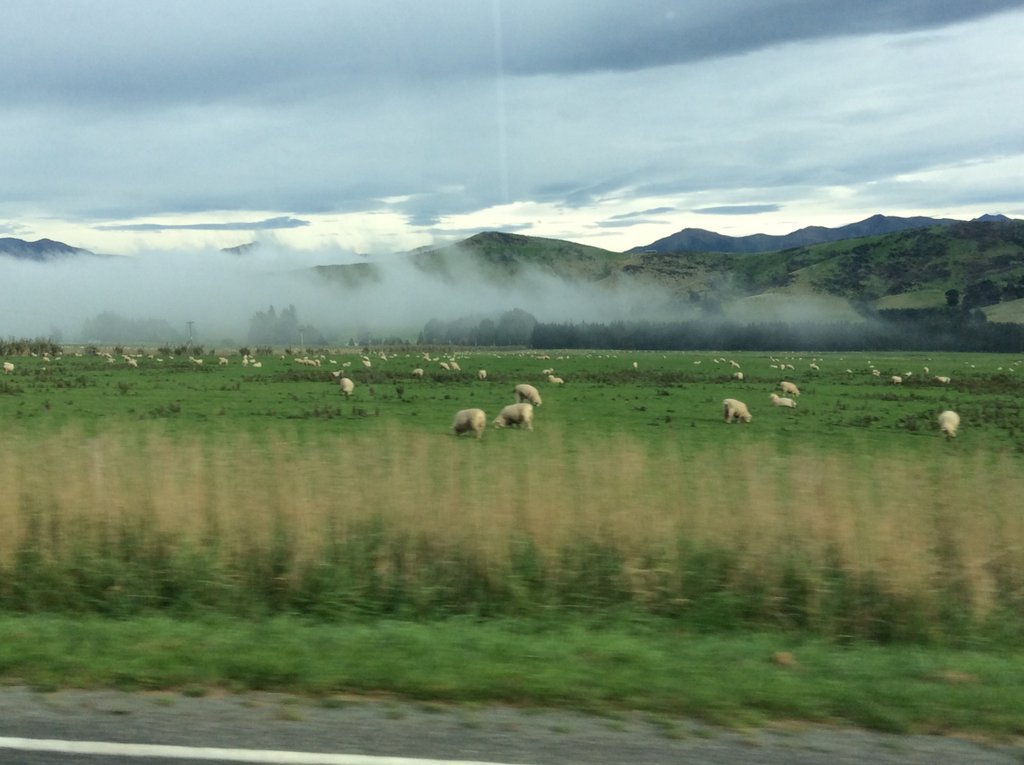
We proceeded to Milford Sound the next morning.   It was a four hour ride and with plans to return the same day, we were a bit apprehensive.   But the rugged and beautiful scenery along the way as well as the jokes and laughter and music melted away the hours.   It is so important to go with good company, otherwise it could be drudgery to travel long distances by road.   The lakes along the way stretched literally for miles, the mountains had a dry but stark beauty.   We stopped for a group picture in a totally desolate area with mountains in the background.  We also stopped for a little trek to view a “mirror lake”. Very little of the alpine meadows of the north island were visible in this area.   There were sheep grazing on cultivated grass with elaborate watering systems and on our return we stopped to take pictures of the grazing sheep that were found by the hundreds in the enclosed meadows.  We made another stop to view the famous Lake Te Anau and wandered into the town for a bit.


Milford Sound itself was worth the visit, we reached around 1 p.m. and just made it to the departing ship.   It was large with several viewing levels and made its way slowly amidst the towering cliffs.  For a change we had non-Indian food on board.   We enjoyed some waterfalls and some seals dozing in the sun on huge rocks.  The weather was cloud and sun, but pleasant, although bright sunshine would have been nicer, but with Fiordland National Park being one of the wettest places in the world, we were lucky we were not in a deluge!  The bus ride back was full of marvel, great cloud formations against the backdrop of the towering sharp peaks.

Bungee Jumping and Bob’s Peak

The next day was a relatively light schedule.   After breakfast we headed for a nearby bridge from which bungee jumping seemed to be a popular event.   Just one or two of our group had the inclination to try the daredevil sport, but they too had to defer due to lack of time.  The fear inducing jump and the zipline  was fun to watch, though, from the safety of solid earth!  From there we took a fairly short bus ride to go up to Bob’s Peak up a mountain of great height about 1,500 ft. in a ski lift gondola.    The view from the top was what New Zealand was all about.   Majestic peaks all around and down below, the blue crystal clear water of the Lake Wakatipu, spreading for 77 kms, a total of a staggering 290 square miles stretching endlessly,  broken here and there by an emerald green island.   It was a captivating sight, but we were forced to look away when we were told to enjoy the buffet lunch.   Wow, was that a sight too!   Right from the mouth-watering corn soup (it was very hard to move to the next course!) to the salads and pastas that seemed endless, it was just great after all the Indian food we had been served day in and day out.   The deserts did not disappoint either!   There was a total  overload of cakes, pies, puddings and fresh Crème Broule for which there was a high demand.

Adventure on the Trail going down

When our appetites were satisfied to the utmost, we finally wandered outside to take in more of the view and explore the Ben Lomond Reserve.  The gondola ride had been pretty steep, but now there was talk in our group about taking a trek down the trails to our bus.   The adventurous ones minimized the effort involved and set off right away.   Few of us got tempted a bit later when we went to inspect the trail, it seemed well laid out and oh so scenic!   Why not?   So we set out.  It was basically fine with smooth downhill paths and spectacular views around every bend.  We just had to avoid  the speed bikers whose path crossed ours every now and then.   But the downside was that instructions on the trail were bad whenever we came to a branch and both parties ended up getting lost for about 30-45 minutes.   With no cell phones to communicate, we did have some anxious moments, but it all ended well and we were all re-united soon.  The walk was well worth it, young people go to New Zealand just to trek the countryside, while we just eat and sit in a bus!   Oh well, we could boast that something  is better than nothing!

Puzzling World

We did a little bit of shopping that evening and our group leader, Lakshmi finally said enough is enough with the mattar paneer and she was able to change the menu to poori-alu and khichdi at the Tandoor.   We sure enjoyed that meal!  The next day we were back on the bus, fully packed as we were heading for Twizel.  On our itinerary, Puzzling World had been listed and we were wondering if this might be too childish.  But it was simple fun.   We were in rooms where the sloping floors did tricks on our balance, felt like Alice in Wonderland with the low ceilings and tiny windows and lots of laser images that entertained us.   After a nice cup of coffee we proceeded outside where we had fun taking pictures with a tower that seemed ready to fall off its base.

  The rest of the day’s drive included a viewing of a glacier at Mt. Cook which was landlocked, not near any ocean and wine tasting. And while our bus filled up with gas, we were dropped off near a small age old Church of the Good Shepherd with its sheep dog monument.   It was very serene with a lake nearby and we walked around peeping in through its windows as it was closed.  Our Twizel hotel was old but the hospitality was good and they went out of the way to serve us good home cooked meals.   We even made time to visit a local supermarket and buy chocolate, chips  and other goodies.  However, the night adventure of trying to view the “Southern Lights” or Australia Borealis was a fizzle out and there were a couple of wise ones who skipped this outing and got caught up on their sleep!

Christchurch and on to Fiji

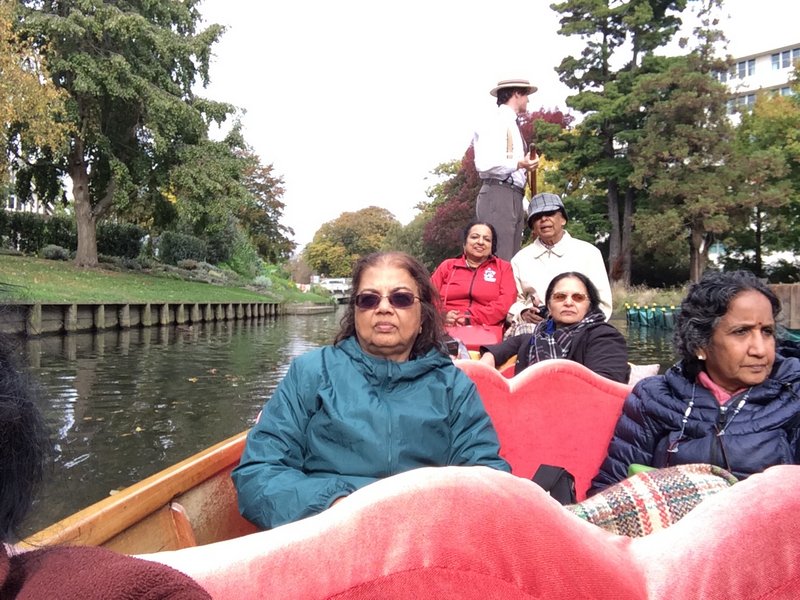
On to Christchurch, the last major city in the southern island.  This is the city that was hit by a major earthquake and some churches are still in the broken condition, just as a reminder of the catastrophe and a cardboard church was temporarily housing the devout.   In contrast, we had a very pleasant ride of punting on the Avon River.   It was  very British and the meticulously maintained botanical gardens around the river afforded us a soothing respite from all the bus travel.   The last leg of the journey was our flight back to Auckland and overnight stay near the airport and the next morning early flight brought us to sunny Fiji!

Our morning flight landed uneventfully in Nadi, pronounced by the locals as Naandi, which is supposed to mean low tide.   Among the locals settled here, many are of Indian origin and still speak Hindi in the homes.   The British brought them over centuries ago when they found the local island  people to be of a lethargic nature.   Now many have advanced to own their business.  Fiji is comprised of 333 islands.  Initially we were told cannibalism was practiced but with advent of missionaries, this was put to an end.  Now Fiji people are rated as among the happiest in the world.  Communal living is common with a chief controlling a village and he was allowed many wives to preserve his dynasty.  We were taken to view a model community and it was very neat and well kept and the government also provides a lot of support.

Fruit Orchards and Hindu Temple

From the start Fiji was appealing as it was not overbuilt like, say, Bali is.  Everywhere there are fruit orchards and the hospitality of the people is amazing.  We had the exclusive privilege of viewing a private fruit orchard at the top of a hill and this belonged to Rosey, the wife of a prominent personality.  The weather is ideal for easy cultivation of fruits like papaya, bread fruit, watermelon and pineapple.  Besides that, sugar, gold and black pearls are the specialty of the region.   Talking of famous, Raymond Burr of American TV fame, had owned and cultivated an exotic orchid garden and later gifted it to the locals.   It is at the foot of the mountain described as the Sleeping Giant whose huge reclining  shape can be easily identified as we travelled back and forth.   We saw a local vegetable market, tasted tender coconut and fruits.  We also had the opportunity to visit the full fledged Subramania temple and got dressed in salwar kameez for the occasion!

6-IMG_0806

Tivua Island and Kayaking

The three days in Fiji recharged our batteries.  Though the beach near our resort was not ideal with sharp rocks and full of shells,  the rooms were large old world style  with sit -out verandas.  We got to visit Tivua (Treasure Island) on a cruise boat and spend  the entire day there on lounging chairs on the soft white sands and turquoise blue waters.  No surprise the men fell into sound sleep right on the sands!   We had a chance to try kayaking too near the shore.   The island was so small we could walk around it in about 15 mins along the beach, leading us to conjecture how those marooned on small islands must feel.  We were also taken to see the coral and exotic fish in a glass bottom boat.   All  our meals were at the resort and they did their best to provide us with tasty vegetarian fare like exotic papaya salads, soups and root vegetables, some Indian dishes and  delectable vanilla ice cream!   They sent us on our way to Australia with a touching farewell show and song specially composed for us.   Very warm people indeed.

P1000478


New Zealand : Love to Live Here!

 New Zealand, Fiji & Australia

                          Part 1                             April 2015

4-IMG_0557

Our visit to New Zealand and Australia was in my book, almost the “last frontier” as we can claim to have at least set foot on most of the other habituated continents like Asia, Africa, the Americas.   This would probably be our last major trip although we did foresee smaller trips in the future.   It proved to be our longest one yet, 24 days including travel.   How did we survive?   Easy!   We are pros now although our hearts were skipping beats at every airport check in.   They are really strict with weight and hand baggage size on that end of the world.   Every other country looks good now!

The first stop, with our now famous Lakshmi group tours, was Auckland in New Zealand.   Of course to get there we had to travel to LA, thankfully they checked in our luggage all the way!   At the LA airport it was another joyous re-union of our group of about 20 that had zeroed in from different locations in the US.  We were all excited to continue with our travels and the long 14 hour flight did not seem so daunting after all.   As it turned out, we were able to sleep a fair amount and reach Auckland, NZ in a okay condition.

The “fun” part of clearing customs in NZ, we had already been strictly warned, was that they would not tolerate any food that would jeopardize their flora and fauna.   The dire consequences were also heavy fines if all offensive food was not declared or thrown out in the bins provided.  Still, a few brave souls (like us) did not want to compromise on our Janaki snacks of murukkus and decided to take a chance and declare them, although we were practically trembling.   Lucky for us we got an officer of Indian origin who knew what murukku was.   Turns out they are more particular about honey, fruits, grains, nuts, plants etc.   It was well worth the risk, the murukkus were gold!

After some amount of waiting, we were greeted by David, our tour guide who was unique in many ways.   Foremost, he had an attitude about people of Indian origin and had many pre-conceived notions.   He talked non-stop on all our drives, but was well informed.  As it was morning, our drive through Auckland was nice.   It is the largest city in NZ and its financial capital.   We were introduced from a distance to its numerous dormant volcanoes which had the potential to wipe out the city.  The city and its environs had four seasons – sometimes on the same day!   Due to the delay in our pick up we were treated to a hot Indian breakfast of poories and other items at the Indian Express and we were now ready for the tour as our hotel check- in was later.

Auckland, Mt. Eden and Viaduct Harbor

Kia Ora! Welcome!!  The weather in northern NZ  in early fall when we reached there was perfect, cool and crisp with ample sunshine.   Our tour began with a visit to Mount Eden, a very picturesque area that also had a caldera or crater, sacred to the indigenous Maoris.  As some bones may still be there from the past, people were not allowed to climb into the grassy large crater that was once a volcano.  We did climb to the top of the adjoining mount to view the commemorative obelisk and enjoy the spectacular view of the city and the ocean, reminiscent of Cape Town.  Among others, the Sky Tower stood out, one of the tallest structures in the eastern hemisphere.

Next we drove to Viaduct Harbor and Queens street and were taken in by the sight of some very large metal serrated wheels that were once a part of a giant dredger.   The final stop on our first day was a grassy open air memorial known as the Michael Joseph Savage Memorial on a lovely location with date trees overlooking the ocean again.

After a leisurely evening at the hotel located centrally we did justice to yet another Indian meal (lunch was provided too!) and retired for a well deserved catch up sleep after our long plane travel.

 Hamilton Gardens, Rotorua Geo-thermal area and Agrodome

We were already on the move the next morning packing a smaller bag to visit the Rotorua area, full of natural wonders.   En route by bus as we drove through the lush green countryside, we found out that over 70% of the population were dairy farmers.  Each cow generally gave ample milk and sheep were sheared twice a year.  Talking about the scenic countryside, it looked like one endless golf course, emerald green, grass kept low by the grazing animals and the small undulating hills enhancing the natural beauty.  Since we had already seen some of the scheduled sights the previous day, we had time to visit Hamilton Gardens.   Though it was called a Maori garden (indigenous people to New Zealand), it was more of an international sight.   We saw well laid out flower beds with their beauty enhanced by architecture of various countries.  There was a lovely Japanese area with Bonsai trees and a traditional bridge, a British maze and a serene Char Bagh Indian contribution with arched Mogul edifices.

Huka Falls, Agrodome

By special request of our photo expert member, we also went the extra distance to see Huka falls.   The water gushed at high force through the valley, though not from any great height.   To some it was a bit of let down, but to me it just meant seeing more of the lush alpine meadows along the drive and enjoying the very quiet countryside.  We also saw the sunset on the very large Lake Taupo and ended the day with having dinner, finding our hotel and once again sinking into sleep.

On to the famed Rotorua area.   The name denotes two lakes in Maori and it was a unique geo- thermal region.  Though the hotel was okay it had a beautiful glassed dining area with lovely views of the lake nearby.   The weather that had co-operated so far turned cloudy with sprinkles as we headed for the Agrodome.   Here we were treated to an exciting display of the farm skills of New Zealanders.   The stars that took to the indoor stage were —  farm animals!  They were well trained to occupy the pedestal space designated for them.   All varieties of sheep were displayed, over a dozen.   Later some sheep dogs came in to show how they herded and also very nimbly climbed up on the backs of the sheep much to the delight of the audience, which incidentally filled up the entire huge Agrodome, mostly people of Far Eastern descent.   Since I had expressed my desire to one day work on a farm in NZ, my friends pushed me on to the stage when they called for volunteers to milk a cow.   I did try (not so easy as the cow, huge though it was, gave a thin trickle only).  Others went up to feed baby sheep with bottles of milk and pet them.  Expert shearing of a helpless looking sheep was the crowning glory though the ladies felt sorry for it!

The rest of the morning was pleasantly spent in watching some herding dogs do their work outside and going on a long ride on a long tractor!   We got down here and there to pet and feed some sheep, admire the glorious scenery, see alpacas, taste the famous Manuka honey which appears to be a mix of different types of local honey and kiwi fruit and sells for an exorbitant price;  we also tasted kiwi juice or kiwi wine and generally had a good time.   We saw some lovely kiwi orchards with fruits hanging by the dozens on low trees.

Pohutu Geyser

The next big attraction was the Te Puia Thermal Reserve.  Here everything was contained within a short distance.   We could see the bubbling mud pool and the “Pohutu Geyser” which sprouted on cue at the expected time.   The height it maintained for several minutes caused much excitement among the onlookers and lent itself to many photo ops.   We got a glimpse of the elusive Kiwi bird in a very dark and quiet enclosure.   Turns out that Kiwis are nocturnal birds and quite rare as well.   Here we were thinking that they would be as common as the Kiwis on our Indian shoe polish tins and we would see them walking around everywhere like chickens!  Wrong!  That was probably the only kiwi we kind of saw in the dim light in all of New Zealand!

The Maori Cultural show was the last of the day’s events before we had dinner and it did not disappoint with the backdrop of their elaborate architecture.   The outfits were very authentic and the dancers very athletic and even caused some fear with their demeanor, as was the purpose in ancient times.  One of our own group, Murali, was invited to the stage and must say he did a great job in joining in step with the dancers.   A word about the food we had so far.   We were mostly taken to a chain of restaurants known as Little India where they used the age old recipes of the owner’s grandmother, Premjit Kaur Gill.   The food was pretty amazing and the extra pounds some of us gained is testimonial to the fact that we did justice to it!   Never mind the fact that by the end of the whole tour, we were so tired of seeing paneer in one form or the other (vegetables except potato and spinach never made it to the table!)   The ice cream was delectable too, mostly creamy vanilla from the rich milk produced by the local cows.   We heard that in both NZ and Australia, Indian cuisine had become so popular that even locals flocked to these restaurants.

7-IMG_0515

Unique Glow Worm Caves

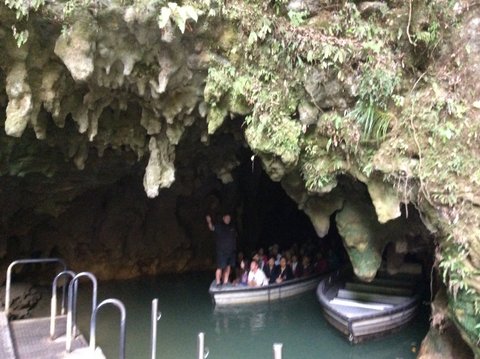
The next morning was ideal for some quiet time and a walk in the drizzle along the lake front where we could view some beautiful black swans with their baby chicks.  We had our drive back to Auckland but on the way made a stop at another famous tourist attraction, the Waitomo glowworm caves.   Here in a semi dark cavern, our boat silently glided through an underground grotto.   On the ceiling was a canopy of thousands of twinkling lights, each spot a glow worm larva. Putting out lines of  sticky substance like a spider, they attract other insects and feed.  Unique indeed!   We have not seen this sight anywhere else and along with the unusual source of light we also enjoyed the meditative silence and marveled at the “shristi” of the Lord in creating so much variety in nature.  We rode back by bus enjoying our own music on the I-Pad magnified by a small portable speaker (this time we were self sufficient, not dependent on the bus driver’s equipment or mood for playing our music!), also enjoying the unsullied green meadows, not too many people in sight, just more sheep and grass everywhere.

Some random facts:  New Zealand still brings in 40,000 immigrants yearly.  Students who have completed the required years of study can even bring their parents. The single important marker in the Maori people’s DNA is Taiwanese.   Livestock farming is the main occupation of the people.  Each cow gives 8 liters of milk per day, but exported milk is probably cheaper than that available in NZ where cost of daily use items are quite expensive.  Though there is wool, wool everywhere, go into a showroom and the cost of wool items is sky high (Peru, we sure missed you for the wool shopping!)  Sorry, New Zealand we could not do much to improve your economy by way of shopping! Whitakers is the famous local brand of chocolate to try! Comes in all flavors including Kiwi fruit, but nothing beats the plain milk chocolate.  Also the ice cream was so rich, but this we found out  after we went to Fiji!


Machu Picchu, a Dream Destination Part II

October 2014

We woke up bright and early the next morning to another gorgeous day of mild temps and bright sunshine. We now had to pack a smaller bag as we would be taking a train from Ollantaytambo and there were luggage restrictions. Once again we sat in the square in front of the hotel. Some adventurous shoppers also found a somewhat fancy boutique nearby selling quality alpaca wool items and did some preliminary browsing. Later on our whole group did a lot of shopping and got a good discount there. Soon our comfortable bus pulled up for our half day of travel.

Different and unique was our first stop. We saw how the travel lodges of the ancient Incas were and frankly, not bad at all! In those days the entourage, often with royalty, travelled for days by paths through jungles and a overnight rest area would have been welcome for all of them. At Tambomachai (tambo meaning rest area and machai was caves) we saw on the face of the mountain, niches and caves carved out for people to spend the night, of course the royalty enjoying better spaces. Right there was a natural spring waterfall, cleverly directed through carved holes in the rocks for the refreshment of the travelers. The Incas believed that even different forms of water had its own sex – a waterfall was male, while the ocean was female, so our guide Angel informed us! Surrounded by the great Andes mountains, it was a serene and perfect place that any traveler would appreciate an overnight stop under the canopy of stars.

We had loved the alpaca animals briefly, now we got a chance to view them at close quarters and learn more about them. At Awanacancha they were fenced in open pens and we could also feed them a kind of grass. They do come in various shapes, sizes and colors and of course, names. According to their chart the Camelids as they are known range from llamas at one end all the way to the two hump camels with several species in between. The locals knew exactly how the quality of the wool would be in each variety of alpaca. “Baby alpaca” referred to the first cut of wool that was in a way virgin wool, like olive oil! The exhibit also included indigenous people demonstrating how the wool was died naturally (even one type of bug produced a deep red color) and woven into intricate designs. We saw a mind boggling display of potatoes of various size, variety and hues. It is a major crop of Peru. Attached to the farm was a high end showroom selling top quality goods by indigenous talents.

IMG_0887

Sacred Valley of the Incas
We drove down to the Sacred Valley. From a vantage point high on the mountains we saw the beautiful agricultural land with river Urubamba snaking through it. It is one of the rare rivers in the world, flowing from south to north, finally joining the Amazon river, we were told. No wonder the Incas made it their home, so fertile, beautiful and bountiful. Next stop – Pisac market! This place could beat any US flea market in its variety. We first saw how silver is crafted into beautiful jewelry blended in with natural colored minerals. Known as Mother Earth or “Pacha Mama”, the pendent was the ladies’ favorite. Almost everyone got a large pendent in silver with concentric circles in beautiful colors like deep blue, green or terracotta red. However, the prices back at Cusco beat out the Pisac market rates! Still, a few good buys like children’s sweaters, place mats and scarves were made. Our lunch was in a lovely “hacienda” type of open air restaurant surrounded by large swatches of colorful bougainvillea flowering bushes and beautiful gardens with the mountains in the distance. The food was okay, they did make a lot of effort to provide vegetarian items.

Next stop, fairly nearby, was the famous Ollantaytambo, a place where an Inca king Ollantay stayed, legend says. The town too is known by this name as is the Inca structure, presumed to be a temple or a fort. Here we saw huge terraces rising up endlessly to the sky. Perhaps there was a sun temple at the top, it was certainly a place where Incas lived and produced crops, for they had storage granneries on a different mountain nearby. We could only climb to a short distance, some adventurous ones in our group were willing but only a few and in the interest of time, we had to leave. However, our guide did tell us a romantic story associated with the fort, the love that ended in tragedy between Pachakutec’s general and the daughter of the king. We also viewed the water temple where Inca rituals were performed for fertility of fields. Corn was the main crop and chicha, a corn based alcohol, was consumed as also used in rituals where it was first offered to the earth.
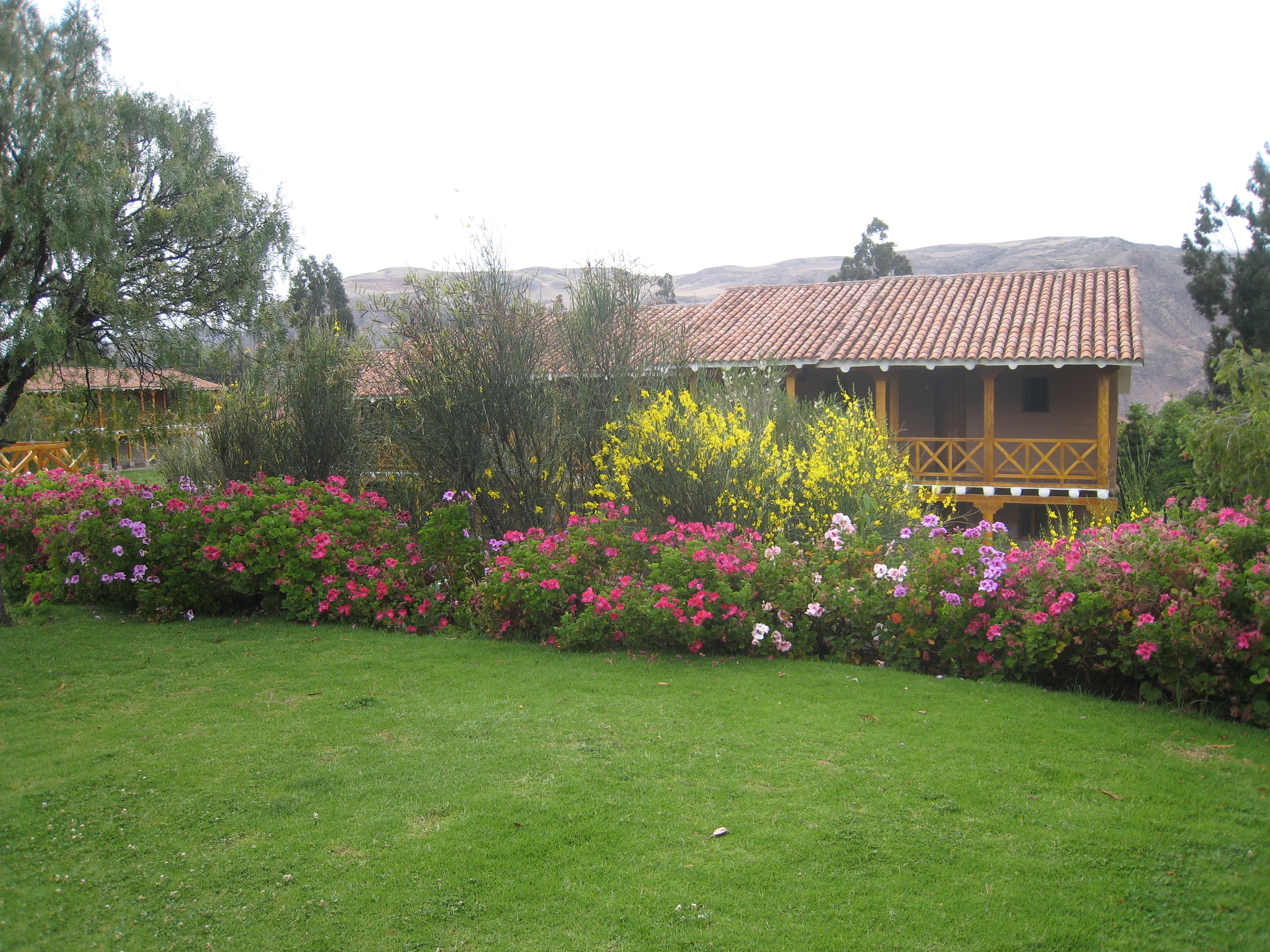
We loved our overnight hotel stay. The location was gorgeous, greenery all around, lovely flower beds meticulously maintained. Our one complaint was that we had to trek up three to four levels of steps to reach our rooms! But we did have incentive to come down to the lobby because some indigenous artifacts were sold in “sidewalk sales” at very reasonable prices. The scarves bought here made fabulous gifts once we came back home and thanks to our group the women made substantial sales. We also enjoyed the sights of alpacas grazing on the property and just beyond the fence was a row of local children looking for small handouts. We were served dinner and breakfast at the same hotel.

All too soon we had to leave for the train station the next morning. The Vista dome train lived up to its name. So comfortable with a table between four seats and gorgeous views all around. All along the route the river Urubamba flowed along with us, sometimes as a narrow stream, at other times whitewater rapids tumbling over large boulders. The majestic peaks of the Andes never failed to take our breath away, some even with snow caps. Along the way we could see smaller Inca structures on the mountainside. The backpackers tackling the famed four day trek to Machu Picchu were visible here and there and we were pointed out the 81 km. marker which is the start of the trek along with a pedestrian bridge crossing the river. Soon we were served snacks and the journey was pleasantly completed in a short couple of hours.

Our destination, Aguas Calientes, (hot springs) at the foot of the mountains was fascinating too. The only transportation allowed here are the buses going up the mountain to Machu Picchu. We were staying at one of the best eco lodge hotels, the Inkaterra, in the midst of the cloud forest. This group is doing great work in conservation of the Andean bear and other species in the vicinity. Even before we got our lovely eco-friendly rooms, we all signed up for the nature walk later in the afternoon. Here we could see miniature species of orchids growing in the thick undergrowth. To be sure we saw a lot of exotic plants but what drew our attention was the hummingbirds that constantly hovered over the sweet water feeders. We were as fascinated by them as they were by the sweet treat! Our walk concluded with a view of the Sacred Rock wall with Inca carvings and an aeriel view of the Urubamba river. We were soon ready for dinner at the nearby restaurant, right in the middle of the railway tracks!

Machu Picchu at last!
The final culmination of the trip was in sight and we got a good night’s rest. As the reservation for the visit to Machu Picchu ruins is filled up weeks ahead (only 1500 visitors are allowed per day), we were to make only one trip and had to make the most of it. No one was complaining about waking up really early and finishing breakfast by 6 a.m. One of us in the excitement of the visit, did leave behind the camera bag in the room and had to run back and miss the first bus! The good news was that buses were plying every 10 minutes. The ride uphill was only about 25 minutes with expert drivers negotiating hairpin bends. With the clouds coming down low, the view was partially covered with each turn revealing breathtaking heights! Soon we were at the entrance, our group assembling and full of anticipation.

Testimonials to the quality of the structures at the entrance praised the quality, none less than the civil engineering society of the US! On entering the gate the sight that greeted us was beyond expectations. As someone in our group said, “Wow would be an understatement”. We just walked in a few yards and stopped to stare. All around us were steep, wide terraces, green everywhere and very even leading our gaze to the guard houses way up. The space was huge with simple stone structures broken only by beautiful patches of grass. What gave majesty to the location were the mountain peaks everywhere, the Andes in their full glory. Granted that the Incas must have built the place with blood, sweat and tears, but how glorious was their reward to have a dwelling so heavenly, close to the gods they worshipped.
The stories told about the discovery of Machu Picchu in 1911 by American anthropologist Hiram Bingham were of course challenged by the Peruvian authorities who said that the mountains of Machu Picchu (old mountain) and Huayna Picchu (young mountain) had been mapped and named in the late 1800s. Story goes that the whole establishment had been abandoned by the Incas for reasons unknown and had been overgrown by nature. With a 8 year old for a guide, Bingham braved many dangers to reach Machu Picchu and unravel its marvels little by little. Untouched by the invaders, the culture of the Incas is pristine here. Credit goes for presenting it to the modern world to Yale University and National Geographic society for funding cleanup expeditions. Now the government of Peru is doing an excellent job of maintaining and managing. What struck us the most was that there were no railings or guards to spoil the beauty, everyone was just careful and it worked!

We spent about 5 hours, escorted by our guide, Angel. He pointed out the difference in the types of stones used and how they were always more polished and finished when it was for the purpose of making buildings of worship. The trapezoid windows narrow at the top and wider below, the trademark of the Incas, was visible especially in their Temple of Three Windows. Another courtyard had shallow stone bowls that caught rain water and probably reflected the sun, moon or stars. Everything was of course conjecture because the Incas did not leave behind anything in writing for the world to understand their culture. We climbed up a small hill in the center to get spectacular views. We saw the famous sun temple designed to receive the rays with precision, the temple of the condor facing east, as they believed that condors transported the souls to a higher world. The wings of the condor were two chiseled rocks behind it, part of the rock formations!

As it is said for many spots of beauty and grandeur in the world, it would take days to explore and discover the intricate secrets. Unfortunately we had no such luxury afforded to us. Soon it was time to do the final ascent to the natural viewing gallery which gives the iconic layout of the Machu Picchu ruins so often used in brochures and books that lures tourists. Again, the view was amazing, unbelievable and beautiful. All we could do was to take our pictures and then take a few moments to drink it all in and hope our memories would take us back to that precious nano second where the world stands still, we forget our cares and we enjoy as nature and man’s amazing skill takes over our mind. Thank you Incas, for calling out to us and giving us such an unforgettable experience.

As we exited, Angel made sure we all got our passports stamped with a nice Machu Picchu proof of visit stamp! After lunching at the sanctuary lodge just outside the gates, we were on our way back and boarding the train to Cusco. There was just a little bit of time to explore the rows and rows of stores selling local wares. Again, so refreshing that nothing was marked “made in China!”. We enjoyed the Vistadome, the train with the windows all around, spotting several snow clad mountain peaks. Back to our same hotel and the next morning was reserved for a walking tour of the city of Cusco. We were quite used to the altitude by now and walked with ease along the cobble stoned streets where centuries ago, King Pachacutec was probably carried in ceremonious procession! We spotted a coffee store and purchased roasted seeds and powder to take back home.

Last minute shopping proved to be a bonanza for the boutique near our hotel. One of the ladies of our group proved to be a consummate bargainer and we all enjoyed the bounties of good quality and lower prices! I am sure we all expect to use our alpacas well and bequeath them to the next generation! They are ultra soft and warm too. We said our goodbye to Angel and others and caught our flight back to Lima, spent a few hours at the airport and the overnight ride brought most of us back home. Others had longer flights with connections. However, no complaints as the trip had been truly amazing. It was just seven days, but packed with new sights, sounds, tastes and above all the visit to a world heritage sight that only a few in the world are destined to enjoy! That too in the company of our dear friends. Priceless!
10-IMG_2469

Machu Picchu — A Dream Destination — Part 1

October 2014

Machu Picchu had been on everyone’s “must see” list so when the opportunity came up through Lakshmi’s tour suggestion, we all jumped at the chance, dropped everything else and made preparations for our trip in the month of October 2014. 

Departing from Newark airport was very convenient and better yet was the direct flight. The seven plus hours did not seem to be much of a drag (especially for us seasoned India travelers). However, for me, the surprise was that we were heading directly South, not West! Somehow, I had imagined Lima to be south of the California area, but you can literally draw a straight line down from NY to Lima. That’s why the time difference was only one hour due to daylight savings in our area and we did not have any jet lag either while going or coming.

Upon arrival that night, we were met by a friendly agent. However, the immigration department was not very accurate in its work. Some of the group had to go back in to have the wrong date stamp corrected on their papers. This also resulted in the misplacement of two passports during the bus ride, causing minor panic upon arrival at the hotel. The agent acted with alacrity and had the bus come back and soon found the missing items. Very impressive! This totally restored our appetites and we were ready for the packed food from the local Indian restaurant, kept warm and ready for us. We took it to our rooms and really enjoyed the neatly packed items.

Touring Lima

After a good night’s rest in our spacious rooms, we were ready to explore and were greeted by a friendly guide and sunshine breaking in through the fog. Go any time of the year to Lima, you will not get rain! We were told that due to the meeting of cold and warm currents over the Pacific Ocean, the precipitation is very little, perhaps 3 inches in the year. The temps were always between 60 and 90 degrees F. We had no complaints about this, in fact we marvelled at the fact as we drove along in our bus that the Miraflores area we saw was green and lush and well maintained with flowers. Our guide made us laugh when she said that it was very hard to buy an umbrella here in Lima. Most cars had no wipers and the roofs were flat and there were hardly any insects. The sidewalks were wide, there were even free public stationary bikes for people to exercise and enjoy the morning hustle bustle of the streets. The only requirement was that each user had to vote in the elections, this is how they cleverly caught the dodgers! The locals cannot use a passport or even a bank account without proof of voting.

Our first stop was right near the beach, the Lover’s Park on a high cliff. The view of the Pacific ocean was breathtaking. Once we were done taking pictures, the next thing to attract our attention was a really unusual sculpture! Now we understood why this was Lover’s Park. The sculpture was tastefully done of a couple lying entwined in each other’s arms. It was fun for our couples to take pictures with it, but the award went to a local couple that tried to replicate the pose on the grass. That takes guts! Next viewing of interest was a huge adobe light colored brick structure that
had been recognized much later as an Inca site of worship. As it had been covered with mud, Huaca Pucllana was just presumed to be a hill at first. Some signs of human sacrifice in the bygone eras had also been detected. We drove through neighborhoods where homes were painted in bright colors to compensate for the cloudiness. When Chinese labor came to work there, rice became very popular referred to as Chifa. Earthquakes were common, the one in 1794 destroyed 92 per cent of the city. Now rules apply for better construction and often bamboo is used to reinforce structures as it was done in olden times.

We concluded our day tour with a visit to the beautiful Cathedral with high ceilings and beautiful statues of Mother Mary and infant Jesus. A service was in progress. Then we moved on to the Santa Domingo Dominican monastery. The art work and ceiling works were stunning. One unexpected treat as we were walking as part of the city tour, was a beautiful parade. Not only was there a lively band, but men, women and children were dressed in traditional finery in the same groups of colors and swaying in tune to the music. It was a pleasure to have our pictures taken with them. We also saw women wearing purple dresses to celebrate a holy holiday. Dinner was repeated at Minar, the same Indian restaurant that had provided packed food. It was good, though better the previous day, and it was the last meal with Indian food till our return to the US!

We caught the local morning flight to Cusco, a short distance from Lima. We had been skeptical about the weather as the official summer was over and showers were common everywhere. But luck was with us! It had been raining in Cusco, but we had obviously brought the sun with us from NY/NJ. We were met at the airport by our tour guide, Angel. He proved to be our “angel” and stayed with us throughout our tour to Machu Picchu till our return flight to Lima. After a quick light lunch of soup or tasty wraps at the hotel and a brief rest, we were ready to see the sights around Cusco. We headed by bus to a higher elevation of over 12,000 feet. At first we seemed to be doing okay with the high elevation and all of us tried the coca tea provided by the hotel. But as the day wore on, tiredness hit us.

Ancient Site and Cute Alpacas

Our first stop was Sacsahuaman (popularly referred to by tourists as “sexy woman”) but a totally innocent archaeological site, dating back to the early 15th century. As we approached the green meadows and the stone structures of the Incas, many of us were charmed by our first glimpse of alpacas grazing in the distance. These are adorable animals, like a cross between a sheep and a llama in white and other browns or blacks. Their wool is soft and commonly used for several types of winter clothing. More on our shopping sprees later, where ever we went we heard “100 per cent baby alpaca”, whether it cost $10 or $100! Final conclusion, only the real baby alpaca animals were 100 per cent pure! The park was our first exposure to the skills of the Incas in building huge walls with very big smooth stones, without the use of mortar. Whether it was used as a fort or a temple was not established. We saw groups of locally dressed Inca tribal people also on a sight seeing tour. It appears that the government encourages them to visit their heritage areas. In the distance, on top of a hill, a large white Christ was visible from several areas along our drive.

After this we had a pleasurable interlude posing for Kodak moments with locally dressed indigenous people with their alpacas. We could touch and pet these gentle animals and carry their babies. The ladies made their living by charging a few sols, their local currency, about a third of a US dollar for taking pics with them.

IMG_0775

As we drove around, we noticed that the small huts and homes all had a cross and bulls on the roof. This was a mix of Incan and Spanish culture. Earlier, Incas had llamas, but the bulls were a sign of fertility for the Spanish. Puka Pukara was the next stop, translated to mean a red fort. We climbed the short way to the top and saw the flat observation area. Also nearby was Q’enqo where we walked into an intricate but partially open cave system that was a temple as well as an alter for sacrifices and perhaps for mummifications, as figured out by the Spanish. In general Incas were short in stature, but they built steps where they needed to reach higher areas. The niches carved out in the rocky walls perhaps served to display their icons or idols.

Our day had been long, but we had more to see. We headed to the famous Inca Sun temple, the Qorikancha. Here we found out that the Spanish used the foundations of the Inca structures but destroyed the rest and built their own churches of worship, in this case it was the Church of Santa Domingo. Soon we learned to identify the slightly inclined Inca base walls and the flawless setting of even stones as we walked the town of Cusco. Inti was another name for sun and this could well have been the most important place of worship for the Incas according to historians. The angle where the sun entered was scientifically calculated and built. It is said the walls and floors were once covered with sheets of gold. However the gold was all given away to the Spanish in ransom to spare the lives of some of the Inca kings.

Church paintings with various cultures

The Incas so far were amazing, but credit for fabulous paintings and breath-catching sculptures and huge works of art, some gold painted, has to be given to the early Spanish as well. The Church which is part of the Sun temple is a great example of this. They used the labor of the Incas who were so innocent, had never heard of an angel, but had to paint them! The Incas also sneaked in many important aspects of their own culture, making grapes look like corn, the angels had condor wings! Gold leaf work and beautiful colors derived from natural plants and minerals have stood the test of time till this day! The end result is truly remarkable and one could spend hours examining all this.

We took in a quick look at the central square of Cusco, with a promise to see more upon our return from Machu Picchu. Cusco had been the first taste of great things to come and did not disappoint. We were also very happy with the guide we had been assigned. Angel was knowledgeable, helpful, cheerful and very easy to understand and get along with. Everyone was comfortable with him and we looked forward to a great visit in his company to Machu Picchu and other marvelous sights along the way. The rest of the trip lived up to our expectations and more, the weather did not disappoint either. Outside the hotel in the large stone lined square, as we waited for our bus, we were entertained by hawkers selling silver trinkets and we found the people to be warm and friendly. Soon with some meaningful bargaining, quick purchases were made and everyone was happy.  At eco lodges everywhere beautiful gardens and exotic flowers welcomed us!

09-IMG_2435


Cambodia and Bali Noteworthy Temples

Visit to Vietnam, Laos, Cambodia and Bali

November 2013

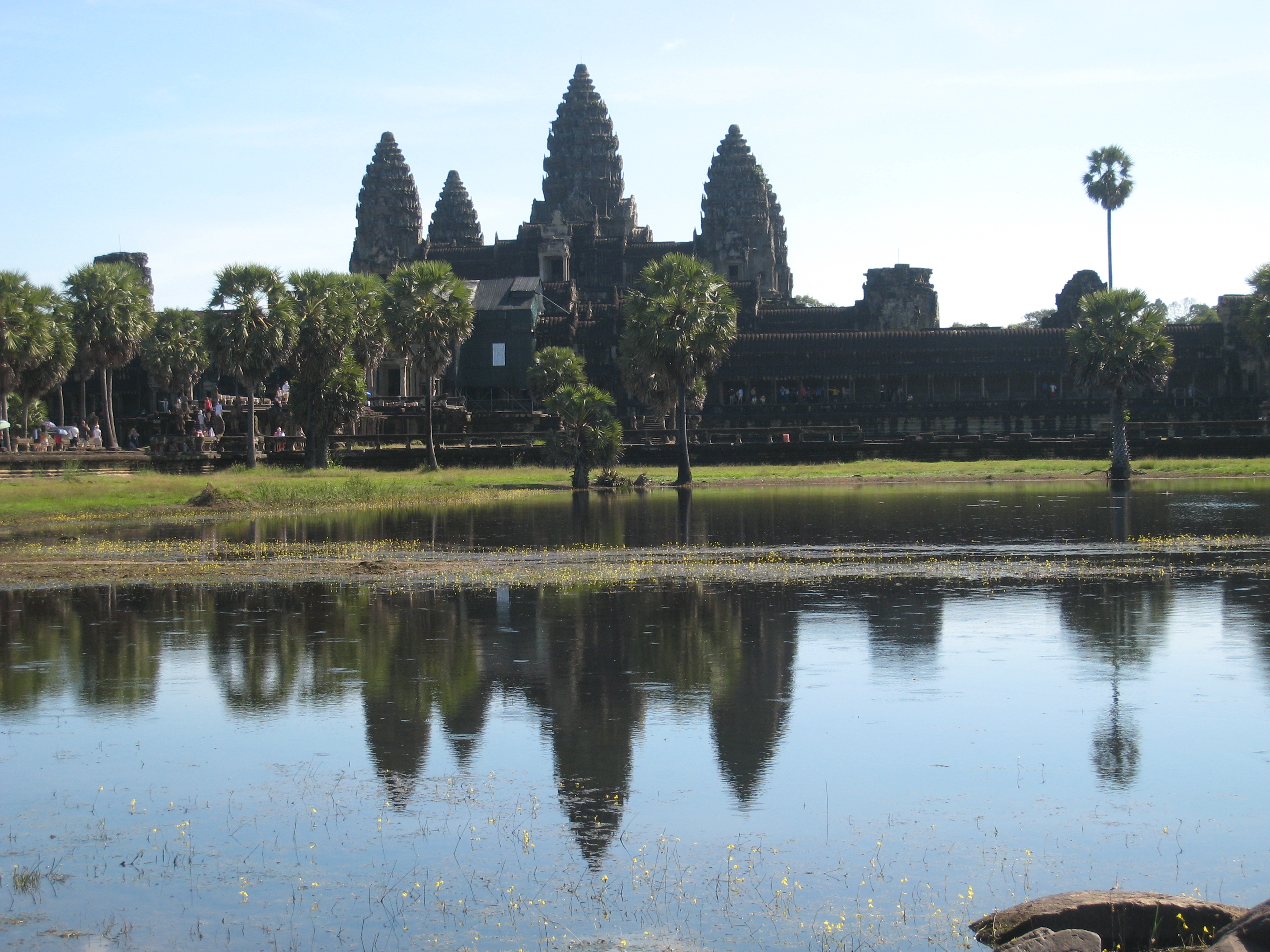
The Moat around the Ankor Wot complex

If so far our travels had been adventurous, Cambodia brought us to the doorstep of awe inspiring.   One hears a lot about ancient wonders and even sees pictures, but being there is very different.   It always turns out to be eye popping, grand, larger than life  and imprints on the memory like nothing else.   So it was with Cambodia, it was not just Angkor Wat, there were so many unique and amazing temples within short distances.

To me the strange aspect was the lineage of the rulers; did they came from India, quite far geographically or were they just influenced by the Chola kings?  No one knows as the meagre information was gathered from inscriptions or travelers who wrote notes.   We can be justly proud of these rulers who managed to perpetuate dynasties for centuries and more remarkable, left distinctly Hindu architectural marks that the world can continue to appreciate for centuries to come.  As with many migrations, trade via the Malay peninsula could have been the catalyst that motivated the dynasty to be so much under Indian influence.

To go back in history for a moment, the building activity was at work from the 9th to the 14th centuries.   It hit the peak in the  12th century during the reign of Suryavarman II.  His ancestors, notably Jayavarman II and earlier emperors, ruling from the 6th century had consolidated several areas of the Mekong and moved the capital to the present area of Angkor. However, by the 15th C, the thriving Angkor had become a Forgotten City, cleaned up and  revived  by benefactors, notably the French and now surprisingly, India which is participating in a restoration  project for one of the temples.  Angkor Wat had been used as a Buddhist monastery in the later years, but now it is basically a tourist attraction only.

IMG_0267

Amazing Angkor Wot

To list a few unique qualities of Angkor Wat (the second word means temple), it is considered one of the largest standing Hindu monuments of the world.  The complex occupies 250 acres, fully surrounded by a moat still filled with water.   It has several entrances, each designated to permit passage according to the seniority or rank of the people.  Built at three levels with interconnecting stairs outdoors, it aspired to imitate Mt. Meru, the abode of the Gods.  Its levels, angles and construction is perceived to be perfect in respect to the sun, planets etc. as is often the case with edifices built in India.   It is considered  based on Dravidian architecture.  But this was built at a time when manual labor, metal tools and simple mechanical devices was all that was available to the builders.   Everyone in the country was put to work, it appears, as stones were hauled from distances.   Without cement, the guide pointed out to us, the blocks were placed so close together and so aligned that even rain water could barely get through.  There has been conjecture as to why it faced West and one explanation or guess has been that the emperor’s remains were buried within, East being the auspicious direction.

We did not see the famous Angkor till the morning after we arrived and had a relaxing night of sleep in the luxurious Grand Soluxe Angkor hotel at Siem Reap. The hotel was beautiful with a huge lobby, a lovely girl playing a soothing instrument to set the mood.  The grounds with the lotus lake were charming for a morning walk. The day of arrival from Thailand was used to take us around to a handicraft center, a wax museum depicting various scenes and people like the Emperor and his consort sitting on their thrones.   Next was the inevitable viewing of the atrocities of the civil wars and the skulls and bones were stored in a glass case at an exhibit garden known as Wat Thmey or the Killing Field.   On the way out we saw some young monks enjoying activities in the noonday sun.  Our next stop was some beautifully maintained gardens inclusive of miniatures of the city.   We were duly impressed with the huge wall fresco of Buddha in a reclining pose.   The same garden provided us with our evening entertainment.   By the time we slowly sauntered over, the good seats were all gone and some of us had to plop down on the hard floor.   But the slow dancing and the play acting spread over two huts with pretty damsels in ethnic clothing climbing up and down, chased by local youth, was quite entertaining.   We ended the day returning to the hotel after a nice dinner.   The distances in Siem Reap were much less compared to Bangkok and afforded us some relaxing time.   However, though we passed by dozens of foot massage parlors, it was almost the last day before we had time to actually try one!  We did enjoy some meals at the Currywalla restaurant, items that were almost homemade in taste and topped off with rich and creamy yogurt.   The other Indian restaurants were mediocre.


The next day was dedicated to Angkor Wat and other temples.   We spent the whole morning at Angkor and continued to be surprised by its size and grandeur and amazed by its carvings.  As we walked over the Rainbow bridge, we admired the super long naga  (snake) balustrades and the lion guardians of stone.  Inside, a small man made  pond reflected the ancient structures and enticed the photographers to pay an early morning sunrise visit the next day.  Inside we found a bare statue here or there of a large sized Vishnu draped with decorative cloth.   Other statues had been pilfered over the centuries, but not necessarily destroyed.   In any case only us diehard Hindus from India want to cram every available inch with our variety of gods.   The building itself inspired wonder, not necessarily reverence.  It felt more like one of our Indian forts. The smooth and detailed bas relief carvings on two extra long walls evoked amazement for their detail and beauty, still very well preserved.   One was dedicated to the Mahabharata and other to the Ramayana with Vishnu incarnation stories woven in.   Notable among all this was the churning of the seas with the snake with Shiva and Vishnu in attendance.   Devas, asuras, the Kurma avatara, the battle scenes, chariot with Krishna and Arjuna and also the pleasures of heaven and travails of hell, the valors of Hanuman, all this and much more could all be found.  One would need several days just to examine and admire these carvings, especially by us Hindus who are familiar with the epics.   At several points in the complex, the view from the elevation was serene and beautiful.   Commercialization had been kept out completely inside the complex and the restoration was tastefully done.  We explored several galleries, both inside and outside in the courtyard.

Angkor Thom, Bayon and the Tribhuvana

Reluctantly we said goodbye to this world heritage sight as there was much more to see around Siem Reap. As Shankar aptly commented, the Brihadeeswarar temple in south India was built a bit earlier in the 11th  century or so,  but because it continued to serve the local people as an active temple, it never went to ruin. We visited next a temple with huge faces in four directions, the Angkor Thom, built with blocks of stone  with an impressive avenue of asuras and a yali (lion) guarding the outside.  At Bayon, similar with large stone heads,  the expression on the faces was amazing and we could climb to the upper levels to see at close quarters.  The temple  indoors had a linga from bye gone days, now just an architectural memento.  This temple was more in disrepair with huge piles of fallen stones outside.   On the outer walls were more beautiful frescos detailing daily life events, including a mother giving birth, , armies on elephants.  Then there was the Bante Srey built by King Rajendravarman in the 10th century, before Angkor.  It was the only one with pink sandstone with good detail to the carvings.   Here the “tribhuvana” or three gods, Brahma, Vishnu and Shiva were celebrated in olden days.  Beautiful archways with intricate carvings,  a three headed elephant and even Shiva riding a Nandi,  was depicted.

In order not to let the temples befuddle our brains, our guide next took us to a landmine museum. It was a one man project founded by Aki Ra.   Besides the pictures telling stories of unfortunate victims there were remnants of the landmine pieces displayed.  Volunteers are still removing these dangerous hidden missiles that maim rather than kill and innocent children playing around are often victims.   Our group was quite fascinated by the details and chipped in donations toward the work.   We also visited the Bantey Samrai temple where lovely carvings of Vishnu and Gajalakshmi on the door and many “prakarams”  impressed us.

On the return trip, as dusk was fast approaching, we were led into Bapuon complex which we totally mistook from the outside to be something small.   It was actually humongous, a huge fortress, layer upon layer of stones.   Now the jungle is fast taking over.   We did not even attempt to climb the upper levels  in the fading light, but wandered around the periphery.   An adventurous few attempted to climb a steep and open stairway (to the heavens?) while the rest of us stood down and prayed for their safe return!

Ta Prohm, Amazing nature and Architecture

Last but not the least, the following day, we visited the temple of Ta Prohm where nature and man have unwittingly co-operated to produce a fantastic effect.  Here literally the huge and curvy trunks of trees have squeezed themselves into the stones without knocking them over,  leaving the tourist to gape in wonder.   The trees were also huge, the trunk of one like a cave carved out, a good photo opportunity to stand within. We could see many Indian sign boards announcing in Hindi and English, the co-operation by the two countries to restore parts of the temple that were more in ruins.   We enjoyed wandering around, spotting heads of Buddha or Hindu deities within the roots of trees.

IMG_0392
The trees as impressive as the temple!

One project that had enticed many of us was the visit to Kbal Spean where carvings were to be seen in the river bed and waterfalls and this was supposedly a difficult but adventurous trek through some jungles.   For better or worse, we will never know, our tour operator decided to take us to a different place on the same mountain eliminating the trek,  which many in our group could not have taken.  The viewing here, though different, was nevertheless very exciting.  With the weather being warm and sunny, it turned out to be a very pleasant excursion. We took the long drive to the Phnom Kulen mountain.  The area is known as Srah Damrei at the peak, the bus went all the way to the top.  We were told that the kings often visited the spot and had coronations and important ceremonies there due to the lingas in the river sanctifying the place. Water from the river is used in worship and it is also said to produce good crops as it flows over the sacred carvings.

Lingas in the river at Srah Damrei

We were quite surprised by the amount of the very small lingas enclosed by stone squares that had been carved in the river bed at various spots, literally thousands.   Depending on the light, the visibility varied.   A  girl helped us by drawing a picture on the sand of the reclining Vishnu and Lakshmi carving on the river bed.   It is more visible in the drier seasons when water flow is low, we were told.  At a different spot that we could reach by bus, we were able to actually step into the water and walk around a rope cordoned area in the river bed to clearly view another reclining Vishnu with a lotus stalk coming off his navel,  Brahma seated on top of the lotus and Lakshmi at his foot.   It was exciting to walk around in the flowing current, ankle deep in water.   Some of our group also found a waterfall and viewed that as well.  Kbal Spean was located on another tributary of the river, we were told,  with its origins from the same mountain.


The trip had gone so well, but one incident that made us very sad was the fact that our dear friend and tour organizer, Lakshmi, fell at the hotel in Siem Reap and broke her ankle. Others had taken falls too, but with no broken bones.  She had to leave the next day for India, missing the entire Bali trip.   We were just happy that she was well cared for by the docs and others in our group and received good treatment in Mumbai as well.  We missed you in Bali, Lakshmi.   On the last night, in Cambodia we made a second visit to the night market in Siem Reap, nearby and also got our foot massages which were wonderful and dirt cheap,  so soothing after all the walking we had done.   We were all quite satisfied with the shopping as well; all the men got white shirts with button necks and the women got printed pants and white gauzy shirts, a typical reminder of all the countries of the Far East.   Our trip concluded with a long boat ride on a fresh water lake 140 km long, the Tonle Sap, which connected to the Mekong river.   The sunset cruise was relaxing and scenic.

Reaching Bali

That leaves just Bali!   Well getting there was not a fun experience.   We left Cambodia in the morning and after many hours of delay reached Bali only at 9 pm thanks to the disorganized airline, Air Asia.   Then to find out that our luggage was only arriving on the next flight!   Fortunately the organizers made sure that the staff at the Indian restaurant waited  till 11 pm to serve us dinner.  Throughout the Bali trip, we got very good food from a chain restaurant Queens Taste of India, and the south Indian chef gave us personal attention and lovely treats like masala dosa, pani puri and the all time favorite, yogurt rice with pickles!

The resort in Bali was located at the south end of the island and reached by a 12 km bridge each time we went in or out. This did prove to be very time consuming and we missed out by not being closer to the main areas.   However, the Nusa Dua resort and beach was gorgeous.  Every morning we could walk on the pristine beach.


We were served free cappuccino made right there!   We just wished we had more time to enjoy the resort, but it was the same story every day, get up early, eat and out for the whole day!   The foggy and rainy weather also prevented us from viewing the volcano and lake; though we made a two hour drive each way, we could not see a thing in the Kintamani area.   We did end up at a coffee “plantation” where we learnt about something really strange.   The Lawasa peabury coffee bean is used to feed a mongoose (Civet per internet) comes out undigested, is cleaned and roasted, ground and made into a delicious (???) cup of coffee, we were told!   Who came up with this unbelievable process was not revealed! Was it even true??  We tasted other flavored coffees.

Kecek musicians and dancers

Memorable among the visits in Bali was the one to the Uluwatu temple on the mountain where the Kecak dancers and about 50 musicians entertained us with depiction of parts of the Ramayana and their sole instrument was their mouth, they made a constant chak chak sound with it with both hands raised.


Some of us opted out of the long drive to view another temple on the beach at Tanah Lot and instead enjoyed the beach and resort and local shopping.   In Bali our disappointment was that the drives were long distances through heavy traffic and for one reason or another we missed the good views.   The town seems to be over commercialized as well and we drove by rows of stores making batiks, wood furniture and carvings all for export.   The temples themselves had no idols, the people were just very well informed about the Hindu gods and incarnations.  We saw several beautiful temples which drew in the local people to a silent retreat in serene and lovely gardens with high, empty pedestals.  They seem to shun idol worship, although we saw many gardens in private properties decorated with Ganeshas and other Indian gods.

Our shopping was a disappointment too, we made a time consuming outing for silver jewelry to come back almost empty handed.   Seems like we missed the main ethnic shopping in the Ubud village.  Other curio items available seemed to be of a much inferior quality compared to workmanship of Laos or Cambodia or even Thailand.


Soon the long and adventurous trip of almost three weeks came to an end with everyone catching different flights to different destinations, but the memories will stay with us. 

Touring Thailand

 Visit to Vietnam, Laos, Thailand, Cambodia and Bali

November 2013
IMG_0001

Thailand and Cambodia had been the dream countries we had been hearing about for so long and what we were able to see did not disappoint us. Fortunately the plane hops were quite short and we were often able to fly in and continue with a full day of our touring. We had landed in the Suvarnabhumi airport, the name speaks for itself. The land was formerly known as Siam, the “land of smiles”.

We had a very “interesting” guide in Thailand, more about his antics later. He now told us that Bangkok had the longest name for a city (even registered with the Guinness book of records!) He repeated it several times, but there was no way of getting it! The ancient capital of Thailand however, was Ayutthaya. With Ramayana being so popular in this part of the world, the name did not surprise us. He enlightened us to the fact that the ancient civilization was very advanced and after seeing some of the palaces and temples, we had no doubts. There were over 400 Buddhist temples in and around Bangkok as it was believed that one must build a temple to achieve nirvana. On the way to lunch from the airport, we squeezed in a visit to a temple with a huge gold Buddha, 700 years old. The Buddha had been moved many times, sometimes camouflaged with a clay covering, but was now in its full glory, solid, shiny gold and about 14 foot tall. It weighed 5 1/2 tons and the purity of the gold was 96.5%.The temple structure itself, though on a main road was with several levels like a Birla mandir.

It was known as the Sukhothai Traimit golden Buddha. Duly impressed we left and were very happy to quench our thirst with some tender coconut water on the pavement, just like India, but infinitely sweeter.

We were scheduled to have our big re-union in Bangkok where a large group of our friends from US were meeting us. It was a joyous get together at lunch at a restaurant where the food and cleanliness was below par but no one seemed to mind. We were now about 35 in our group. We had our temporary residence at the Amari Watergate five star hotel and considering we were to spend a few days there, it was quite comfortable. The morning breakfast spread was particularly impressive with several south and north Indian delicacies like idli/sambar/chutni, cholle/puri etc.

Ayutthaya World Heritage Center

Our first sight seeing foray was hugely impressive, being the summer palace of the former king, now open for viewing as a museum. It was painted yellow and red, having been built by the Chinese in the bygone days. It was well preserved, including the furniture in the rooms. A viewing tower also provided great views and photo ops. The gardens with fountains and flowers were breathtaking. Our Kodak moment came when we were asked to wear a colorful sarong to step inside one of the residences. Everyone looked and felt so good! In sharp contrast, the next stop was some ruins of Sukhothai, beautiful brick structures from the 1700s and now a World Heritage site. It is also referred to as Ayutthaya, a previous capital.
IMG_0017

A Buddha head that had been lodged in the roots of a tree also attracted our attention. The place had an aura about it and we were told that even now, monks are initiated there. There was a big stone Buddha seated serenely on a raised platform surrounded by pillars. Some of the buildings were leaning over, but still standing their ground. Our guide Jo Jo entertained us with facts and also his pronunciation of certain words were hilarious. For instance, he often told us that the “chopping” (shopping) in Thailand was great, the “toulists” like to eat “lice” (rice), there was a lot of “ugliculture” and a few other words that are truly X-rated and cannot be repeated here! OK, one little one, the bricks are held together with “semen” (cement!) He often talked about gems and pronounced it as “james”. Imagine our surprise when he took us to a tailor shop called James Tailors! We pretty much spent several hours there while some of the men in our group were being measured for tailor- made suits and shirts. Jo Jo also told us that when something is extreme, like the price of an item, the locals say Baaa Maaa! By the end of our stay we had plenty of occasions to say Baaa Maaa! We also complimented our guide and told him he was like Tom Cruise or Shalook Khan! He was very sporting about our teasing him with his accent. But he was like royalty always starting his sentence with his name, “Jo Jo now tell you about …..!”

Visit to Royal Palace Museum and Gardens
On our first full day of sight-seeing, we were treated to a local Thai lunch, visited another temple with a huge golden Buddha made of bronze and covered in gold leaf. Those who had missed the tender coconut now went for it and our way back we saw an artifacts museum and people taking rides on some decorated elephants. We saw the royal palace and attached to it was another temple.

The day concluded with an unforgettable night city cruise and dinner on the Chau Praya river. The sights of the lighted buildings by night was rapturous. The surprise arranged by our tour operator was a completely Indian food dinner with several authentic dishes and desert. Other Indian groups were on board too. The icing on the cake was literally icing on the cake with my birthday being celebrated on board the ship with live rendering of happy birthday by a music group. Later on the bus, Shantha took over the mike and sang for me a song that she had composed on the spot in “shuddha” Tamil! What an honor! Thank you so much, Shantha! One of my best birthdays in recent years, to be in such an exotic place with some of my very best friends and being surprised with so much! Priceless!
The next day after we had done justice to the excellent hybrid breakfast of continental and Indian food, we were ready for one of the best days of the trip! It was an amazing, exciting, memorable day, our one regret was that we could have spent more time on each of those sights! But the little we saw will stay with us for the rest of our lives, we have pictures to prove it! One of the highlights was the Floating Market. Here the customers are taken in dozens of high powered motor boats accommodating about 6 people each and the shops are alongside the canal displaying their colorful wares like clothes, curios, etc. Then there were the brave souls in the paddle boats selling only hats, fruits or coconuts!

The Floating Market
We managed to buy a few items, but it was sheer fun just to soak in the color, the hustle-bustle, the excitement of the moment and the traffic on the canals. Ah, it was good to be alive! There was only joy all around reflected on the faces of these innocent people trying to make a few bucks with their items for sale.
Next stop – Tiger Temple or monastery to be more exact, after a long drive through some lush countryside. The drive through Kanchanaburi province was pleasant, we were told jasmine rice and sugarcane was cultivated here. I had seen a program on the tigers in this unbelievable place on TV before and a few friends who had alerted me to the fact that it was “not to be missed”. Being an animal lover and not really afraid, I had decided to pet the tigers while a few others were kind enough to let me be the “bakra” (sacrificial lamb)! But when we got there, everybody was gung- ho about touching the huge beasts and being photographed with them. It was simply amazing.

At the Tiger Monastary

One is lucky to see a tiger in one’s lifetime outside of a zoo (or the Life of Pi!) But to see dozens roaming in an open area only chained to a post and being touched by hoards of tourists was like a strange dream. We all loved it. Apparently they are rescued tigers being cared for by monks and have not known the life of survival in a wild jungle since they were cubs. They were well fed and not interested in sampling humans, we supposed, and everyone followed the strict instructions of the volunteers working there from all parts of the world. Oh yes, the visit was well worth the drive out of Bangkok and when my other friends see the pictures, their eyes really pop out! We could pet a sleeping baby tiger and also watch a monk take a full grown tiger for a walk on a chain accompanied by tourists walking alongside!

Bridge on the River Kwai

On our return we stopped to see the famous Bridge on the River Kwai. Earlier we had stopped for a local cuisine lunch. The movie, we were told had been picturized in Sri Lanka, but this was the beautiful historic spot and we could freely walk on the re-built bridge. After that we hit traffic and it seemed to take double the time to get back to town. We had been booked for the dinner show of Siam Niramit and when we got there we realized it was a unique show. We did miss the pre-show where we could have met the artistes, but fortunately missed only a little bit of the real show. It was truly fantastic. Hundreds of beautifully costumed people danced and acted to the live music and exotic themes of heaven and hell and flying fairies! More artistes and some on elephants invaded the aisles and thrilled us. Suddenly there was a canal on the stage with real water and cute things happened on it like boats, ducks and lotuses. There was thunder and lightening, and goats on the stage! It was enchanting and we were sorry when it ended. The stage itself is world class and recognized as one of the marvels of the world. The dinner was kindly served to us after the conclusion of the show as we had missed it earlier. Thus ended another fabulous day of unique experiences.

The last day in Thailand was also fun filled. We saw more Buddha temples. If you have seen one, you have seen them all is a theory that does not work here! Each was fabulous, different and admirable. The maintenance of the temples is amazing. The courtyard, the outside “pagodas” and the inner sanctum are all shimmering with precious gems and gold work. Many temples had rows of seated Buddhas in the outer areas. Two of the most impressive temples we saw this day was the Emerald Buddha (on the grounds of one of the royal palaces) and the Reclining Buddha. The Emerald Buddha (or Jade Buddha) was very small by comparison, but it was placed on a very tall, gorgeous pedestal with intricate gold filigree and stone work.

As for the Reclining Buddha, at the temple of Wat Po (which was itself gorgeous) wow, the Buddha was of mammoth proportions! We entered the hall and could view each gold covered portion only through a section of the huge hall. It is 170 years old and around 50 feet long. How they built and housed it is an architectural wonder. We lingered to admire the lovely work on the head with its ringlets, the serene face resting on one arm, the long, long body and finally the feet adorned with mother of pearl. Here was one place where we were in silence without being requested, simply awed by it all! Upon exiting, we too participated in getting local change and dropping a coin in each of the 50 or so pots located for the purpose of charity, probably to help the monks.

img_1515


We then attended an interesting elephant show where the animals were well decorated and men riding them demonstrated their skills, including war games and soccer. It was followed by a alligator show where dangerous tricks were performed by men who put their heads or hands inside the open jaws of the dangerous beasts. We had dinner at Palki restaurant and were delighted by the rasam and curds provided. I lose track, but on another evening we attended a dinner and a somewhat less impressive cultural show, dances based on the Ramayana. The sheer number of tourists occupying the huge hall spoke for the popularity of Thailand and its culture.
Thus we passed four days chock full of wondrous sights and prepared to pack up and leave for Siem Reap, the town closest to the Ankor Wat and other ancient ruins of Cambodia.


Bridge on the River Kwai

Mesmerizing Far East

Vietnam, Laos, Thailand, Cambodia and Bali

November 2013

IMG_9861

It is hard to believe that we were out there in the Far East for over three weeks and are back to our routines now. Ruminating on the experience, everything is like a dream, an exotic dream. We definitely need to re-live some of those moments, the highlights and the moments of misery, so that they are permanently etched in our memories and when we look at our pictures (we took a lot of them!) we will be able to recall more clearly, the wonderful trip we all took together.

Looking back, it is amazing the amount of flights we caught, the hours we spent on planes and the fact that we had only one delay (a long one that tilted the scales!) on the way to Bali. So, like pros we all met at Newark. Many of us had already done this twice before, so it was a friendly airport re-union. We knew exactly what to do, where to go, how to get our afternoon coffee! We were a bit disappointed to learn that Lakshmi had to jettison some of her snacks to conform to the weight limitations, but consoled ourselves saying that the others would have brought enough treats!

Cu Chi Tunnels

We arrived at Ho Chi Minh city airport with a brief stop at Hong Kong. It was late at night and we knew an earlier group of ours from JFK had already arrived. We met them the next morning. We woke up after a brief sleep, perhaps too excited to be tired. Our first day of sight -seeing had been scheduled for the Cu Chi tunnels. This was our first hand exposure to the war that was fought decades ago between the Viet Cong and the US. The Viet Cong were at that time reputed to be guerilla war experts and the tunnels, over 200 km long in various directions, gave a glimpse of their intelligence and craftiness! One had to admire the way the tunnels were dug and camouflaged. First of all the openings were so narrow, when asked to try to get in, we were afraid we would get stuck in them, given our middle-age spread! They were covered with grass, some mounds with vents helped the air in and cooking vapors out. Dogs used by the enemy were thrown off by scents of chilli and garlic deliberately put there. Whole families lived down there and carried on their routines. Meanwhile cleverly laid traps above ground got the enemy and instilled a deep fear in their hearts.

A quick tour of the city followed and we were quite thrilled to spot a Mariamman temple. Our driver was kind enough to allow us a darshanam. A board gave us the facts, it had been built in late 19C and rebuilt in 1950. Mariamman is an aspect of Parvathy, it said. It was quite like a south Indian temple with a gopuram and sannadhis, but with oriental touches like ceramic vases and elephants. It was touching to see local Vietnamese coming in for silent dedicated worship and their lighting of bunches of agarbatti sticks. We had also stopped at a place called handicrafts by the handicapped which made some beautiful paintings and weavings. They demonstrated the growth of the silk worm which died a natural death before its cocoon was used for weaving, they said. Had to admire the quality of work and the dedication of the handicapped. First taste of shopping and we were hooked. Lots of silk scarves and some shirts were bought and packed into bags

 
Next on the agenda was our flight to Danang/Hoi An which was smooth. As we drove to our hotel by bus, we could see several sea front properties owned by golf pros like Jack Nickles. Some had developed beautiful golf courses near the ocean. We were taken to an Indian restaurant, Ganesh, for dinner. We stayed at a beautiful seaside resort, several miles from the city, but wild weather took over at night. We woke up the next morning planning to walk on the beach, but instead had to view the palms swaying in the wind and waves crashing to the shore, from our balconies.

A Ride on the Dragon Boat but in the rain

This day was possibly an unforgettable one! We explored the quaint riverside town of Hoi An by foot. Not a single one of us had spent so much time in pouring rain since our childhood, we concurred. Were we glad we had brought our waterproof jackets and umbrellas as instructed! We still had to buy the “one dolla, one dolla” thin plastic raincoats in various colors, that were mostly good for only one use! The locals seem to take the weather in stride. We were taken on the Japanese pedestrian bridge built centuries ago which also had a Vietnamese Buddha shrine. We visited several old, old homes, reminiscent of our south Indian homes with a central utility area or the decorated Rajasthani havelis. As they were made of teak wood, they survived the onslaught of floods several times. The people demonstrated ingenious means of hoisting up good furniture and knick knacks to higher levels of their home when floods hit.

We visited our first full fledged Buddhist temple. It was serene and beautiful. We were impressed with the incense sticks which were in the form of huge coils hung from the ceiling and whoever wished to could light them in memory of their ancestors, sending up a wish or a message to them.

One of the early disappointments was the fact that we could not go up to the Hai Van Pass and view the scenery on as the rain was relentless. Our bus had to take a different route and a tunnel and we drove into Hue, another riverside town. At the hotel some of our group discovered that they had soaking wet suitcases due to the rain and bus ride and had to get laundry done on an emergency basis. Must mention that our bus ride had gone fast with a group of us singing every film song in memory. That’s the fun of travelling with friends, one can be free and enjoy the company. The only tense moments we had was when the flood level was really high and many roads were closed. Lucky we made it to our hotel, thanks to the skillful driver and guide.

Our next day started with a ride on the Perfume river (named for fragrant flowers that grows in it) in a dragon boat. Our guide entertained us with the story of how the emperor at that time had been guided by a celestial being on where to locate his palace according to guidelines of Feng Shui. She told him to light an incense stick and walk around with it; when it burned out, the spot where he was would be good for his palace. He later built the Thien Mu pagoda and garden to honor her as she was never seen again. We saw the beautiful garden and pagoda, all in the rain.

But an attempted visit to a palace based on the style of the Forbidden city, had to be cancelled and we turned back with soaking wet sneakers as the rain and resulting flowing water on the paths was too much. It was disappointing as we missed a big chunk of the sightseeing. Some of us were the target of the raincoat sellers as we were looking pretty much tattered by then! We did hit upon the hotel for lots of plastic laundry bags and tons of napkins to dry our shoes. Must say they were nice to put up with us as we had already checked out earlier! On arrival in Hanoi after a short flight, we also got a taste of local food at dinner and a beautiful water puppet show. This was unique and entertaining and we enjoyed it very much. As for the local food, no comments from me, but others seem to have enjoyed it!


Hello, Ha Long Bay! Goodbye wet, wet, clothes, sneakers, etc. From here on the sun shone down on us and the powers that be, smiled. We were welcomed on board with drums and an impromptu dance by the staff and our own group! The sandstone rock formation, the locals say, are a part of the descending dragon, Vietnam itself being the parts of the mythical creature. We were delighted to find the cruise ship to be really nice with beautiful rooms and wood floors and a super friendly staff on the sunny deck. It was not too big.

They had a spread of good food for us including delicious soups and Indian dishes. None of their meals disappointed. The boat sailed short distances smoothly through the inlets and we could see up close the rare and beautiful limestone formations at almost touching distance. We were taken in a smaller boat to see a floating market (they use a rope and basket to deliver the goods, mostly beer, and collect the money!) and some caves within the formations which we were to explore the next day. Oh what a break it was after the hectic 6-7-8 AM  schedules.

Halong Bay Cavern Visit

The cavern visit was amazing too. Huge!! The ceilings were super high and the locals had singled out rock formations like a turtle which is a good luck sign.
IMG_9837


Convenient steps were carved to walk around. Among the high stalagmites and stalactites, we were able to discern some of our own designs, including a Radha-Krishna formation. The next morning a boat ride to a “secret” lagoon through a cave like opening in the rock further brought thrills and a sense of “shristi” of the higher power, evident everywhere in the world.
We had a cooking demonstration of spring rolls on deck which even our husbands were willing to participate in.

Enjoyable cruise at Ha Long Bay

My zen moment was when we were invited to attend a Tai Chi class at the break of dawn on the open upper deck. Though the moves were not that simple, the mind quieted down to a meditative state in the setting of Ha Long Bay and its beautiful sunrise and left the cares of the world far behind. Should have stayed a few more days to reflect on the Vietnamese philosophy that all is nothing and nothing is all. Deep!
This reverie would not be complete without an observation on the Vietnamese people. They are so humble, smiling and friendly. There is hospitality and goodwill everywhere. Most of them were young too, something about the war killing many of the older citizens. The girls were so slim and pretty with lovely features. Small wonder as they subsist on the local cuisine which consists of a lot of watery dishes and absolutely no deserts except fruits! There was no animosity by the people of North or South Vietnam for each other. They consider themselves one and are not at all fazed by political beliefs. Maybe the season was not right, maybe it was the rain and fog, but Vietnam did disappoint a little by way of scenic sights. We had expected miles of terraced rice fields of the greenest hue with peasants in conical hats working and waving to us, but alas, we could only see this in paintings they had made.

Laos: Serene scenery, Cave of Buddhas

Next destination – Luang Prabang in Laos. After a very short flight we found to our delight that the airport was also very close to our hotel. We had food at the only Indian restaurant called Nazim. Turned out that the owners were south Indian Muslims settled in Laos for many years. They provided us with some delectable meals including “vetral kuzhambu”! The popular brand of beer here is Beer Lao – very convenient if you are ordering beer in Hindi, for as everyone knows, “lao” means bring!  Bring beer!  The highlight of the next morning tour was a visit to the Royal Palace, now a museum. It was actually built by the French in 1903 as a gift. Beautiful red Japanese glass enamel work adorned the walls. It also had a room of life-like paintings by a French lady artist depicting the life and times of the monarchs in the hey days. With change in regimes, the last emperor, it is said, was taken away with his sons and never heard from again. The prince’s coronation never took place, the throne still stands a silent witness, as if waiting for the event to happen. The Prabang Buddha housed in the museum came from Sri Lanka and a new temple is now under construction on the premises to house it. Gifts from all over the world including some nice carvings from India are displayed and one “out of the world” gift, a moon rock from President Nixon!.
We were fortunate to see Xieng Thong, the city of Gods, the only original temple built in 1560 that was untouched by wars. So many beautiful Buddhas, housed in lovely small temples, some in standing, sitting or reclining poses. The lovely sweeping architecture of Laos where the roof almost touches the ground was very noticeable here. Also a ratha to transport the main Buddha in the days of yore. We next climbed Phousi hill (believe it or not 329 steep steps!) to see another shrine, aerial view of the city of Luang Prabang and a beautiful view of the Mekong river.
Highlight of the trip was a visit to the the cave of the 2,000 Buddhas. It was a long ride to the river and we took a boat to cross it. But the scenery was spectacular, the river surrounded by mountains and fog at the confluence of the Mekong and the Hu rivers. The cave was amazing too. As soon as we climbed up the steep steps to the natural formation of the caves, our senses were assailed by Buddhas in every size, shape and color, most of them small. It seems one king had brought a Buddha to the cave and now many of the locals do the same when they visit.
IMG_9976

We got a taste of local food as well as culture at the dinner show that evening. All through the region Ramayana is very popular and this was briefly depicted by three young girls in Laotian attire, swaying to gentle live music. The food was light with plenty of vegetables. The night market nearby was wonderful too with hundreds of local vendors and all locally made knick knacks. One of the best shopping on our entire trip. As we bade goodbye to Laos the next morning, we saw young monks waiting for alms along the route.

All males go through the experience of being a monk, the duration is up to them. What a wonderful way of teaching humility and spirituality,  something that will stay with them for a lifetime.


Africa Part 2 — South Africa and Zambia

August 2012

IMG_4637

Having had a very satisfactory safari we braved the long flight to Cape Town, proceeding from Nairobi to Johannesburg and thereafter catching the connecting flight. At the O.R. Tambo airport in Johannesburg, which is a very large hub, we had the intimidating experience of taking all our checked- in luggage via an escalator as we had to change airlines. Although the carts are equipped to do this, it was nevertheless scary and made us wonder why the airport was not better organized. We had a wait, but time passed pleasantly as we were in very good company.

Table Top Mountain

Since we had departed very early from Nairobi, we reached Cape Town by mid afternoon around 4 p.m. and since we had already cleared immigration and customs at Johannesburg, we were out fast and met our guide. It was a beautiful day and our guide alerted us to the fact that the next day would be drab and rainy which may cancel the outing to Table Mountain. He gave us the choice of doing the visit right away, straight from the airport! We were all in fairly good shape, so we said yes and drove the half hour to the base of the mountain. Along the way we got a beautiful glimpse of Cape Town, sprawled on the slopes of the mountains, reaching out to the aqua blue sea, sparkling in the sunlight like a gem.

What a contrast Cape Town is to all that we saw so far on the sparse Masai Mara plains! Here it is a so cosmopolitan and advanced, the big city life, affluence and urban conveniences. Yet, it is not overpopulated. Sure, some of the group was making enquiries as to how much it would cost to buy a house there. Maybe when you visit next, you may have a host! The other thing is that Cape Town is very mountainous and picturesque so we could not get enough of staring out of the windows of the comfortable couch. We went up the ski lift to a height of about 4,000 feet and could get spectacular views of the surrounding mountains, the Lions Head and the Twelve Apostle mountains. There were people braving the climb on foot but these had to be very experienced as the mountain was sheer with smooth rocks. Table mountain is very flat for a long stretch and this we could view from the air when our plane was landing and also later, when we were out at sea visiting one of the islands.

Botanical Gardens

We completed the visit and headed for our well deserved rest at Hotel Protea. King Protea is the national flower and we could later see a sample in the botanical garden. It was a comfortable hotel and we had the luxury of staying in the same room for three nights and having our food at the nearby Jewel of India restaurant among others arranged for us. After five Indian restaurant meals in Cape Town, we were all ready for pizza or pasta! Later at Victoria wharf nearby, the main attraction was the Out of Africa children’s clothing store which entertained the grandmothers for quite a while.

The next morning we drove along the sea viewing some homes costing multi-millions rands, the local currency. We had been scheduled to take a boat ride to view Seal Island from Hout Bay. After a choppy but fairly short boat ride we approached some rocks inhabited by hundreds of seals of all sizes. Back on land, our eagerly anticipated destination now was the Cape of Good Hope and the southern tip of Africa. The drive itself was pleasant as we passed through miles of protected land where habitation by people has been prevented by declaring it as a national park. This added to the serenity of the surroundings of scenic land dotted with wild flowering bushes. We were also shown crosses set up by ancient mariners like Vasco da Gama as navigational beacons, painted white on one side, black on the other The weather, as predicted was grey with light rain and wind. It was fine in the coach, but once we reached the Cape of Good Hope, the wind was strong enough to almost blow one off the feet, especially at the elevation we were taken to by the winch rail. Nevertheless, it was a big thrill to view the choppy sea in front of us and the land narrowing down to several premonitories, as they are geographically known. It was pristine and untouched and not at all hard to imagine the ships of bygone days buffeted by the rough seas, yearning to land safely and the thrill felt by the seamen who had travelled for months, kept afloat by their sense of adventure.

Famous Cape of Good Hope

We were soon ushered into the small exhibit that showed details of the map of the southernmost tip of the great African continent. Cape of Good Hope was the south western tip, Cape Agulhas was the ultimate southern tip, although the first name is what most of the world reads about. In fact travelers from Spain in search of other continents were often in doubt as to when they had actually rounded the tip! There is a bay named False Bay along the Atlantic coast, because it misled sailors into believing that they had reached. We saw details of ships that had bravely sailed but never made it to their destination because of the rough seas and rocky coasts. The Indian Ocean influences were much milder and brought in warmer currents, we learnt, but that was on the eastern side of the continent. We viewed the Atlantic ocean side. Our driver was kind enough to drive us all the way down to the ocean where there is a sign that says “The Cape of Good Hope” and every one of us took pictures next to it! To be able to see the shape of the land narrow down as it does on a map was an unforgettable experience. Similar to viewing the confluence of waters at Cape Comerin in India.

IMG_4230

After a tasty and homely lunch at another Indian restaurant ( I think it was Bhandari’s), with generous servings of yogurt, we proceeded to view some African penguins on a small beach. These were small and cute waddling around, some nesting in the surrounding bushes. We also covered the Kirstenbosch botanical gardens when the weather was nicer the following day. Though very few flowers were in season, we could see some large specimens of Bird of Paradise flowers and the manicured lawns and shrubs against the beautiful backdrop of the mountains. It was a pleasant stroll and some were even able to spot some of the famous Protea flowers. Rest of us saw it at a florist’s!
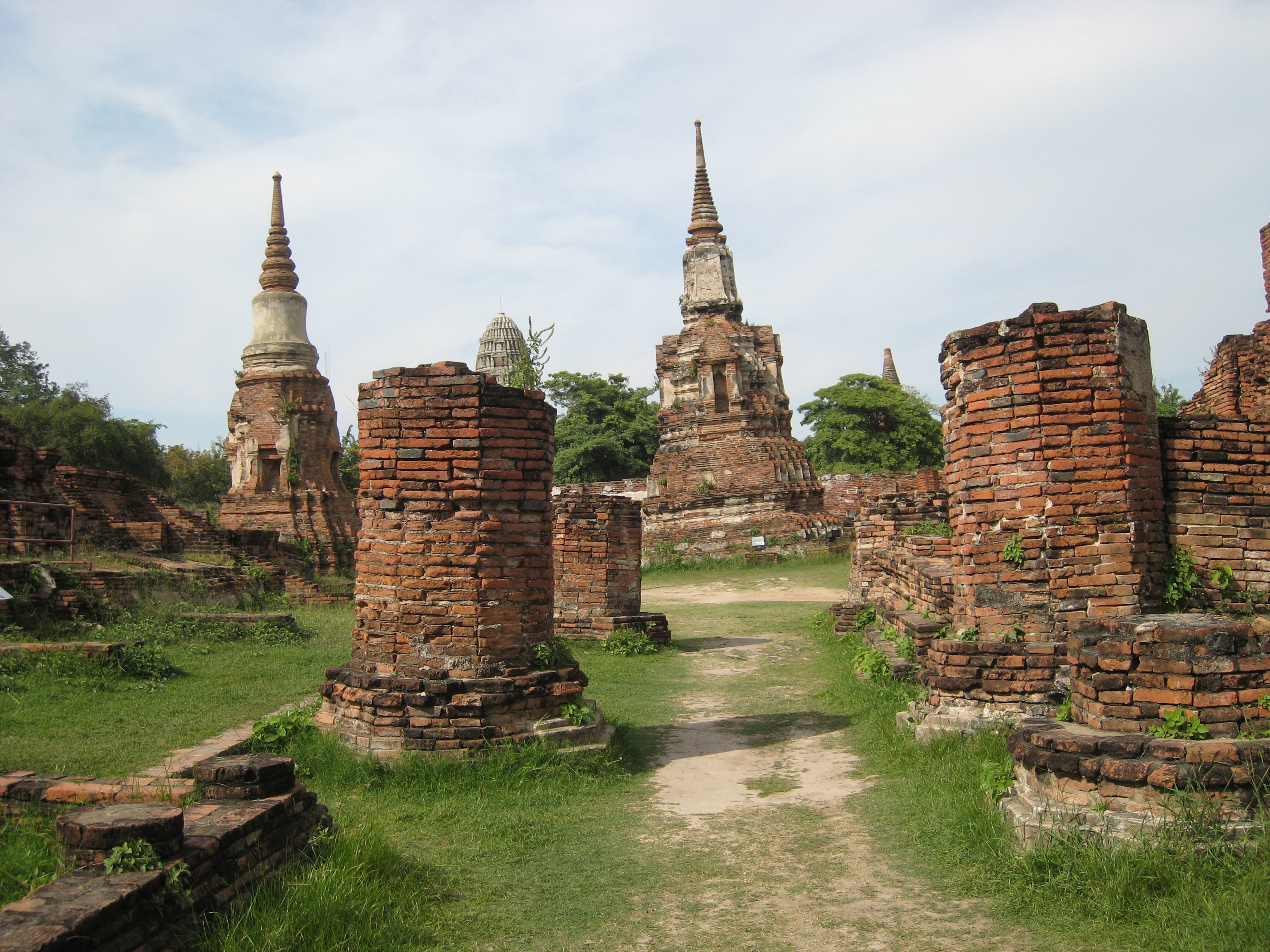
The next day was pretty much dedicated to our trip to Robben Island, the famous place where Nelson Mandela was incarcerated for 17 years! He spent many more years at other prisons. The boat trip itself was adventurous as we found the sea to be extremely choppy and those sitting on the wooden benches were sliding from side to side. Though the sides of the large boat were low, the waves never splashed in. After a good 45 minutes we sighted a very pretty island and our boat headed for its wharf. We were met by several group leaders who escorted us inside and our guide was a former inmate, a political prisoner. He told us that from 1962 political prisoners were imprisoned there, prior to that people with mental problems were sent away to this island. Currently it is just a heritage sight and there are no prisoners. We saw Mandela’s spartan cell, small with its basic items, we were allowed to go inside. We were shown isolation cells used as punishment for some, group housing cells and the quadrangle where they were taken out for short periods each day. Mandela wrote a book titled Long Walk to Freedom. Empty cement bags were used as writing material. He is now 94 years old and has returned to the village of his birth, 2-3 hrs. away from Port Elizabeth. We also heard about ingenious ways in which the inmates communicated with each other. Our guide told us that the prisoners had to do hard labor at the nearby limestone quarry. Mandela returned later 14 times, the last time being in 2004. The island itself is beautiful, with great views of Table Mountain and surroundings of Cape Town on our return boat ride.

All too soon it was time to bid adieu to Cape Town. Yes, we did see the Malay quarter where the houses are painted in bright colors like yellow, green, blue, magenta and red. It appears that the imported labor could not read or write, not even numbers, so they had each house painted differently in order to identify them. Till today this happy tradition is followed.

img_4629

We were on a flight back to Johannesburg the next morning, making a connection for Livingston airport, Victoria Falls. This airport was really tiny, reminiscent of some of those in India in small towns. I am sure our entire group will agree that Victoria Falls was the best stop of our southern Africa tour, relaxation wise. We had two full days and two nights at a beautiful resort, the Zambezi Sun Hotel. The rooms were great, the grounds beautiful and conducive to walking around. Right in the middle surrounded by a gorgeous turquoise blue swimming pool was the bar and snack shop that was amazing. As lunch was not provided to us, we were quite happy to buy pizza and veggie wraps and pina coladas which were delicious. The breakfasts and dinners they provided was sumptuous as well (notably the African eggplant curry). An added bonus was the nearby Victoria falls and a row of shops very reasonably priced, selling local arts and crafts. Everything was at walking distance, we actually had free time to relax and enjoy the ambiance!

The falls itself was a bit of let down as it appears that the water levels were low for this time of year before the rains. Normally it is referred to as “the smoke that thunders”. The hydro electric project also diverts some of the water for its own use. Nevertheless the walks were very scenic and our guide took us to the other side over the falls where we could go all the way down to the river before it took its plunge. He also drove us to the bridge separating Zambia from Zimbabwe where adventurous sports like bungee jumping was available (what, us try it? No way, too old for that!!). It was scary enough just viewing the apparatus! One from our group did take a helicopter ride and captured the aerial view of the river, delta and the falls. On the final morning before our departure, we had time to discover the Zambezi river flowing briskly by at walking distance from our rooms at one end of the hotel.

The other highlight of the Zambia visit and my personal top favorite was the leisurely sunset cruise down the Zambezi river on a charming ship, a 70 ft. catamaran named the African Queen, on the afternoon of the second day. It was reminiscent of the splendor of the British Raj with comfy cushiony rattan chairs facing the river on either side and a well stocked bar and snack area in the middle. The staff was friendly as always in Africa and served us free drinks and tasty tid-bits like mini samosas and pizza bites, freshly made! We could freely walk around as well. It was the cruise itself and the gorgeous sunset that made it unforgettable. As our boat slowly ambled down the clean, wide river, all we could see for miles along the edge of the river was greenery and sandy banks, not a hutment in sight, not even a small boy with a stick, waving to us! But true to the African habitat, we soon began to see animals frolicking in the water and coming down for a drink to the river edge. Kamakshi rightly called it the “Cruise Safari”! How fortunate we were to see almost at arm’s length, hippos, elephants and all sorts of birds. Soon our boat reached a bend in the river and it widened out hugely and we slowed down to watch the beautiful red orb that was the sun, sink into the placid waters. That scene is etched in our memories, probably for eternity, the peace and tranquility of that moment making it soooo perfect!

img_4714-1

Reluctantly we said goodbye to Victoria Falls and the Zambezi Sun resort after the leisurely breakfast and stroll was over and proceeded to the small airport to catch our flight back to Johannesburg. This time we were not in transit, we actually went into the city and our rooms were at the unique Peermont Mondior Hotel, attached to the mall and casino known as the Emperor’s Palace. Though we were not enticed into the casinos, we did find the ambiance interesting with a beautiful night sky effect of the ceilings with simulated clouds and stars. Our Indian restaurant, the Taste of Mumbai was also located within walking distance inside this area.

Gandhi Square, Gold mine viewing
The next morning was our last day of the entire Africa trip but our flight was only late at night. After breakfast, we went in the coach for a city tour. We saw the Mahatma Gandhi square where there is a statue of Gandhiji depicting his young years as a lawyer in Johannesburg. Then we headed for Gold Reef city where we were taken down a gold mine shaft by a utility elevator to view the scene below. Though the mine is not financially viable any more, it is used to show tourists the conditions down below. The entire mine goes over 10,500 feet into the bowels of the earth, but even the 800 feet into its cold depths made it a unique experience. We walked inside the long dark tunnels and we were protected from any falling debris by our hard helmets.

IMG_4788

Back at the airport, we splurged on a delectable dinner of squash or tomato soup with fresh baked bread and vegetables and mentally got prepared for our long journey home. Though what we had was a mere glimpse of Africa, it was unforgettable and we were really fortunate to have had the opportunity to experience it.